The Importer and Exporter of Cigars and Tobaccos (IEPT), the exclusive distributor of Cuban cigars in Mexico, highlighted the presence in the country of a product that, before reaching the hands of the consumer, undergoes a handcrafted process of 539 stages that combines the time of nature, generational knowledge, and the manual skill of rollers and binders.
This company, officially recognized by Habanos S.A. as its distributor for the Mexican market, including duty-free shops, celebrates its 35th anniversary in 2026. It highlighted in an article that tobacco production begins in the tobacco-growing regions of Cuba, where two types of crops are planted — shaded and sun-grown — using seeds authorized for the production of cigars with Protected Designation of Origin.
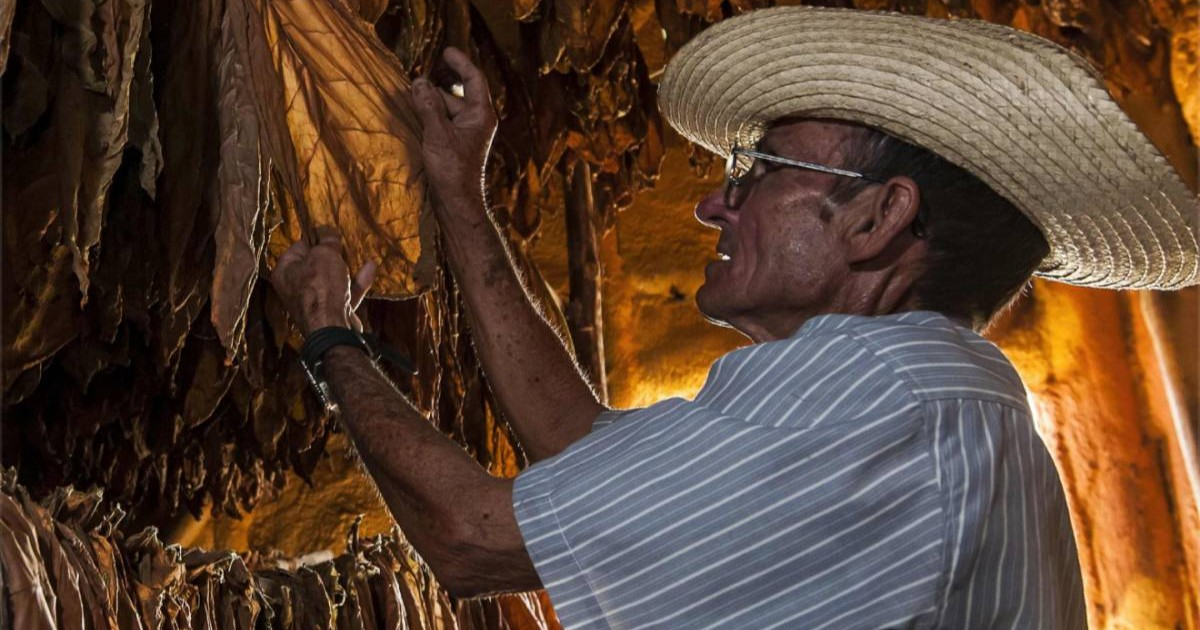
One of the peculiarities of the process is that the leaves are not collected in bulk: they are harvested individually, according to the ripeness of each one.
"One of the unique aspects of the cultivation is that the leaves are harvested individually, according to their degree of ripeness. Furthermore, their position within the plant determines some of their characteristics, such as aroma and strength in the growing fields," explained IEPT.
After the harvest, the leaves undergo curing, fermentation, and aging, phases that define their aromatic profile and require constant supervision to determine which is suitable for each component of the cigar.
The next stage, known as the binding, is where specialists combine three types of leaves with distinct functions: the volado, seco, and ligero create the inner filler; the capote wraps around that filler, giving it shape and ensuring good combustion; and the capa provides the exterior finish that the smoker sees and touches.
The twisting process is perhaps the most iconic stage. The torcedores work with traditional tools —chaveta, table, mold, guillotine, and cap— to cut and give the final shape to the cigar. "It is not only a manual skill but a craft that requires experience, sensitivity, and a deep understanding of tobacco," emphasized IEPT.
Once formed, each cigar undergoes a quality control process to verify its weight, length, diameter, consistency, and appearance. The approved pieces are placed in display cases with controlled temperature and humidity, grouped by wrapper shade, dressed with bands, and packed into boxes.
Mexico has a special historical connection with this product: it was in Cancun where the first Casa del Habano in the world opened in 1990, a concept created by Mexican entrepreneurs Max Gutmann and Rodolfo Velasco, which Habanos S.A. later adopted as a global franchise. Today, the country has 16 Casas del Habano and 26 Habanos Lounges, representing between 8% and 12% of the world's distribution of the product.
This anniversary, however, comes at a time of tension for the industry.
The energy crisis in Cuba has impacted tobacco production, making it difficult to transport raw materials from Pinar del Río —which accounts for between 70% and 80% of Cuban tobacco— to factories and international markets.
Prices have skyrocketed: a cigar that cost 20 pounds a decade ago can reach 160 today.
In Europe, the situation is equally complicated. Cuban cigar exports took a commercial hit when the German distributor Fifth Avenue went into insolvency in November 2026 following international sanctions against Chinese businessman Chen Zhi, who is indirectly linked to Habanos S.A.
Despite this adverse context, Mexico remains one of the most solid markets for Cuban cigars, supported by three and a half decades of a commercial relationship that has made Mexico City a global reference for luxury tobacco.
Related videos:
Filed under: