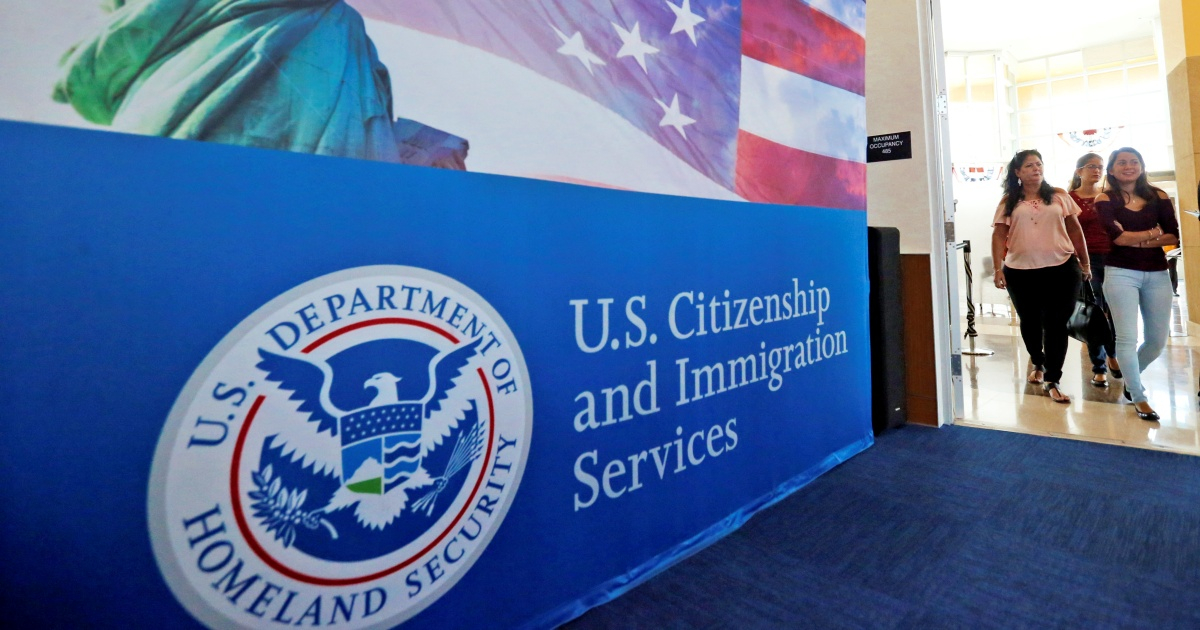
The United States Citizenship and Immigration Services (USCIS) has required since November 9, 2026, that employers use the latest edition of the Form I-129, which is used to apply for certain categories of temporary foreign workers.
The agency only accepts the edited version dated September 9, 2026 (09/09/26). Previous versions, including the one from February 27, 2026 (02/27/26), are no longer valid for new submissions.
The change may affect foreign workers awaiting a new petition or an extension of their work stay in the United States, especially when their immigration deadlines are approaching expiration.
What changes with Form I-129?
The I-129 Form, referred to as Nonimmigrant Worker Petition, is used by employers and sponsors to request that certain foreign nationals be allowed to work temporarily in the United States. It is also employed to manage extensions of stay and changes in immigration classification in relevant cases.
According to the official USCIS instructions, as of November 9th, only the edition 09/09/26 is accepted. Up until that date, the version 02/27/26 was also allowed.
This means that companies must download and use the updated form before submitting new requests.
The agency also sets specific requirements for printed applications sent by postal mail. The edition date and page numbers must be clearly visible at the bottom of all pages, and all completed pages must correspond to the same edition.
USCIS warns that it may reject a petition if pages are missing or if sheets from different editions are combined.
Which work visas are affected?
The update applies to various categories of foreign workers whose petitions are processed through the I-129. These include:
- H-1B: workers in specialized occupations.
- L-1: employees transferred within the same company or organization.
- O-1: individuals with extraordinary abilities or achievements.
- H-2A: temporary agricultural workers.
- H-2B: temporary workers in non-agricultural jobs.
The change does not entail the elimination of these categories nor does it itself modify their eligibility criteria. It is a documentary requirement that employers must fulfill when submitting the corresponding requests.
What happens if the employer submits a previous version?
According to N+ Univision, petitions submitted with an outdated edition may be rejected and returned without being assigned an official date of receipt.
In those cases, the employer would need to correct the documentation and resubmit the application.
The main risk for workers is the delay that a return can cause, especially when the expiration of their authorized stay period is approaching or when they depend on a pending application to continue working legally.
The specific consequences depend on the immigration category, the applicable deadlines, and the circumstances of each case.
What should foreign workers do?
Although Form I-129 must be submitted by the employer or appropriate sponsor, workers can verify with the company that the correct documents are being used.
Those with an outstanding request, a stay extension, or a classification change can consult with their human resources department or immigration attorney to confirm that:
- Use the 09/09/26 edition of Form I-129.
- All printed pages belong to the same edition.
- The request is complete and submitted within the appropriate deadlines.
- Use the current instructions and shipping directions from USCIS.
The editing date can be checked at the bottom of the form and on the official USCIS I-129 page.
For workers with upcoming deadlines, reviewing these details well in advance can help avoid unnecessary returns and delays.
Related videos:
Filed under: