The Board of Governors of the Florida State University System (BOG) will vote this Friday on a proposal to allow certain undocumented students to enroll in the 12 public universities of the state, just two months after unanimously closing that door to them, according to WLRN.
The meeting will be held at the Modesto A. Maidique campus of Florida International University (FIU) in Miami, and the exception that will be discussed is specific and limited: it would only benefit those who were already enrolled in one of the 28 colleges of the Florida College System before the spring semester of 2027.
The underlying reason is a legal conflict that BOG itself created in September by prohibiting the enrollment of individuals "present illegally" in public universities starting from the 2027-2028 academic year.
That regulation conflicts with the State Agreement on Articulation —known as the 2+2 program and in effect since 1971— which guarantees by state law that graduates from public colleges are admitted to a public university and can transfer 60 credits toward a bachelor's degree.
The proposed exception does not repeal the general prohibition; it merely seeks to resolve that legal contradiction for those who have already embarked on that academic path before the deadline.
If the BOG approves the proposal this Friday, the change will need to go through a 14-day public comment period before final approval.
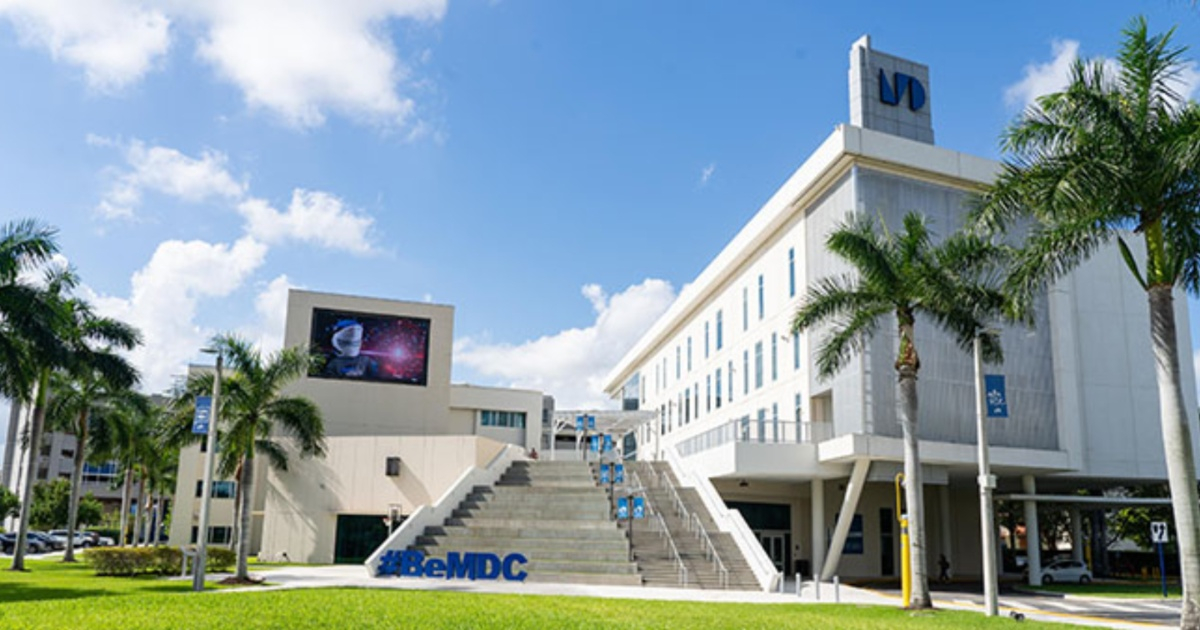
For many young Cubans studying at Miami Dade College (MDC) —one of the 28 centers in the Florida College System, with nearly 96,000 credit students in the last academic year— the news has direct but uncertain implications.
A large number of them are in an irregular immigration situation: with I-220A, expired parole, or pending asylum applications. However, the specific immigration categories that would be covered by the exception have not been specified by the BOG, so the eligibility of Cubans with I-220A remains unclear.
The political debate surrounding the measure is intense. The lieutenant governor Jay Collins firmly defended the original veto: “Florida’s public universities are for students who are here legally. Period. Florida taxpayers should not have to subsidize opportunities for people who broke our laws to come here.”
The Education Commissioner Henry Mack was equally straightforward at the time: "Taxpayers built these campuses. They are not a reward for illegal presence."
On the opposite end, the former Democratic representative Anna Eskamani celebrated the possible exception, although she insisted on going much further.
"We have often pointed out as members of the Legislature that this was never a directive from our body, and that the Board of Governors and the Board of Education acted well beyond their jurisdiction by creating new policies targeting immigrant students. I am not surprised that they are creating this exception because they ignored state law," declared Eskamani to the News Service of Florida.
Eskamani, who is running for the mayoralty of Orlando in 2027, also urged the elected governor Byron Donalds —who won the elections on November 3rd and will take office in January—to order the complete repeal of the regulation. Donalds has not announced his position on this matter.
"In short, both the BOG and the Education Board should completely repeal the new standards and allow all students, regardless of their background, to attend a public university or college to which they have been admitted," concluded Eskamani.
During the 2026 legislative session, the bills SB 1052 and HB 721 aimed at blocking undocumented individuals from higher education did not advance in the Legislature, prompting the BOG to take regulatory action.
Florida has thus become the fourth state—following Alabama, Georgia, and South Carolina—to restrict access to public higher education for undocumented individuals, in a context where Miami-Dade has drastically lost immigrant students: from about 22,000 new students born abroad each year to just 3,000.
Related videos:
Filed under: