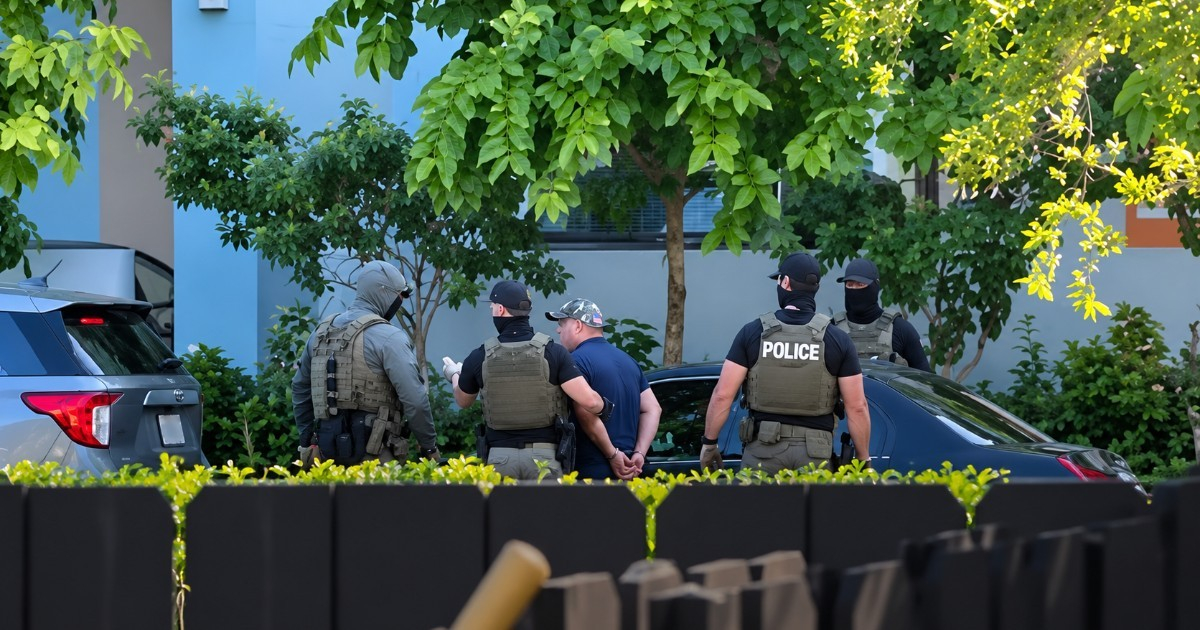
The councilwoman of Doral Maureen Porras announced this Wednesday that she is considering bringing a public discussion before the City Council in December to review or terminate the 287(g) agreement that the city has with ICE, following months of pressure from residents and merchants who report the devastating impact of immigration operations on the daily life of this city in South Florida, according to a report by Univision.
The Porras movement arrives after a first failed attempt: the councilor presented a memorandum to include the topic in the session on November 18, but the municipal attorney Lorenzo Cobiella declined to recommend it for the agenda, arguing that even a public proposal to exit the agreement could be interpreted as a "premature repudiation" of Doral's obligations and expose the city and its council members to consequences under Florida state law.
"Yesterday, I presented a memorandum requesting that the City Council discuss the current 287(g) agreement in Doral at the November Council meeting. The matter was rejected by the City Attorney, Lorenzo Cobiella, and I disagree with the basis of that decision," wrote Porras in an official statement.
The councilwoman, who has just won her reelection by a mere 12 votes after a manual recount, was clear about her intentions: "I believe our residents deserve the opportunity for this issue to be discussed publicly with my colleagues, the City Attorney, and the community."
The legal background turns the debate into a crossroads for the city. Florida's Attorney General, James Uthmeier, has warned that any municipality that cancels or rejects federal immigration cooperation could be classified as a "sanctuary city," which would result in civil and criminal penalties, as well as the removal of officials.
However, civil rights organizations dispute this interpretation: Sam Lester from the ACLU of Florida stated that Doral "is free to abandon this agreement" and that the governor "does not have the authority to remove municipal officials for doing so."
The Cuban-American mayor Christi Fraga —who admitted in September to having signed the agreement under direct pressure from Governor Ron DeSantis— has insisted that the Doral Police has not collaborated with ICE in any raids nor sent officers to the training related to the agreement.
An official document acknowledges that, to date, no local agent has completed the required training under the program.
The economic impact in Doral, a city where nearly 76,490 residents were born outside the United States and about 27,000 are of Venezuelan origin, has been severe.
The Hispanic Chamber of Commerce of South Florida estimated that business sales in the area have dropped by between 40% and 45% due to fear of immigration raids.
Eleazar Guevara, owner of La Sabrosita Parrilla & Grill, told CBS Miami that his restaurant used to welcome about 150 people on August 29, whereas now it sees no more than 10 customers a day. The entrepreneur estimated that his business has dropped by around 80% and that he is "about to lose it."
The restaurant Pipo Burgers reported a 70% decline in its sales, and Al Pastel, a Venezuelan food business, closed its doors at the end of October with a phrase that sums up the drama: "A business cannot survive with empty chairs."
In early October, during a gathering held in front of the Doral City Hall, activists urged elected officials to reconsider the collaboration with ICE, backed by around 170 signatures from resident families demanding the end of the 287(g) agreement. "Enough is enough. What our community is experiencing is absolutely shameful," Guevara stated at the event.
The Council session scheduled for November 18 will proceed without the debate on 287(g) in the formal agenda. If Porras manages to garner the necessary support, the discussion will be postponed until December, when the Cuban and Venezuelan community, along with the other residents of Doral, hope to finally be heard.
Related videos:
Filed under: