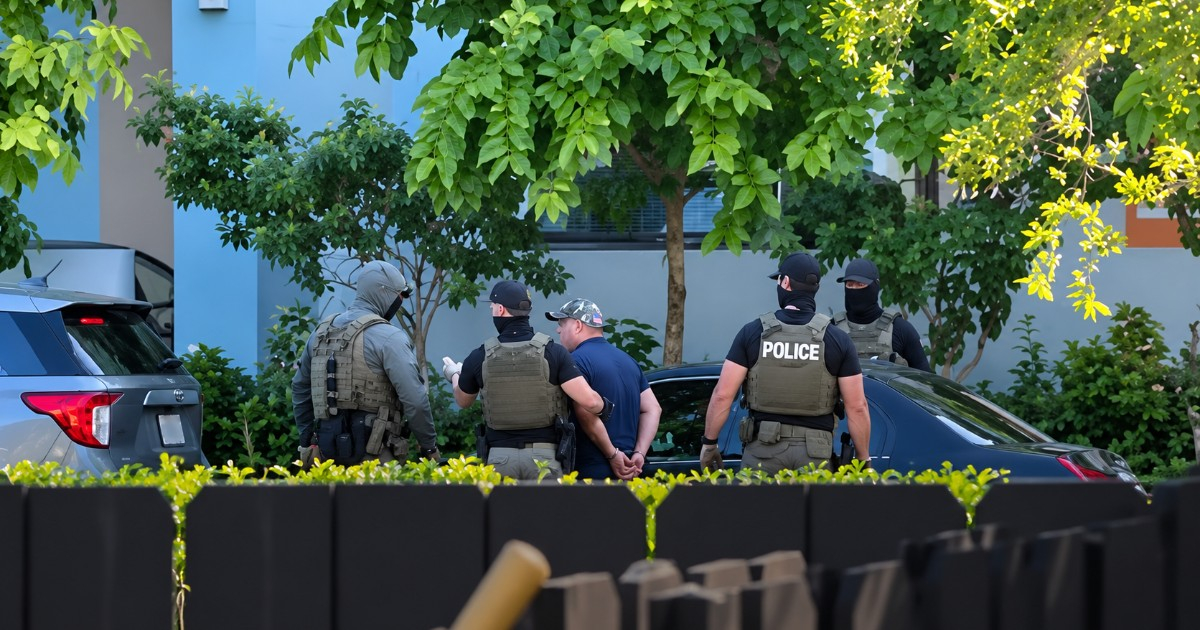
Migratory raids in South Florida are impacting the revenues of small businesses in Miami-Dade, where sales have dropped by 40% to 45% in areas such as Doral, Miami, and Homestead, according to estimates from the South Florida Hispanic Chamber of Commerce, which has called for intervention from President Donald Trump and Congress due to the economic consequences of the operations.
The president of the business organization, Liliam López, confirmed to Univision 23 Miami that the fear caused by the operations of Immigration and Customs Enforcement (ICE) and other federal agencies is decreasing both customer arrivals and the availability of workers in various establishments.
"The economy and sales have dropped by 40 to 45 percent," said López, who identified Miami, Doral, and Homestead among the cities where merchants are reporting the greatest impacts.
Restaurants, hotels, agriculture, and construction are among the most affected sectors, according to the Chamber, which warns about the challenges of keeping businesses open and retaining their staff.
The concern has prompted the organization to send a letter to President Trump and members of Congress, signed by around 200 local leaders, requesting measures to protect businesses and ensure that their workers can continue performing their jobs.
The request reflects a concern that goes beyond immigration detentions: entrepreneurs assert that fear is altering consumer habits, reducing commercial activity and making it more difficult to hire employees.
"The economy will collapse if all these permits are not facilitated," López warned, referring to the difficulties companies face in maintaining their workforce.
The effects are already visible in Doral. The owners of Al Pastel, a Venezuelan food business, announced that they will cease operations at the end of October after several years of activity in the city and its surroundings.
“A business cannot be sustained with empty chairs”, stated the owners of the establishment when announcing their decision.
Another merchant, Mhanna El Keis Badaoiu, owner of Shawarmas Beirut Miami, explained that many customers have stopped visiting establishments out of fear of encountering immigration agents.
"The situation we are experiencing is not easy, and unfortunately, people do not want to go out for fear; we are all living it," she stated.
The difficulties also directly impact employment. Angelimar Bonilla, owner of Boni Bakery, stated that her business has experienced days with exceptionally low sales and that, in addition, she faces challenges in hiring staff.
In another testimony collected by Univision, Marco Vannezo, owner of a used car business, explained that the lack of income has forced him to reduce work hours.
"Without sales, we cannot cover payroll," he stated. As an example, he pointed out that some employees were only working two days a week and that he had to send two workers home.
The impact is not limited to merchants losing customers. It also affects those who rely on these establishments for their income, including immigrant workers who are afraid to travel to their jobs due to the possibility of detention.
In Miami-Dade, where a large Cuban community resides, the situation is particularly sensitive for families and workers with pending immigration procedures or complex legal situations, including beneficiaries of humanitarian permits and individuals who received I-220A documents.
The new estimates from the Hispanic Chamber of Commerce provide a broader perspective on a situation that had already been reported by merchants from various areas of the county.
At the end of September, small business owners in Miami-Dade described a significant drop in sales and the loss of workers associated with the fear of immigration operations.
Among the testimonies published at that time was that of Katia Ríos from Pipo Burgers, who stated that her sales had decreased by about 70%. Other merchants reported days with few customers and difficulties in keeping their businesses operational.
There were also documented cases of employees who left their positions out of fear of being detained, even when they had pending asylum applications or other ongoing immigration procedures.
The concern has a particularly significant component for the Cuban community. In April, data released on the detentions of Cuban immigrants by ICE revealed a 463% increase between October 2024 and January 2026, a trend that helps to explain the existing anxiety among sectors of that community.
In Doral, Mayor Christi Fraga has also acknowledged the impact of immigration fears on the local economy, although she pointed out that municipal authorities do not have the power to hinder the operations of a federal agency.
The city has also been the setting for questions regarding the 287(g) agreement, a mechanism that allows certain forms of collaboration between local law enforcement authorities and federal immigration agencies.
Related videos:
Filed under: