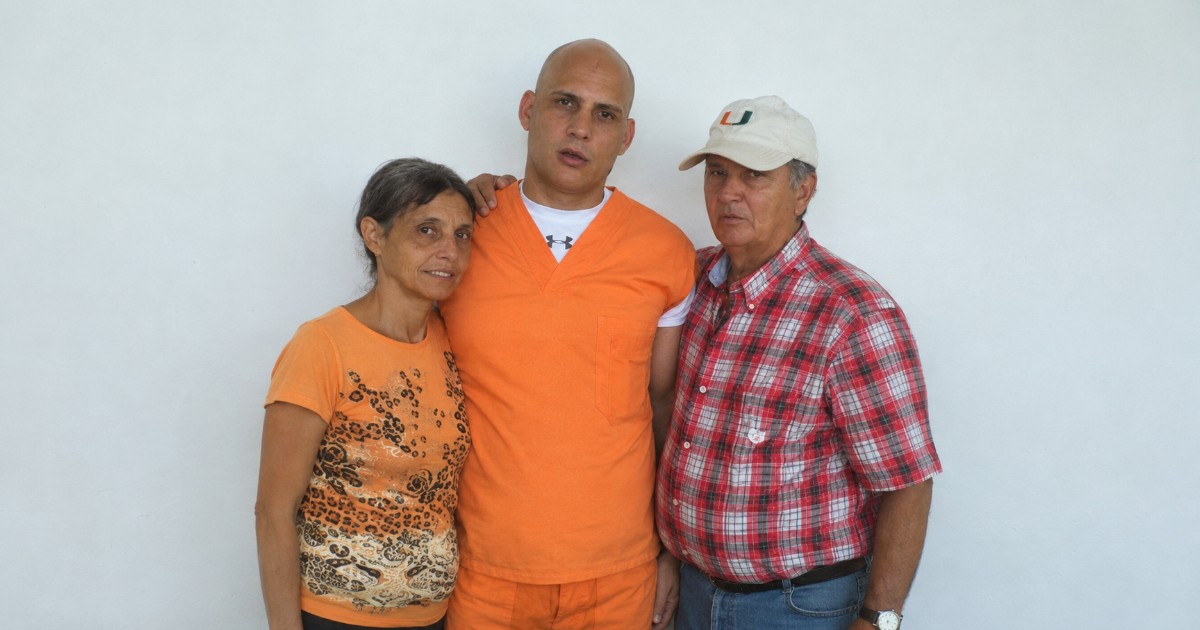
Joel Dorta García has been serving a life sentence in Cuba for 27 years, exactly half of his life, and activist Anamely Ramos is demanding that Cuban courts review his case in a call published on her Facebook account this Thursday.
Dorta was arrested on July 4, 1999, when he arrived in a speedboat from the United States to the Cuban coast with the intention of picking up his family and those of other crew members.
The boat, with 14 people on board —five men, four women, and five children— capsized about seven miles off the coast while heading back to Florida. One man, Sergio Maurilio Martínez, drowned; a Cuban patrol boat rescued the remaining castaways.
The regime accused him of human trafficking and brought him to trial just 45 days after his arrest. The proceedings lasted eight hours. According to a message that Dorta managed to send from prison, the authorities tried to force him to sign a self-incriminating statement against the U.S. government; he refused and expressed his opposition to the Cuban government. He was sentenced to life imprisonment, becoming the first person in Cuba to receive that sentence for this crime.
The sentence was based on a criminal reform approved by the National Assembly in February 1999, which established life imprisonment for cases of human trafficking where the lives of others were endangered. Fidel Castro had publicly proposed that the pilots of speedboats receive "at least" that penalty. Cubalex noted in October 2026 that life imprisonment in Cuba is incompatible with the protection of human rights.
Dorta is serving his sentence in the Incrementada area —maximum security— of the Guanajay prison in Artemisa, a facility that has faced repeated allegations of violent searches, long periods of isolation, and reprisals against those who express political opposition. Last October, Ramos had already reported an operation involving more than 30 agents targeting the political prisoner Maykel Osorbo in that same prison.
According to Dorta himself, he has survived thanks to the support of his family amidst the scarcity and poor quality of food that inmates receive, and he condemns the constant reprisals for maintaining his critical stance against the regime.
Ramos openly questions the proportionality of the sentence: "Does it justify a life sentence? Could that accusation and that sentence be imposed without taking into account the circumstances of the journey, the purpose of reuniting a family, and the pain of the separation of so many Cuban families?"
The activist, linked to the San Isidro Movement and living in exile since 2021 after being expelled from the Higher Institute of Art, opens a series of publications dedicated to the so-called "chains" with the case of Dorta: prisoners serving life sentences or more than twenty years for events related to the political situation in the country.
"They, their lives shattered, their children who grew up without a father, their mothers or fathers dead without the final embrace, are one of the greatest wounds we have as a people and as a nation. Nothing will return to its place without justice being served to them and in some way, compensating for the suffering they have endured," Ramos wrote.
Related videos:
Filed under: