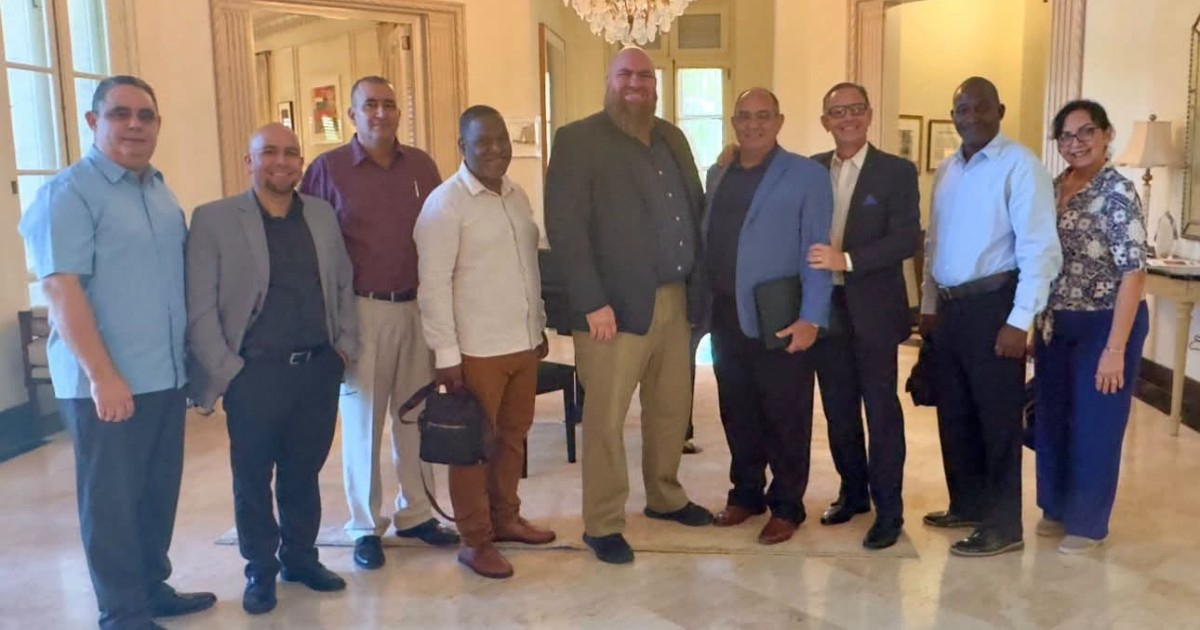
The Assemblies of God in Cuba issued a pastoral statement in which they categorically reject the accusations of espionage, mercenarism, and foreign agency directed at Cuban evangelical leaders who participated in a recognition event for Mike Hammer, Chargé d'Affaires at the U.S. Embassy in Havana, according to the statement published on Facebook by the organization.
The document, signed by Dr. F. Moisés de Prada Esquivel in his capacity as General Superintendent of the Evangelical Pentecostal Church of Cuba and Superintendent of the Caribbean, is titled "Gratitude is Not Betrayal, Diplomacy is Not Complicity, and Serving the People is Not a Crime."
"We categorically reject the insinuations that aim to portray us as spies, agents of foreign organizations, mercenaries, or tools serving the political interests of others outside our nation. Such unfounded claims do not represent responsible criticism, but rather an attempt to sow suspicion, foster resentment, and incite hostility against those of us who have dedicated our lives to the service of God and our people," De Prada states in the text.
The statement clarifies that the presence of the pastors at the diplomatic headquarters was in response to "a public act of recognition, courtesy, and gratitude" in the context of the 250th anniversary of American independence, and not to partisan commitments or hidden political agendas.
The statement defends the long tradition of humanitarian cooperation between North American Christian organizations and Cuba, noting that this aid—in the form of food, medicines, and financial resources—has benefited countless Cuban families.
"Since when does thanking those who help the needy constitute an offense against our nation? At what point did building bridges of friendship become a reason for condemnation?" the text asks.
The statement also draws a distinction between peace diplomacy and political militancy: "We do not engage in political partisanship; we practice, when necessary, a diplomacy of peace, respect, and humanitarian cooperation, because we believe that the differences between nations should never hinder the solidarity among their peoples."
"Let no one attempt to turn a gesture of gratitude into an act of betrayal, nor to transform our vocation for peace into a reason for persecution. We are not enemies of Cuba: we are children of this land, shepherds of its people, and servants of Jesus Christ," he concludes.
The statement comes amid an escalating crackdown by the Cuban regime against evangelical religious leaders connected to the U.S. Embassy.
On November 7, Pastor Rolando Fidel Pérez Lora was forcibly transferred from Havana to Las Tunas and threatened with imprisonment if he continued his activism. The day before, activist Anthony Martínez was arrested and held for over 20 hours; the agents criticized him for posting videos and meeting with officials from the Embassy.
This pattern is not new. In October, the official profile "El Necio" accused the Western Baptist Convention of being a recruiting channel for the CIA, an accusation that Pastor Bárbaro Abel Marrero labeled as "serious and unfounded."
The Assemblies of God had also published in October pastoral guidelines clarifying that the faithful can criticize the government and denounce injustices individually, although the church as an institution should not engage in party politics.
The Assemblies of God has around 300,000 followers in Cuba and is a founding member of the Alliance of Evangelical Churches in Cuba, which encompasses nearly a million evangelicals. More than 80% of local congregations lack legal status because the regime only recognizes those registered before 1962.
Related videos:
Filed under: