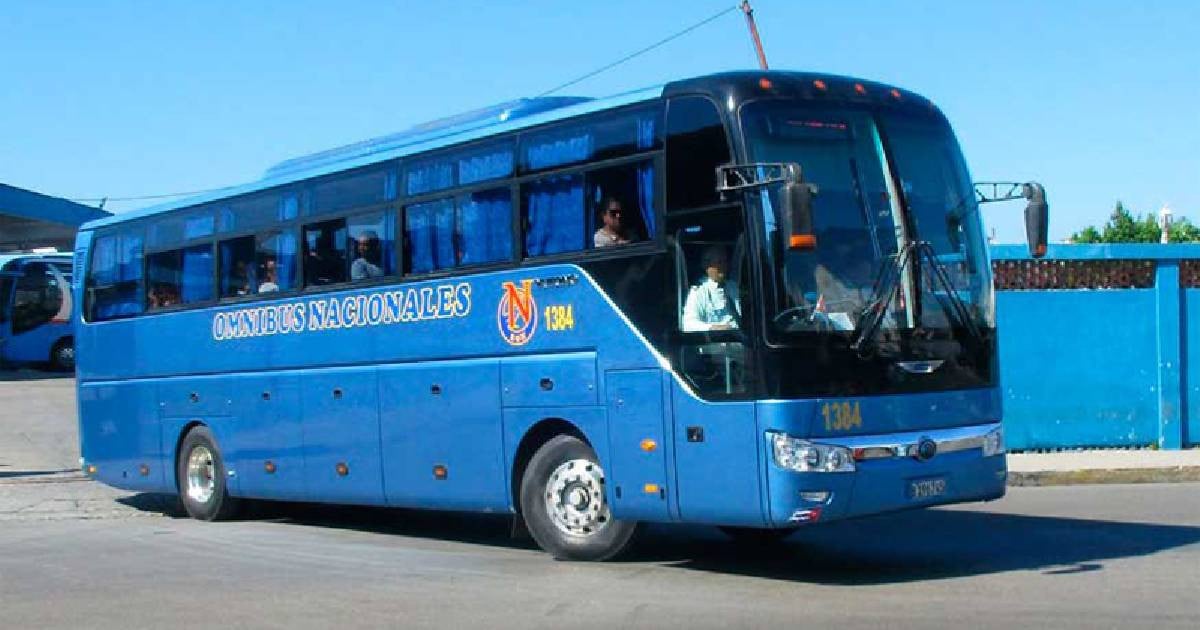
The state interprovincial bus service in Cuba currently transports fewer than 1,000 passengers a day, compared to more than 5,000 before the crisis, as acknowledged by the general director of the Automotive Transport Services Business Group, Óscar Carbajal Serrano.
In his appearance on the radio-television program Mesa Redonda, the official attributed the decline to limitations in fuel availability and specified that, during the same period, the group's passenger transport dropped by 47.9% and cargo transport by 31.5%, reported the official newspaper Granma on Thursday.
The collapse coincides with the deterioration of connections from Havana. In October, the Minister of Transportation, Eduardo Rodríguez Dávila, admitted to the news agency Reuters that the daily departures of interprovincial buses from the capital had decreased from 419 in 2025 to just 11 in 2026, a reduction of 97.4%. He also acknowledged that national routes had been cut down from over 100 to just 21.
"These are families that cannot move, individuals who cannot visit their sick loved ones, and others who cannot reach a hospital. The drama behind these shortages is complex," Rodríguez told Reuters on that occasion.
The crisis worsened after the interruption of oil supplies. Venezuela halted shipments following the capture of former president Nicolás Maduro in early January, Mexico suspended its shipments, and the administration of Donald Trump signed an executive order threatening to impose tariffs on countries that provided crude oil to Cuba.
The consequences also impact healthcare services. About 3,000 patients with chronic kidney failure who depend on hemodialysis have seen their transportation compromised, a difficulty that Carbajal himself acknowledged. Additionally, the cost of private transportation can reach 5,000 pesos per month, exceeding the minimum wage of 3,210 pesos.
In light of this situation, the Automotive Transport Services Business Group, which includes 17 companies from the Ministry of Transport, announced a structural reorganization.
The plan includes the creation of state-owned small and medium-sized enterprises (SMEs) and subsidiary companies, greater autonomy in resource management, and the connection of over 600 motor vehicles with non-state management forms through leasing contracts.
The strategy also includes the electrification of transportation. The group has acquired 120 solar charging stations, and their distribution to the provinces has already begun. Meanwhile, Taxis Cuba has 160 of the 200 electric cars it purchased in service, with plans to add another 200.
However, the push for electric mobility is hampered by the limitations of the energy system itself. State-owned electric tricycles remain idle in garages due to a lack of electricity to charge them.
Recently, in Havana, 20 repaired buses with parts from a Chinese donation were introduced, almost a year later than expected due to blackouts and fuel shortages.
Since June 18, national buses have reduced daily departures to three weekly frequencies between Havana and the provincial capitals. This reduction has further limited the options for millions of Cubans who rely on public transport to work, study, and access health services.
Related videos:
Filed under: