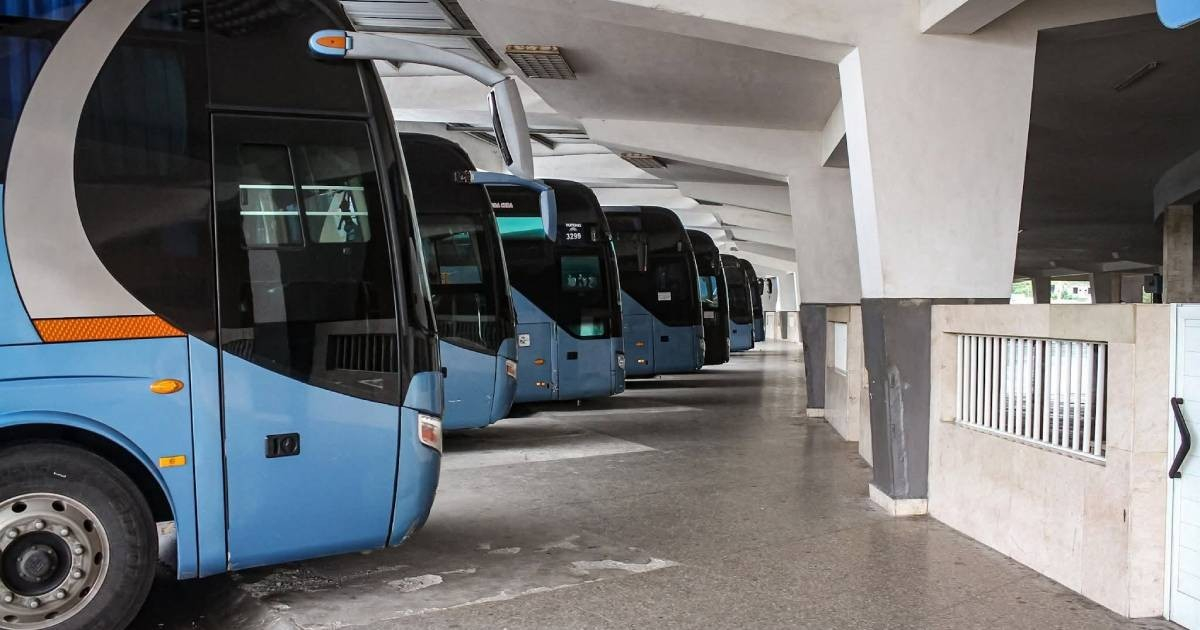
The Cuban Minister of Transport, Eduardo Rodríguez Dávila, acknowledged this Thursday in an interview with Reuters that the public transportation system on the Island is "at one of its lowest levels ever," with figures that he himself described as dramatic.
The decline in interprovincial bus travel from Havana is devastating: from 419 daily departures in 2025 to just 11 in 2026. Bus routes across the country have been cut down from over 100 to only 21, interurban transportation—crucial for workers—will drop by 90% this year, and public transport passenger trips will decrease by 75% compared to the previous year.
"They are families that cannot move, people who cannot visit their sick loved ones, others who cannot reach a hospital. The drama behind these shortages is complex," the minister stated to journalist Dave Sherwood in Havana.
The collapse is not limited to the transportation of people. National freight movement will decrease from 70 million tons in 2025 to about 20 million this year, less than a third, exacerbating the shortages across the Island.
The regime attributes the crisis to fuel supply restrictions imposed by Washington. However, the decline began long before: transportation in Cuba was sinking every day even before the situation worsened in 2026. Ómnibus Nacionales closed 2024 with only 36% of the trips it made in 2019, and by December 2025, only 219 of its 558 buses were operational.
The fuel crisis intensified starting in late January when Venezuela halted oil shipments following the capture of Nicolás Maduro, Mexico suspended its shipments, and the Trump administration signed an executive order threatening tariffs on any country that supplied crude oil to Cuba. Díaz-Canel himself admitted in April: “There is fuel for almost nothing”. In July, the U.S. sanctioned key companies in the Cuban oil sector, including CUPET.
Due to the paralysis of conventional transportation, Cubans have turned to hitchhiking, carpooling for the same journey, or much more expensive private options. The regime is betting on electrification as a solution: Cuba now has around 150,000 electric vehicles—cars, motorcycles, and tricycles—double the number in 2025 and nearly 15% of the total vehicle fleet.
According to Rodríguez Dávila, in August, 40% of vehicle imports were electric, compared to just 3.5% in January 2025. This is due to import incentives that exempt or reduce taxes for electric cars and bicycles.
Rodríguez Dávila states that Cuba currently has 150,000 electric cars, bicycles, and tricycles, double the number in 2025 and around 15% of the one million vehicles in the country.
But there is a problem: the supply of renewable energy has not increased at the same pace as electric cars.
The contradiction is evident. During the press tour organized by the government, the journalist saw dozens of yellow electric tricycles from a state-owned company parked in a garage because there was no electricity to charge them. Upon seeing them, the minister could only say, "These are the problems we face."
Related videos:
Filed under: