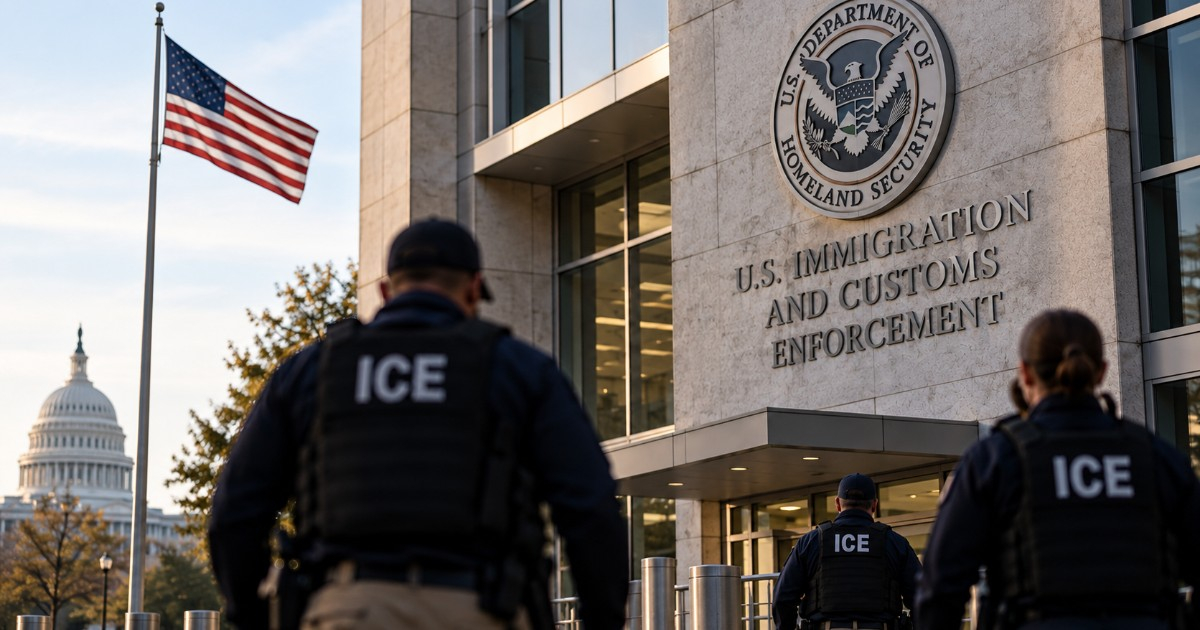
If a Cuban family member is detained by ICE and the agency has denied their release or set an unpayable bond, there is still an opportunity: to request an immigration bond hearing. In this hearing, the judge decides whether the person can continue their case while free and under what conditions.
These hearings are usually brief, so presenting solid evidence and organizing the case file well can be crucial. Recent rulings from the Board of Immigration Appeals (BIA) have emphasized the importance of demonstrating ties to the community, the reliability of the sponsor, and the chances of obtaining legal immigration status.
This guide explains, with verified information as of November 16, who can request it, how to apply, and what supporting documents are advisable to prepare.
If you are still at the first step (locating the detainee or paying a bond set by ICE), start with our guide Detained by ICE: how to request the immigration bond and who can pay it. Here we focus on preparing for the hearing before the judge.
First of all: Can your family member have a bail hearing?
Not all detainees have the right to have an immigration judge review their custody, and this has changed several times in 2025 and 2026:
- People who entered without being admitted. El 5 de septiembre de 2025, en Matter of Yajure Hurtado, la BIA decidió que los jueces de inmigración no tienen autoridad para conceder fianza a quienes están en EE.UU. sin haber sido admitidos y son considerados «solicitantes de admisión», aunque lleven años en el país.
- Florida and the Eleventh Circuit. El 6 de mayo, el Tribunal de Apelaciones del Onceno Circuito, que cubre Florida, falló lo contrario en Hernandez Alvarez v. Warden, un caso de detenidos en Miami y Krome: las personas no admitidas que viven en el interior del país y no están «buscando entrar» quedan bajo la norma que permite la fianza. Los detenidos de ese caso ganaron mediante un habeas corpus ante un tribunal federal.
- The Supreme Court has the final word. El 1 de octubre, el Supremo agreed to review el caso Rhoney v. Barbosa da Cunha, que plantea si la ley obliga a mantener detenidas sin fianza a las personas que están en EE.UU. sin haber sido admitidas. A fecha de hoy no hay sentencia.
- Individuals with a final deportation order. El 25 de agosto, en Matter of W-F-D-, la BIA recordó que, en general, el juez de inmigración ya no puede revisar la custodia cuando la orden de deportación es definitiva. En ese caso la vía es una solicitud por escrito a ICE o un habeas en un tribunal federal.
What does this mean in practice: if your family member entered through the border without being admitted (for example, many Cubans who received an I-220A), it is possible that the immigration judge will declare themselves without jurisdiction. Whether that case fits within the ruling of the Eleventh Circuit depends on how and where they were detained and their record. It is a technical decision that must be assessed by a lawyer from day one.
How to request a hearing
According to the Immigration Court Practice Manual of the Executive Office for Immigration Review (EOIR), the process is straightforward:
- It can be requested in writing, orally in court, or, if the judge permits, by phone.
- It costs nothing: there is no fee to request a bail hearing.
- The written request must include the full name of the detainee, their A-number (the foreigner number that appears on their documents), the bond set by ICE if applicable, and the detention center. If you have the Notice to Appear (form I-862), please attach it.
- It is initially presented in the immigration court that has jurisdiction over the detention center.
A detail that many families are unaware of: the bond filing is separate from the deportation case. The documents you have already submitted in the deportation process do not count for the bond and must be submitted again. If they are submitted in advance and separately from the hearing request, they should include a cover page that says “BOND PROCEEDINGS.” Additionally, these hearings are typically not recorded.
What does the detained person have to prove?
The judge evaluates three things: whether the person poses a danger to other individuals or property, whether they are likely to appear at their upcoming appointments and hearings (risk of flight), and whether they represent a threat to national security.
The burden of proof lies with the detainee. In Matter of M-S-V-, decided on October 6, the BIA reiterated this: it is the detainee who must demonstrate that they are not a danger or a flight risk. To assess that risk, various factors are considered, including criminal history (how many offenses, how recent, and how severe), the manner of entry into the country, the duration and stability of residence in the U.S., and possible avenues for regularizing their status.
The most significant evidence
The M-S-V decision serves as a warning. The BIA nullified a $20,000 bond because the sponsor was a friend without any documents proving their financial capacity or the relationship. The reference letters had addresses that did not match the licenses of those who signed them, and the asylum application was merely a possibility, not a submitted procedure. CiberCuba explained what this decision means for Cubans.
With that in mind, prepare:
- A solid sponsor. Preferably a family member with legal status, along with an affidavit, proof of income (pay stubs, tax returns), and documents that verify the relationship (birth or marriage certificates, photos, messages).
- Verifiable fixed address. Rental agreement, bills, or a letter from the host, all showing the same address on the documents.
- Grounds for Staying in the U.S. Children or spouse in the country, employment, tax payment, church or community. Each claim must be accompanied by a document.
- Complete criminal records. If there were arrests, provide the certified final disposition for each case. In M-S-V-, the BIA found relevant an arrest for failing to stop at a truck checkpoint and the fact of driving trucks without a valid commercial license.
- Compliance Test. Attendance at ICE appointments and hearings, and notified changes of address.
- Submitted applications. An asylum application or an application under the Cuban Adjustment Act that has already been submitted carries more weight than one "that is intended to be submitted."
The Day of the Hearing: What Changes from November 10th
In the hearing, the lawyer usually makes an oral presentation of the facts in favor of the detainee (what is known in English as a proffer), and the government explains why it requests that bail or detention. The judge may allow witnesses to testify under oath.
On November 10, in Matter of G-M-T-, the BIA overturned a $15,000 bond because the judge accepted unsubstantiated claims about taxes, family, and a request for withholding of removal and protection against torture without explanation. From now on, when the government questions a significant fact, the judge must explain in their bond memorandum which version they believe and why. CiberCuba covered it in this news article.
The lesson is clear: every statement made in the hearing must be supported by a document provided either beforehand or on that very day.
If the judge denies bail or sets it very high
- Appeal to the BIA. Se presenta con el formulario EOIR-26, que debe arrive at the Board en un máximo de 30 días naturales desde la decisión del juez. Lo que cuenta es la fecha de recepción, no la del envío, y los detenidos tienen el mismo plazo, según el BIA Practice Manual.
- Evidence cannot be added in the appeal. The BIA only reviews what the judge saw. That’s why everything must be presented at the initial hearing.
- New request before the judge. It is only possible in writing and by demonstrating a significant change in circumstances, such as a new documented sponsor or an already submitted asylum application.
- Habeas corpus. If the judge refuses to hold the hearing due to lack of jurisdiction, a lawyer may consider going to a federal court.
What to do now
- Find an immigration lawyer or an accredited representative as soon as possible. The first hearing is the most important.
- Gather the number A, the Notice to Appear, and any document that ICE has provided to the detainee.
- Choose the sponsor and prepare their sworn statement, proof of income, and proof of relationship.
- Order the proof of ties and compliance, and make copies for the judge and for the government.
- Request the certificates of disposition for any criminal or traffic case.
- If the bail is denied, note the date: you have 30 days for the appeal to reach the BIA.
Aviso legal: este artículo ofrece información general con fines exclusivamente informativos y no constituye asesoría legal. Las leyes y políticas migratorias de EE.UU. cambian con frecuencia. Para evaluar tu caso concreto, licenciado o un representante acreditado por el Departamento de Justicia.
Related videos:
Filed under: