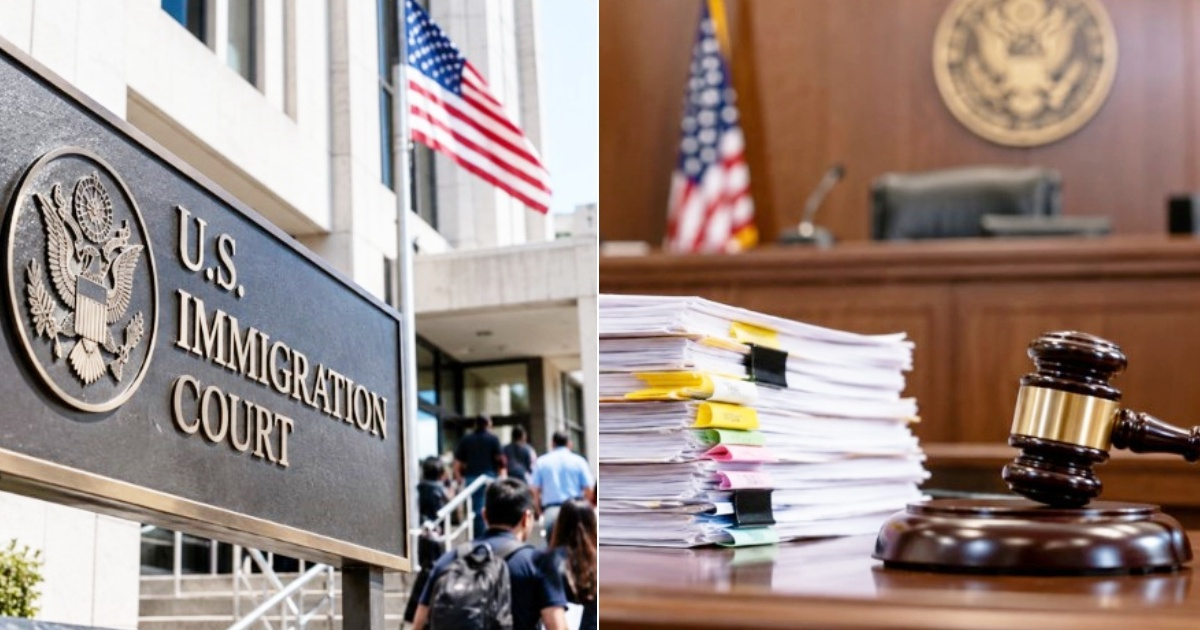
The Bureau of Immigration Appeals (BIA) of the United States issued a new precedent on Tuesday, November 10, regarding immigration bond hearings, requiring judges to explain how they assess the statements of the parties when there are disputes over relevant facts in deciding the release of a detainee.
The decision, Matter of G-M-T-, 30 I&N Dec. 228 (BIA 2026), Interim Decision #4273, establishes that when a party presents an alternative version of a significant fact or questions a statement due to a lack of evidence or contradictions with the record, the judge must address that controversy and justify the weight given to each version.
The precedent applies to immigration judges who resolve bond proceedings under the jurisdiction of the BIA, including those working in immigration facilities in Florida.
What changes with G-M-T-?
In immigration bond hearings, attorneys may present information through statements known as proffers, without always needing to provide sworn testimony or documents to support each claim.
The BIA confirmed that this practice remains valid. A judge can accept a statement without additional documentary evidence when it is deemed sufficiently reliable and has not been challenged.
However, a controversial statement lacking supporting evidence may carry limited weight.
If the Department of Homeland Security (DHS), of which ICE is a part, questions relevant information to determine the risk of flight, the judge must assess the reliability of the accounts and explain the reasons for their evaluation.
The BIA also clarified that judges are not required to receive sworn testimony to resolve these disputes; they can rely on documentation and other available information.
The explanations do not need to be presented in detail during the hearing. When the decision is appealed, they must be included in the bail memorandum to allow the BIA to review the judicial reasoning.
Why did the BIA revoke a $15,000 bond?
The precedent arose from the appeal filed by the DHS against the decision of an immigration judge who had authorized the release of a detainee on a $15,000 bond.
The government questioned several assertions used to conclude that the immigrant did not pose a flight risk.
Among them were her alleged tax payments since 2012, the existence of a business, her family connections in the United States, and her immigration status
Related videos:
Filed under: