A journalist from the official newspaper Girón, based in Matanzas, published an opinion piece on Sunday that openly acknowledges what the Cuban regime often downplays: state salaries are inadequate to retain professionals in the country, and the quiet exodus of doctors, teachers, and engineers to private or informal jobs is undermining the foundation of the public sector.
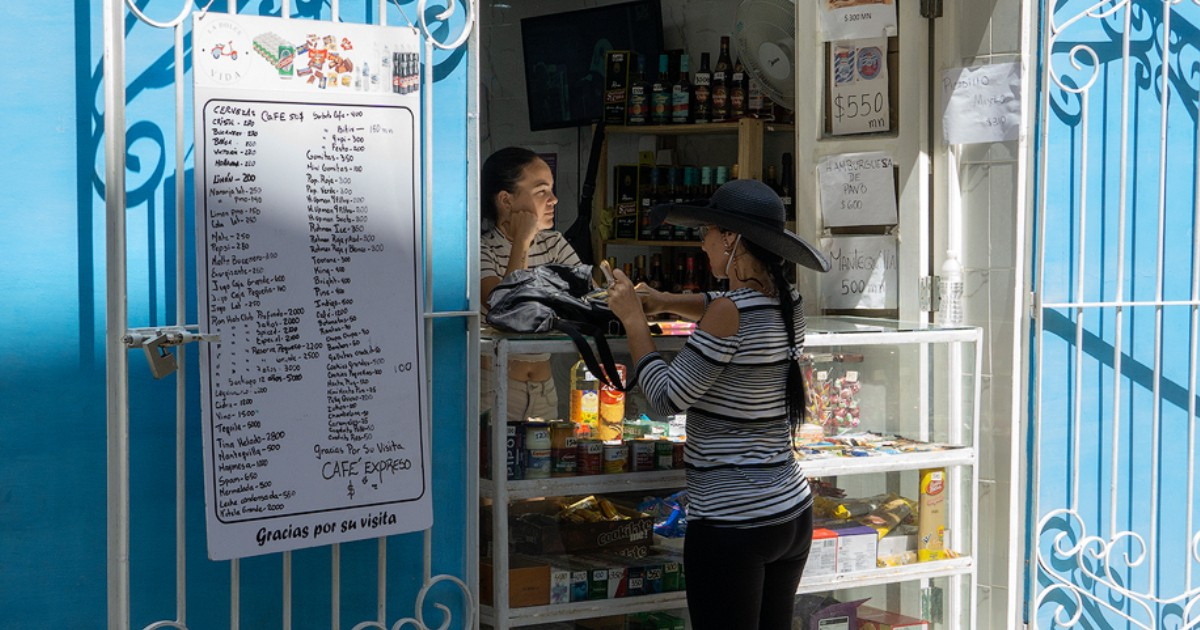
The article, written by Jessica Acevedo Alfonso and titled "Silent Leaks…”, describes scenes that, according to the author herself, no longer surprise anyone in Cuba: "the doctor who, after finishing his shift, works on an electric tricycle to secure the weekly chicken supply; the Mathematics teacher who left the classroom to manage a private business; or the receptionist at an office who works night shifts as a sales assistant in a café."
Acevedo Alfonso summarizes the essence of this shift with a powerful image: "When the value of labor is silently consumed by inflation, professional dignity becomes too luxurious a coat."
The author acknowledges that the compensation for those working in the state sector remains at a "symbolic" level and warns that without real tools to combat inflation, "any plan to stabilize the specialized workforce will be difficult to implement."
The numbers support that alarm. A recently graduated doctor earns about 4,610 pesos per month —less than 16 dollars at the informal exchange rate— while the economist Javier Pérez Capdevila estimated that a person needs around 96,000 pesos per month to meet their basic needs. The official year-on-year inflation reached 28.44% in September 2026, with food prices skyrocketing by 42.66%.
The impact on public services is already visible. Cuba went from 106,131 doctors in 2021 to 75,364 in 2024, a loss of over 30,000 professionals in three years. The exodus of teachers started long before the regime acknowledged it: the 2026-2027 school year began with about 24,000 vacant teaching positions, equivalent to 12.5% of the expected positions, and more than 380,000 students without a permanent teacher.
The article by Girón also notes that the phenomenon is reshaping the expectations of an entire generation: "young people are not motivated to pursue university degrees and, even once they graduate, they do not take up their jobs to fulfill their Social Service."
For those who do not completely abandon their profession, the alternative is equally exhausting. "There are quite a few who juggle three or four jobs at the same time, which they carry out with limited time, without fully utilizing their capabilities and often sacrificing their personal growth," writes Acevedo Alfonso.
The text is notable because it comes from a state media outlet and presents a direct criticism of the regime's salary policy, although the author maintains the official framework by attributing part of the crisis to the U.S. embargo, without questioning the internal structural causes of six decades of a single-party system. The Cuban state sector lost 144,861 workers just in the first half of 2025, a year-on-year reduction of 7.8%.
"Honoring them and compensating them well is the only way to show respect for the work they do and to put an end to this silent exodus that undermines the foundations of society," concludes Acevedo Alfonso, in a demand that, published in a state newspaper, sounds more like an acknowledgment of failure than a call to action.
Related videos:
Filed under: