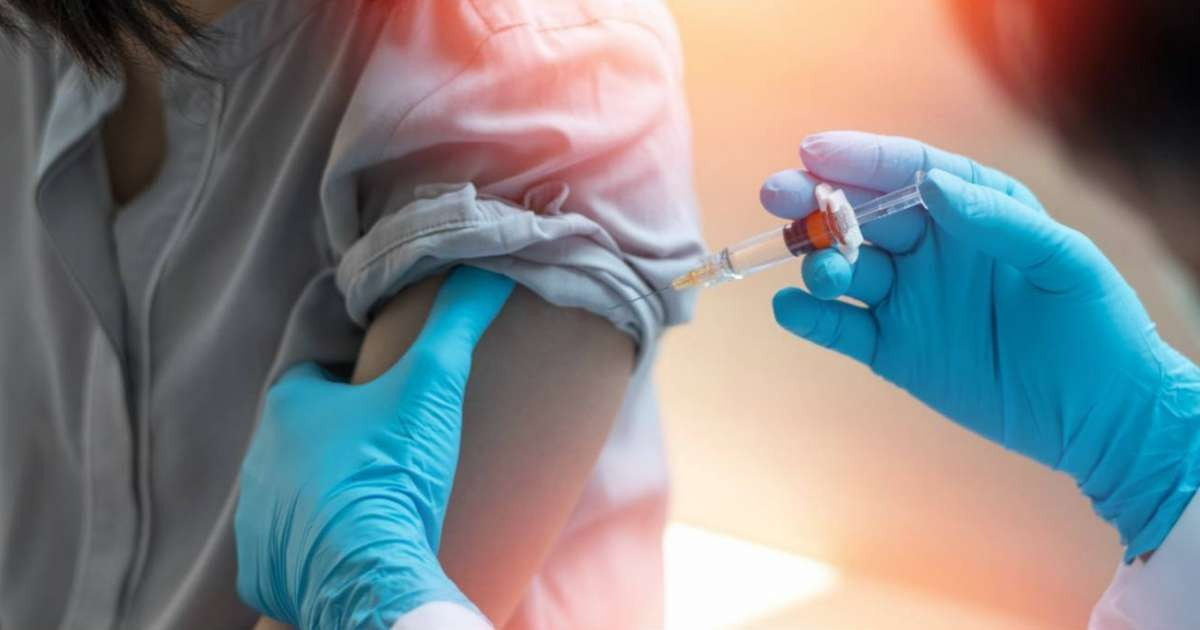
The loss of the status of measles-free country in the United States raises an important question for thousands of Cuban families residing in Florida: are the vaccines they received in Cuba still valid?
The answer is yes, as long as they are properly documented and meet U.S. medical requirements. However, those who do not remember how many doses they received or lack records should consult with a health professional regarding their situation.
The Centers for Disease Control and Prevention (CDC) state that vaccines administered outside the United States may be accepted when the ages of administration and the intervals between doses are consistent with U.S. recommendations.
The norm does not require repeating a vaccination solely because it was received in another country.
The clarification becomes important after the United States lost the health recognition it had maintained since the year 2000, according to the decision of an international panel of experts associated with the Pan American Health Organization (PAHO).
The public announcement from the organization was scheduled for this Tuesday, November 17th.
The elimination of measles does not mean that cases will never appear, but rather that the virus does not maintain continuous transmission within the country for at least 12 months. The loss of that status indicates that chains of transmission have persisted for a year or more.
According to the official figures from the CDC, updated on November 13, the United States has reported 5,412 confirmed cases in 2026, more than double the 2,289 recorded throughout 2025.
96% of the infections are among unvaccinated individuals or those whose vaccination status is unknown.
Florida has recorded 149 confirmed cases this year, compared to eight in 2025. In July, the state was already among the five most affected by measles, with a significant outbreak linked to Ave Maria University in Collier County.
Do the vaccines we receive in Cuba protect against measles?
Cuba includes immunization against measles, rubella, and mumps in its National Vaccination Program. A brochure released by the PAHO and the Cuban Ministry of Public Health identifies these vaccines as ones that children should receive during their early years of life.
In the United States, the measles, mumps, and rubella vaccine, known as MMR, is used to protect against these three diseases. The CDC recommends two doses for children: the first between 12 and 15 months of age and the second between four and six years.
Therefore, a Cuban who received both doses on the island does not automatically need to be vaccinated again upon arriving in Florida. The key is that the vaccinations were administered at the appropriate ages, with the corresponding interval, and that there is valid documentation.
Two doses of the MMR vaccine provide approximately 97% protection against measles, while one dose reaches about 93%, according to the CDC.
For most adults, a documented dose or any other valid proof of immunity may be sufficient. However, healthcare workers, university students, and international travelers, among other groups, may require two doses.
People born before 1957 are generally considered immune due to the high circulation of measles before widespread vaccination started, although there are exceptions, especially in certain healthcare settings.
What happens if a Cuban does not have their vaccination card?
Those who arrived in the United States without the Cuban vaccination card can consult with their doctor or local health department. The CDC does not consider a verbal statement about previous vaccinations sufficient to demonstrate that a person is immunized.
The professional can review the available background information and determine whether to administer the missing doses or, under certain circumstances, request a laboratory test to verify immunity.
In the case of minors entering schools in Florida, it is also necessary to meet the state's documentation requirements. Immunization records must be reviewed by an authorized professional to complete the corresponding certificate for Florida.
Protection against measles continues to be a school requirement. In October, the Florida Department of Health clarified that the proposals to eliminate certain vaccination requirements for schools did not include measles, for which immunization is directly addressed in state legislation, with the appropriate legal exemptions.
Who is at greater risk in Florida?
Measles can affect people of any age, but the CDC identifies several groups at higher risk of experiencing severe complications: children under five years old, adults over 20 years old, pregnant women, and individuals with weakened immune systems.
Babies under 12 months require special attention because they have not yet completed their regular vaccinations. In certain circumstances, such as international travel or outbreaks, health authorities may recommend an early dose for babies between six and 11 months, which does not replace the later doses.
Pregnant women without immunity should also take extra precautions, as measles can cause complications during pregnancy, including premature births.
The MMR vaccine should not be administered during pregnancy or to certain individuals with severe immunodeficiencies, so medical guidance is essential.
The virus is transmitted through the air and can remain in a closed space for up to two hours after an infected person has left.
Symptoms typically begin with high fever, cough, nasal discharge, and red eyes; days later, a rash appears that usually starts on the face and spreads across the body.
If a person believes they have been exposed to measles or is exhibiting compatible symptoms, the Florida Department of Health recommends contacting a healthcare professional for guidance. It is important to call ahead before visiting a clinic or emergency room to prevent possible transmission to other patients.
Related videos:
Filed under: