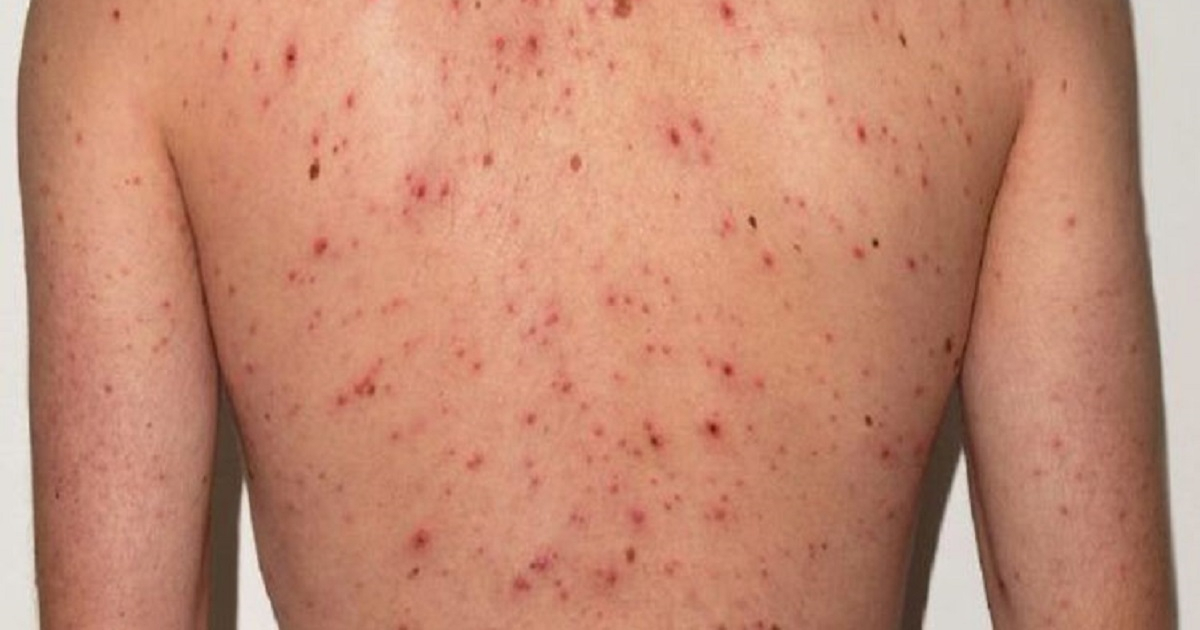
The Pan American Health Organization (PAHO) removed this Saturday the designation of United States as a measles-free country, which the nation had held for 26 years since the year 2000.
The decision was made by the Regional Commission for the Verification of Measles, Rubella, and Congenital Rubella Syndrome Elimination, which held its meeting in Washington D.C. from November 10 to 13, 2026.
The technical criterion that determines the loss of status is the demonstration, through genomic analysis, that the same strain of the virus circulated continuously from person to person for at least 12 months within the country.
The most documented case was the outbreak in Utah, where the same strain was responsible for over 95% of the cases for more than a year, from June 2025 to June 2026, causing more than 600 infections and spreading from the southwest to the central part of the state.
"The data from Utah alone would have been sufficient to support the decision," stated Dr. Angela Rassmussen, a virologist at the University of Saskatchewan in Canada and editor-in-chief of the journal Vaccine. "It was not a difficult decision," she added.
In 2026, the Centers for Disease Control and Prevention (CDC) recorded over 5,400 cases of measles, the highest number since 1991, associated with 43 active outbreaks that year, plus over 1,000 cases linked to outbreaks that started in 2025.
At least 10 people died from measles in 2026 according to state reports, although the CDC recorded six deaths, a discrepancy attributed to different confirmation criteria. Approximately one in nine reported cases required hospitalization.
Pennsylvania was the hardest-hit state, with more than 1,500 cases across 46 counties and seven associated deaths. Wisconsin reported over 500 cases and at least two deaths, including one child death reported in November.
Behind the collapse lies a sustained decline in vaccination coverage: the immunization rate with the measles, mumps, and rubella (MMR) vaccine among kindergarten children dropped from 95.2% in the 2019-2020 school year to 92.4% in 2024-2025, leaving approximately 286,000 children unprotected. Almost all cases in 2026 were recorded in unvaccinated individuals or those with unknown vaccination status.
The political context worsened the situation. Members of the Trump administration, including the president himself and Health Secretary Robert F. Kennedy Jr.—known for his history of vaccine skepticism—cast public doubts on the safety and efficacy of the MMR vaccine, whose two doses reduce the likelihood of falling ill upon exposure to the virus by 97%.
Experts do not hide the seriousness of the moment. “It is devastating and very sad that we are in this situation. This indicates that we are reversing an entire generation of progress in public health,” stated Dr. Nuwan Gunawardhana, infectious disease epidemiologist at the Irvine Medical Center of Columbia University in New York.
Dr. Peter Hotez, co-director of the Center for Vaccine Development at Texas Children's Hospital in Houston, was more straightforward: "To me, the fact that we have officially lost our status as a disease-free country is much less important than the fact that measles is present. It is a widespread disease, vaccination rates have declined across the nation, and I don’t see us returning to normal anytime soon."
To regain the designation, the United States must demonstrate that it has halted the continuous transmission of the virus for at least 12 consecutive months, a process that experts warn could take years of public health efforts and significant political will.
Related videos:
Filed under: