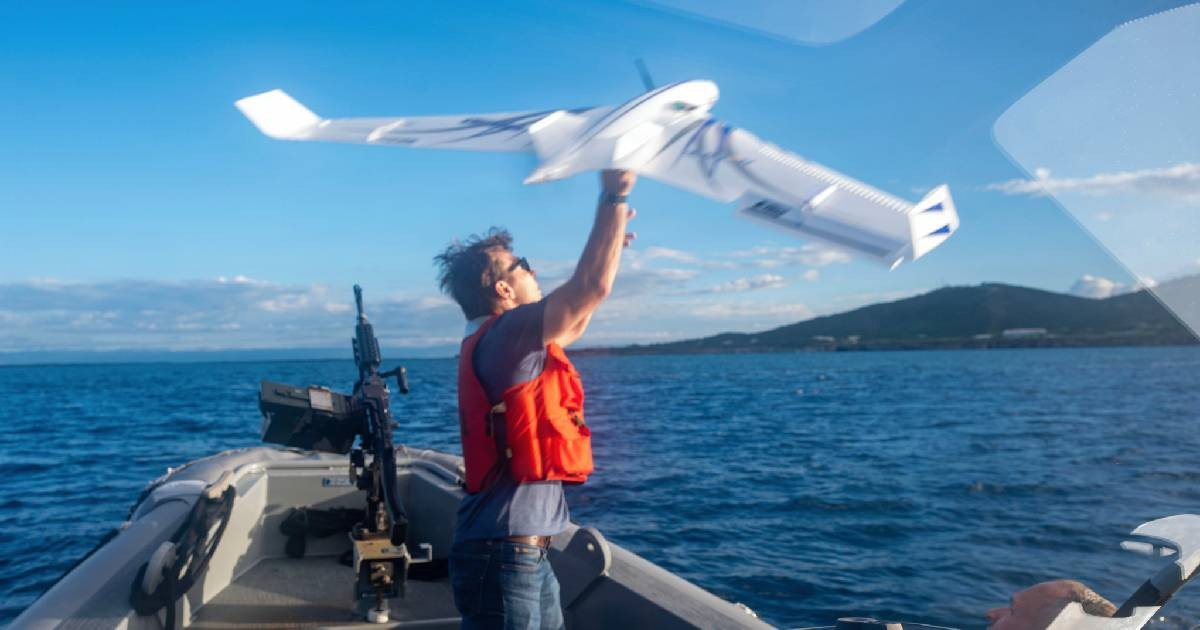
The United States Southern Command released images and video on Tuesday of recent small drone neutralization exercises conducted at the Guantánamo Naval Base, in which joint units from various U.S. agencies and military commands participated.
The training involved the Joint Interagency Task Force 401 (JIATF-401), the Naval Forces of Southern Command, the Army Combat Capability Development Command, and SOUTHCOM itself. According to the official publication, the goal was to ensure "operational readiness with capabilities that match existing threats."
Southern Command described the facility as "a vital U.S. military base in Cuba, serving as a key operational and logistical hub for maritime security, humanitarian assistance, and joint operations."
This anti-drone exercise is the latest in a series of intensified maneuvers in Guantánamo throughout November. At the beginning of the month, the "No Fly Zone" exercise took place, in which our forces simulated being enemy drones to practice their detection and neutralization.
Days later, more than 140 marines from Task Force Secure conducted live-fire exercises with rifles, grenade launchers, and M2 Browning .50 caliber machine guns, supervised by General Francis L. Donovan, commander of SOUTHCOM.
The background of this military activity dates back to a report by Axios published in May 2026, which stated that Cuba may have acquired more than 300 military drones from Russia and Iran since 2023, and Cuban military officials had discussed scenarios for their use against the base itself, U.S. ships, and Key West, Florida.
The same intelligence sources cited by Axios clarified, however, that they do not consider Cuba an imminent threat nor do they believe there is an active attack plan. Russia denied having supplied those systems and labeled the information as disinformation.
The Cuban regime responded to the escalation with the national strategic exercise "Moncada 2026," held from November 4 to 6, with participation from the Revolutionary Armed Forces, the MININT, militias, and reservists. President Miguel Díaz-Canel stated that Cuba has "the determination to reject any attempt at foreign military aggression" and that the island does not threaten or attack other nations.
In parallel with the exercises, Guantánamo has gained strategic weight within the U.S. military architecture in the hemisphere. In October 2026, SOUTHCOM announced that the base will host the first regional center of the Autonomous Warfare Command, established in April of that year to integrate drones and autonomous systems into operations in the western hemisphere.
The Cuban representative to the UN, Ernesto Soberón, stated that Havana takes the possibility of a U.S. military operation "very seriously," which reflects the level of tension surrounding the situation at this moment.
Related videos:
Filed under: