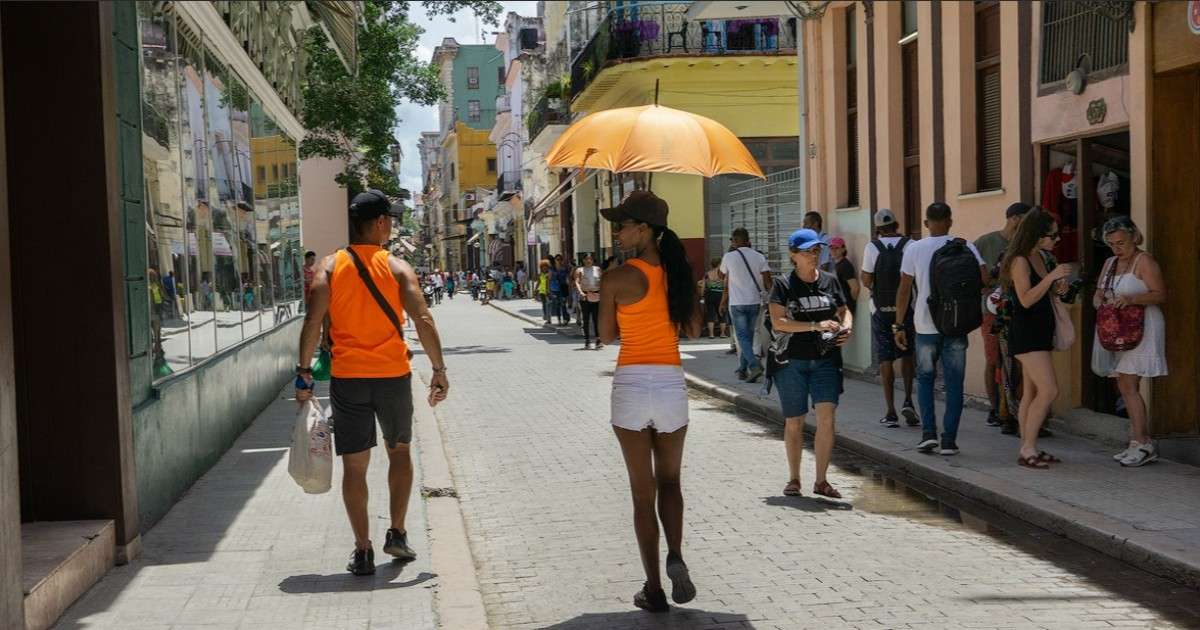
A national survey conducted within Cuba between July and September 2026 reveals that nine out of ten young Cubans believe the country is heading in the wrong direction, while 85% of that age group demands profound and urgent changes, according to a study by the International Republican Institute (IRI) published this Wednesday.
The survey, conducted by the National Opinion Research Center (NORC) at the University of Chicago through in-person interviews in homes across the island, consulted 1,199 Cuban adults between July 22 and September 7, with a margin of error of ±4.2 percentage points.
Its probabilistic and representative methodology, applied within Cuban territory, gives it particular relevance compared to studies conducted among the diaspora.
The data from the population as a whole is equally compelling: 86% of Cubans believe that the country is heading in the wrong direction, 89% claim that the government does not represent them, and 82% think that Cuba is governed for the benefit of a select few.
When asked about the greatest achievement of the current government, 69% responded "nothing".
The rejection of the regime extends to its main figures and institutions. About eight out of ten Cubans have a negative opinion of Raúl Castro, Miguel Díaz-Canel, the Communist Party, the National Assembly, the National Revolutionary Police, and the Committees for the Defense of the Revolution. Díaz-Canel has an unfavorable rating of 81%, of which 76% categorize it as "very unfavorable."
73% of respondents stated that they do not trust any political or public figure, 87% reject the idea that citizens can influence the country's decisions, and 85% believe it is impossible to publicly protest against the government.
The demand for transformation is significant: 78% of the total population calls for serious and immediate changes, and 67% believes that nothing in Cuba should remain the same. Only 10% supported gradual changes that would preserve the existing system, and a mere 7% felt it was necessary to protect the current order.
«The confidence of Cubans in the political system and leadership of their country has collapsed,» stated Antonio Garrastazu, senior director of IRI for Latin America and the Caribbean. «Cubans are overwhelmingly dissatisfied not only with their leaders but also with the institutions that support the regime's single-party state.»
The results align with a trend documented by other independent organizations. The Cuban Observatory of Human Rights recorded in its IX Report of August 2026 that 95% of Cubans rate the government's economic and social management negatively, based on 1,318 interviews conducted in 79 municipalities across the country.
This widespread rejection occurs in a context of multiple crises: prolonged blackouts, severe shortages of food and medicine, soaring inflation, and an unprecedented migratory exodus, with hundreds of thousands of Cubans—mostly young people between the ages of twenty and forty—having left the island in recent years.
"These findings clearly show that Cubans are deeply dissatisfied with the dictatorial status quo and want to choose their own future," concluded Garrastazu in the complete survey report.
Related videos:
Filed under: