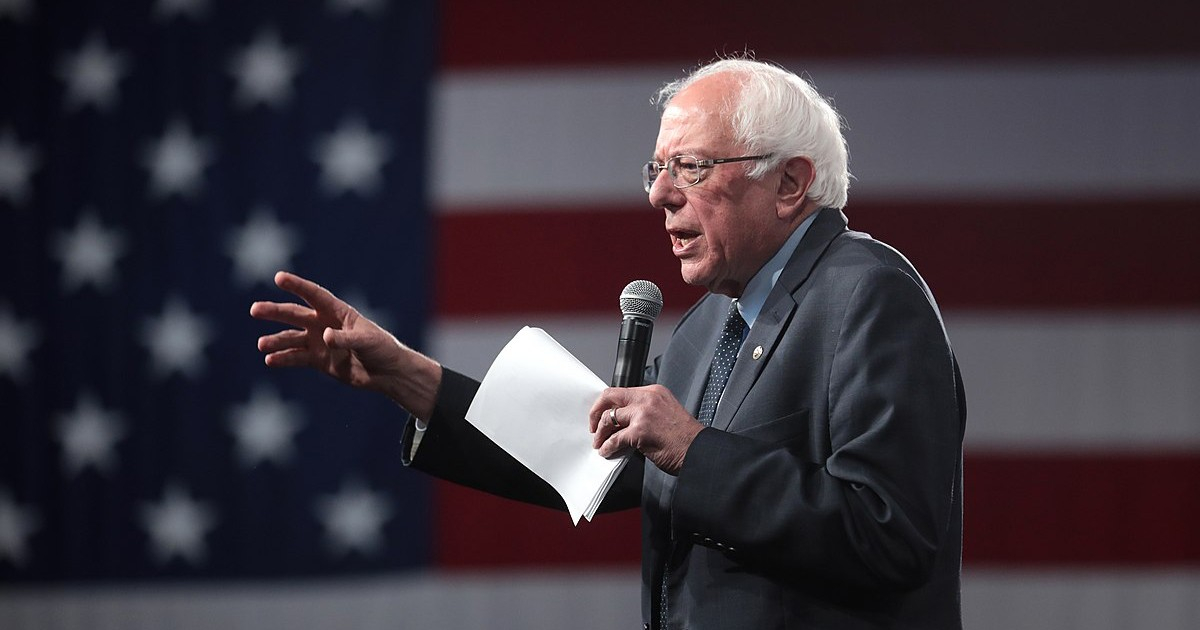
The independent senator Bernie Sanders unveiled an ambitious legislative agenda in an exclusive interview with The Associated Press, in which he detailed how he will use his return to the presidency of the Senate Committee on Health, Education, Labor, and Pensions to advance universal health coverage in the United States.
Sanders, who is set to take on this role when the Democrats assume control of the Senate in January, proposed a four-year transition plan to a single-payer healthcare system with universal federal coverage, which would replace most private insurance.
"This is no longer a utopian vision. This is where the American people are," stated the legislator from Vermont.
The plan begins in the first year with a reduction of the Medicare eligibility age from 65 to 55 years, the addition of dental, vision, and hearing coverage, and the assurance of healthcare for all individuals under 18 years old.
In the second year, the age would drop to 45 years, in the third to 35, and in the fourth, coverage would extend to the entire population.
"Transforming a system that accounts for 18% of the GDP of the United States does not happen overnight," Sanders acknowledged while justifying the gradual timeline.
The most immediate obstacle is the fiscal cost: the Congressional Budget Office already estimated in 2022 that simply lowering the eligibility age to 60 would increase federal deficits by $155 billion between 2026 and 2031, at a time when the national deficit is already reaching $2 trillion, equivalent to 6.2% of GDP.
To finance the program, Sanders proposes shifting spending from private insurance premiums to employer and household payroll contributions, combined with higher taxes on the wealthy and new levies on Wall Street and large corporations.
In order to bypass the usual threshold of 60 votes in the Senate, the legislator proposes to resort to budget reconciliation to pass at least the first stage with a simple majority. The Democrats will have a majority of 56 to 44 when the new Congress takes office, marking the largest party advantage in that chamber in 16 years, a result of the midterm elections on November 3.
Sanders' goal is not only to provide greater access to primary care, but he will also advocate for reducing the costs of prescription medications.
The independent senator sees signs of support among the leaders of his party. One of them is the Democratic leader of the House of Representatives, Hakeem Jeffries, who has committed to working "from the very first moment" to restore the subsidies of the Affordable Care Act and reverse the cuts to Medicaid, and agrees to lower the Medicare eligibility age and add new coverage options.
"Jeffries basically supported the first year of Medicare for All," noted Sanders.
The main hurdle remains the White House: any legislation passed by Congress would require the president's signature, Donald Trump, who has referred to the proposal as "Medicare for None."
Sanders, however, is optimistic. "Donald Trump may be crazy, but he is not stupid. He is a smart guy and a very good politician," he stated, arguing that the president might acknowledge that the healthcare system is broken and act accordingly.
Salaries and artificial intelligence: the other changes proposed by the senator
Sanders' agenda goes beyond health care. He will also advocate for raising the federal minimum wage from $7.25 per hour—unchanged since 2009—to $20, in a similarly phased transition over four years, along with the PRO Act to strengthen the right to unionize.
In the field of artificial intelligence, Sanders proposes a moratorium on new data centers and a pause on the development of advanced systems until federal safeguards are in place, along with legislation to permanently prohibit the development of an artificial intelligence capable of surpassing human beings.
Related videos:
Filed under: