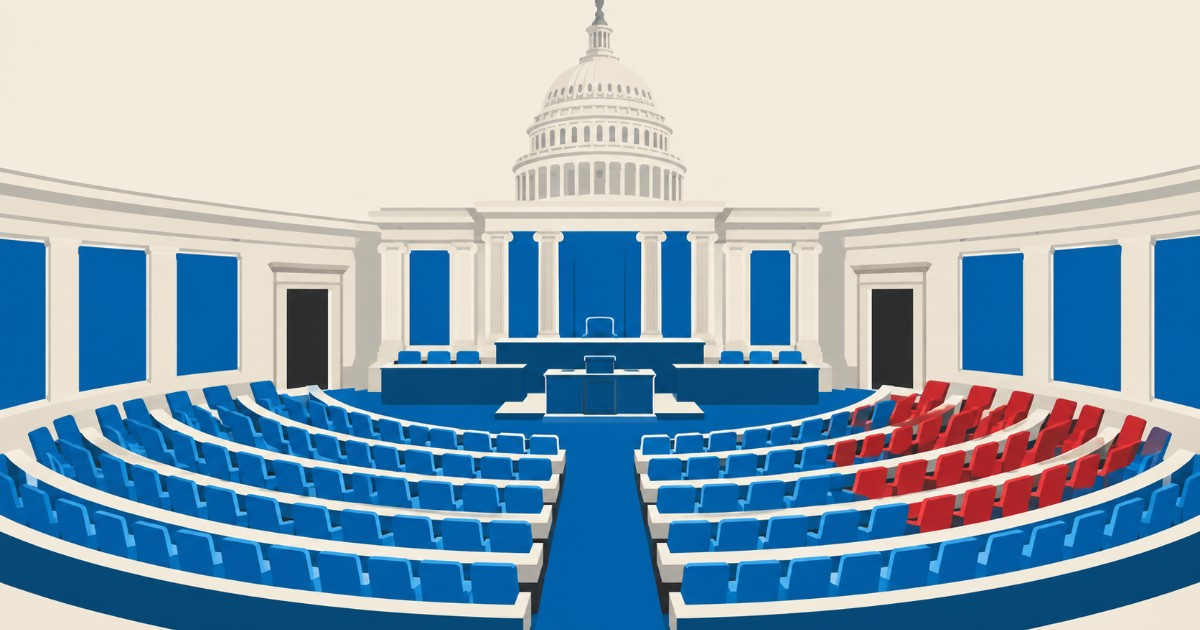
The Democratic Party seized control of the United States Senate from the Republicans in the midterm elections held on Tuesday, November 3, according to projections released by CBS News during the election night. Victories in conservative strongholds like Texas, Kansas, and South Carolina, along with wins in North Carolina and Ohio, turned the tide in a chamber that had been in the hands of the Republican Party until now.
The night also showcased a projected Democratic victory in Iowa and turned the 2026 legislative elections into a significant political setback for President Donald Trump, who had personally involved himself in the campaigns of several defeated Republican candidates. The counting was still ongoing in other races at the time this information was reported, and the results must be certified by the electoral authorities.
The historic triumphs that changed the Senate
The Republicans arrived at the polls with a majority of 53 seats compared to the 47 of the Democratic bloc, which includes two allied independents. Therefore, the opposition needed a net gain of four seats to reach 51, which would allow them to control the chamber without relying on the tie-breaking vote of Vice President JD Vance.
The most symbolic victory occurred in Texas, where state legislator James Talarico defeated Republican Attorney General Ken Paxton, who was backed by Trump. This marks the first time since 1988 that a Democrat has won a federal Senate race in that state. The outcome, forecasted by the Associated Press and reported by CiberCuba, was one of the most significant blows to the Republican establishment.
In South Carolina, pediatrician Annie Andrews defeated Republican Senator Darline Graham, sister of the late Lindsey Graham, whom she had replaced by appointment. Trump personally endorsed the Republican candidate. The state had not elected a Democrat to the Senate since 1998, according to Associated Press.
Another extraordinary outcome came from Kansas: the Methodist pastor Adam Hamilton defeated the Republican senator Roger Marshall, according to projections from AP and CBS News. Kansas had not elected a Democratic senator since 1932, 94 years ago. Hamilton focused his campaign on the cost of living and positioned himself as a moderate alternative in a state that Trump had won decisively in 2024.
North Carolina, Ohio, and Iowa widen the Republican defeat
In North Carolina, former Democratic Governor Roy Cooper prevailed over Michael Whatley, former chair of the Republican National Committee and a candidate backed by Trump. This victory marked the acquisition of a seat left vacant by Republican Senator Thom Tillis, according to projections gathered by Reuters.
In Ohio, former Democratic senator Sherrod Brown defeated Republican Jon Husted and reclaimed a seat in the upper chamber after losing his re-election in 2024. Husted held the seat that JD Vance left vacant upon assuming the vice presidency.
These five victories were joined by Iowa, where Democratic state representative Josh Turek defeated Republican Congresswoman Ashley Hinson, according to a projection released by CBS News at 11:32 p.m. Eastern Time. Turek, a former Paralympic athlete, won a contest that was initially expected to favor Republicans. Iowa had not elected a Democratic senator since 2008.
The Democratic bloc also managed to defend two important seats: Jon Ossoff was re-elected in Georgia against the Republican Mike Collins, and Chris Pappas won in New Hampshire. Not all races were settled: Michigan remained a contested battleground and there were still votes to be counted in other states. The majority announced by CBS News constitutes an electoral projection, not the official certification of the results.
The cost of living and the war with Iran are taking a toll on Trump
Economic concerns were at the heart of the backlash vote. The national voter survey by Associated Press found that approximately two-thirds of respondents believed that Trump's policies had worsened the country's economic conditions. A similar proportion estimated that the tariffs had harmed the national economy or that of their communities.
The rising cost of gasoline and other products, the repercussions of the war with Iran, and dissatisfaction with the functioning of the government became key issues for numerous voters. The Democrats capitalized on this discontent, while Republican candidates sought to defend the White House's policies without being entirely linked to its most unpopular positions.
Trump congratulates the Democrats after stating that he was not on the ballot
In light of the magnitude of the defeats, Trump stated that he was willing to accept the results and collaborate with the opposition. In an interview with The New York Times, also reported by AP, he declared: "I am absolutely willing to accept those results." He added that he hoped to work with the Democrats and reach agreements.
Later, in a phone conversation with CBS News, he conveyed a message of congratulations to the winners, although he attributed his party's losses to the absence of his name on the ballots. This explanation contrasted with his campaign strategy, during which he repeatedly urged voters to vote as if he were the candidate. CiberCuba previously reported his claim that the Republicans would have swept if he had been on the ballot.
What is changing in Washington and what happened in Florida?
The new Democratic majority will begin to exert control over the Senate when the next Congress convenes in January 2027. They will be able to lead committees, call hearings, drive investigations, and exercise greater control over appointments and Trump's legislative priorities. However, a simple majority does not eliminate the Senate's procedural rules or the president's veto power, which means it does not guarantee automatic approval of laws.
In the House of Representatives, projections also indicated a Democratic victory, regarding which CiberCuba has already reported. The final distribution of the 435 seats remained dependent on the counting of competitive districts.
Florida was a notable exception to the Democratic wave. Republican Ashley Moody was able to retain the Senate seat previously held by Marco Rubio before he became Secretary of State, while fellow Republican Byron Donalds won the governorship. The races in Florida and the Cuban-American candidates remain particularly relevant for Miami and the southern part of the state.
Readers can follow the state results, the races in Florida, and the updates on the recount in the .
Related videos:
Filed under: