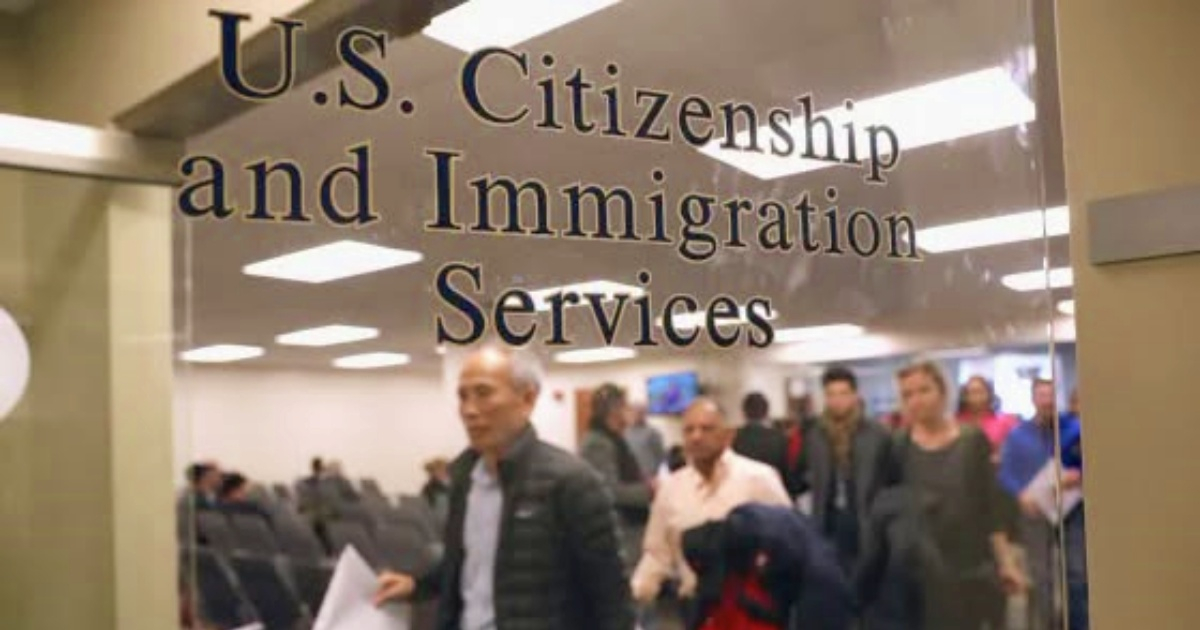
The United States Citizenship and Immigration Services (USCIS) approved 652 permanent residency applications under the Cuban Adjustment Act during September 2026.
The data appears in the monthly report to Congress published by USCIS and extracted from the ELIS and CLAIMS3 systems in October.
The figure represents a real uptick within a trend of historical collapse, but it does not imply that the backlog is easing: the month ended with 355,314 pending cases, and nearly 98 out of every 100 have been unresolved for over six months.
In total, 347,613 applications —97.8% of the accumulated total— had been pending for over six months as of the end of September. Only 7,701 cases had been pending for six months or less.
During the month, USCIS issued 1,118 decisions in total: 652 approvals (58.3%) and 466 denials (41.7%). At the same time, 1,149 new applications were submitted, 31 more than those resolved, although the pending inventory decreased slightly compared to August.
The average processing time for completed cases was 21.5 months, although this indicator only measures the files that have already been closed and does not predict how much longer those who are still waiting will have to wait.
A modest rebound after months of paralysis
To understand the magnitude of the problem, it is enough to compare the series of approvals throughout 2026: in the first quarter of the year, there were only 50 approvals in total; in the second quarter, 139; in July, 308 more; in August, 386; and in September, 652.
The contrast with previous periods is significant: between April and June 2024, USCIS had approved 49,965 residencies under the Cuban category; in the same quarter of 2025, 10,432; and in the same period of 2026, only 139. The cumulative decline exceeds 99%.
The increase in approvals in September came after a court order issued on August 24, which mandated the lift of an administrative hold that USCIS had implemented through internal memos that halted the adjudication of applications from nationals of 39 countries, including Cuba.
A federal court in California ordered the resumption of regular processing, and USCIS announced on August 28 that it would comply with the ruling, although it stated that it disagreed with the decision.
Even so, the 652 approvals from September account for only 0.18% of the pending cases at the end of the month. Adding approvals and denials, the total of 1,118 decisions represents 0.31% of the accumulated inventory.
The Eleventh Circuit ruling complicates the landscape for I-220A applications
The publication of this data comes in the same week that the Eleventh Circuit Court of Appeals issued, on Tuesday, November 17, a binding ruling that represents a significant setback for Cubans who were released from immigration custody using form I-220A.
In the case Aguiar-Fernandez v. U.S. Attorney General, the court determined that supervised release documented with that form is legally distinct from humanitarian parole required by the Cuban Adjustment Act, and established binding precedent in Florida, Georgia, and Alabama.
That ruling could have repercussions in the litigation Bello-Rubio v. Noem, filed by 992 Cubans before Judge Jacqueline Becerra in the Southern District of Florida, which seeks collective recognition. Its proponents estimate that a victory could benefit between 500,000 and 600,000 Cubans with I-220A.
The judge already rejected the federal government's first attempt to dismiss the case in September. In October, the government submitted a second motion to dismiss. On November 17, the plaintiffs' attorneys requested a 60-day suspension of the litigation process after submitting the new ruling from the Eleventh Circuit.
For those facing prolonged delays in their adjustment applications, it is advisable to periodically check the status of the case and consult with an attorney about possible legal avenues, including, when appropriate, a mandamus action for unjustified delay.
Its origin depends on the circumstances of each case and does not guarantee the approval of the application or that the court will order USCIS to issue a decision.
Meanwhile, the accumulated inventory slightly decreased, from 355,520 pending files in August to 355,314 in September, and nearly 348,000 applications have been pending a response for over six months.
El colapso en los trámites migratorios afecta a cientos de miles de cubanos. Sigue de cerca todas las novedades sobre visas, residencias y procesos en nuestra sección de
Related videos:
Filed under: