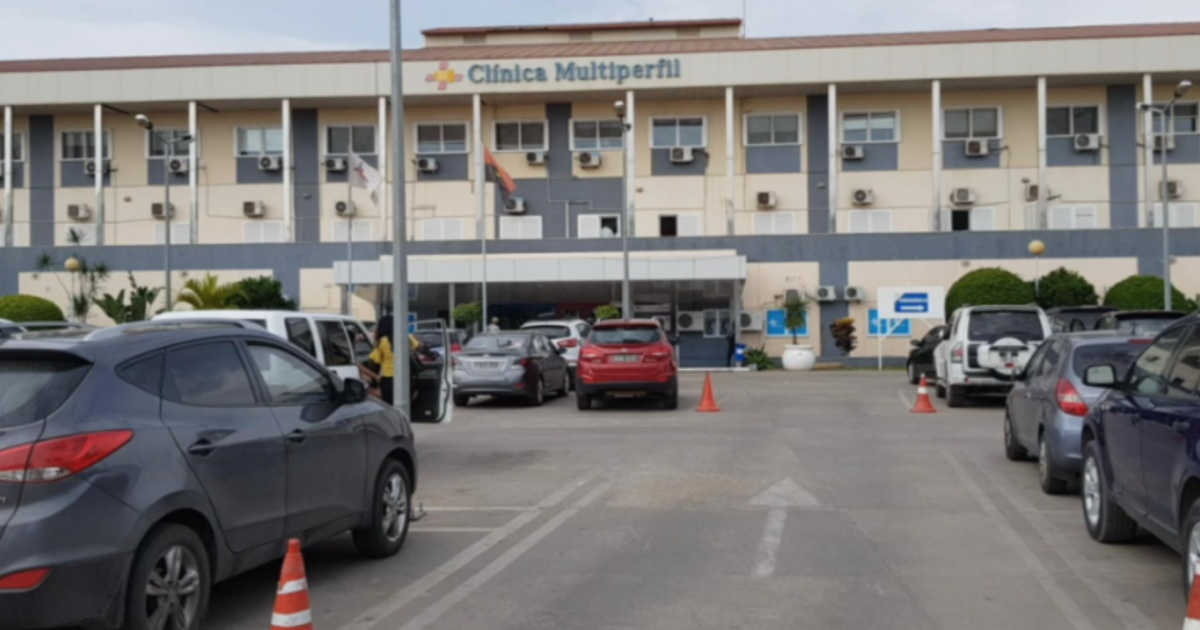
The president of Angola, João Lourenço, authorized this week a disbursement equivalent to 787,200 euros —paid in kwanzas— to hire 12 Cuban specialist doctors destined for the Multiperfil Clinic in Luanda, as reported by the Angolan media Novo Jornal.
The operation was conducted through direct adjustment, without a public competition, and will be executed by Corporación Antex S.A., a Cuban state company linked to the military conglomerate GAESA.
What is striking is not just the figure—around 65,600 euros per specialist, with the source not specifying the duration of the contract—but the destination of these doctors and the channel through which their hiring is processed.
The agreement falls within the framework of the technical-military cooperation agreement between Angola and Cuba, and the authority to sign the contract was delegated by Lourenço to the Angolan Minister of Defense, not to the Minister of Health.
The Multidisciplinary Clinic is not an ordinary public hospital. Established in 2002 under direct supervision of the Angolan Presidency and incorporated in 2010 into the Military Bureau of the Presidency, it primarily serves politicians and military personnel.
Her fees—deposits exceeding 200 dollars and consultations close to 100 dollars—make her services inaccessible to the vast majority of Angolans. The 12 Cuban specialists will, in practice, serve the elite in power.
This contract is the second major agreement of its kind in just over a year. In June 2025, Lourenço had already authorized the hiring of up to 1,102 Cuban doctors through Antex for 71.3 million euros for public health units across the entire country.
While Angola pays millions, the Cuban doctors themselves see very little of that money. According to an investigation by elTOQUE based on over 7,300 payrolls and accounts of Cuban military personnel, Antex retains between 76% and 91% of what Angola pays for each collaborator.
A leaked contract from August 2025 set the nominal salary of the doctor at $598 per month, of which only $200 was disbursed in Angola; the remainder was frozen in accounts in Cuba under the control of the corporation.
In February 2025, Antex even halved that stipend, citing "lack of liquidity."
"We don't know where the money that Angola pays for our work in the hospitals goes," stated a Cuban doctor in Angola. "Of the $5,000 that Angola pays for each doctor, $1,000 goes to Cuba in MLC cards, but now no one wants the MLC."
The contrast with the healthcare situation in Cuba is stark. The country closed 2025 with 71,635 registered doctors, over 30,000 fewer than in 2021. By April 2026, more than 70% of essential medications were missing.
The MINSAP itself acknowledged that Cuba only had 39.6% of the necessary ambulances; in Matanzas, out of 54 required, only 14 were operational. A specialist with a second degree on the island earns 8,880 Cuban pesos per month, equivalent to between 13 and 16 dollars at the informal exchange rate.
On July 13, 2026, the Office of Foreign Assets Control of the U.S. Department of the Treasury (OFAC) included Antex on its list of sanctioned entities due to its connection with GAESA and its role in the export of Cuban labor.
Despite this, the regime continues to operate missions with over 24,000 healthcare workers in 56 countries, and Foreign Minister Bruno Rodríguez defends them as "solidarity and lifesaving" programs.
The investigation by elTOQUE presents the testimony of Maritza, a former Cuban healthcare worker in Angola, who starkly summarizes the logic of the system: "We are not being supportive of them; we are opportunists because we take advantage of the chance to make money and obtain, at the expense of our family's sacrifice and our own, what we cannot have in Cuba even if we work our entire lives."
Related videos:
Filed under: