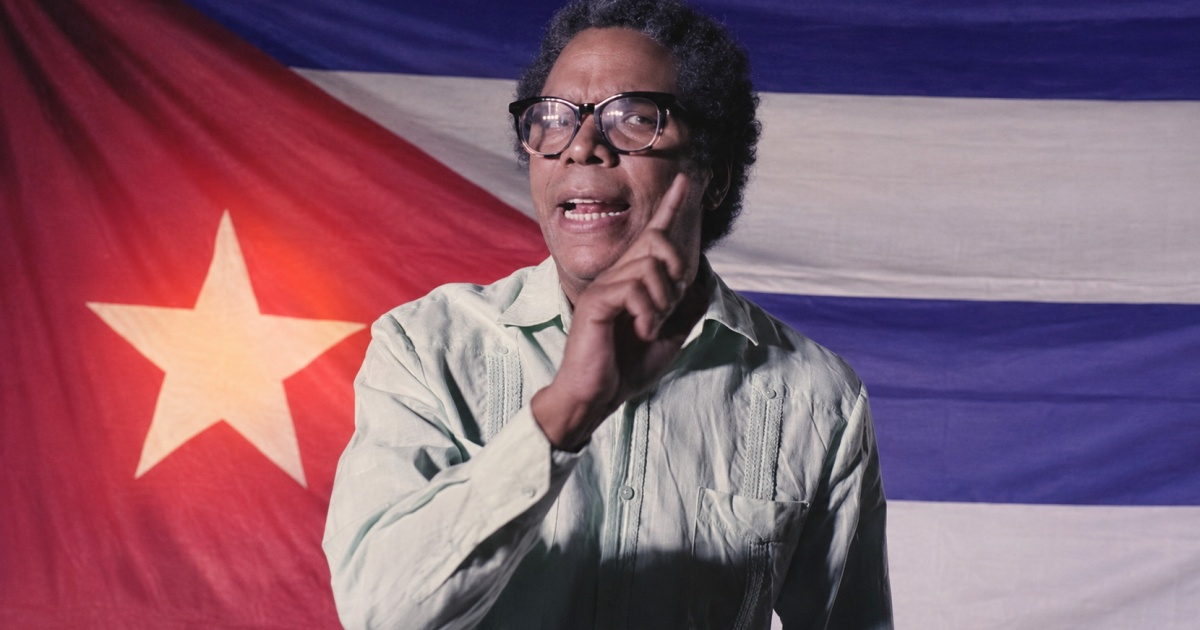
The Cuban singer-songwriter Raúl Torres, known for his public support of Fidel Castro and chavismo, accused the interim president of Venezuela, Delcy Rodríguez, of treason for her rapprochement with Donald Trump's government.
The musician compared his performance to that of Judas and contrasted the agreements between Caracas and Washington with the death of 32 Cubans during the U.S. military operation that culminated in the capture of Nicolás Maduro.
In a lengthy Facebook post titled Thirty-two Reasons to Feel Betrayed, Torres expressed his disillusionment with the new Venezuelan authorities and questioned both the oil agreements and the recent military cooperation with the United States.
“There are betrayals that are cloaked in heroism and there are heroisms that bleed silently”, he wrote at the beginning of his message, in which he portrayed the decisions of the Venezuelan government as a departure from the principles that, in his opinion, were upheld by Hugo Chávez and Nicolás Maduro.
His accusation reached one of its harshest moments when he resorted to a biblical comparison: “Judas' coin was not counted in thirty pieces of silver: it was counted in barrels and in decrees”.
Raúl Torres questions the alleged blackmail of Delcy Rodríguez
The singer-songwriter recounted that for weeks he wanted to believe that Rodríguez and his brother, Jorge Rodríguez, had acted under death threats and in response to a supposed fifteen-minute ultimatum from the United States.
"For weeks I waited, as one waits for a miracle or an explanation for the evidence to confirm the account of the blackmail: that that woman and her brother had been threatened with death, that a fifteen-minute ultimatum had backed them into a corner," he wrote.
Torres stated that he expected to find an explanation that would justify the decisions of Venezuelan leaders following Maduro's capture.
"I wanted to believe that capitulation was the price of survival, not the harvest of a previous sowing," he stated.
However, he explained that the lifting of sanctions, the oil agreements, and the meeting between Rodríguez and Trump in New York ultimately increased his suspicions regarding the true motivations behind the rapprochement between both governments.
The musician rejected the notion that the fear of U.S. retaliation could solely justify the political changes taking place in Venezuela.
"The account of the threats is impeccable as tragic literature, but it fails the test of philosophy," he stated.
In her interpretation, if the Venezuelan leaders had acted solely under coercion, the response should have been different.
Torres believed that what happened afterward—including the changes in ministers and the reforms initiated by the new government—demonstrated a deeper political transformation.
"The excuse of fear does not explain the ideological metamorphosis," he wrote, before delivering another of his most striking phrases: "And there is a vast difference between bending to avoid breaking and kneeling to continue collecting."
The 32 Cubans who died in Caracas, the focus of their accusation
One of Torres' main arguments was the death of 32 Cubans during the U.S. military operation on January 3 that resulted in the capture of Nicolás Maduro.
According to reports from the Government of Havana, the deceased were on missions representing the Revolutionary Armed Forces and the Ministry of the Interior in Venezuela.
For the singer, the subsequent decisions made by the Venezuelan authorities contrast with the stance he attributes to those Cuban military officials.
“The thirty-two Cubans who fell in Caracas that January did not have fifteen minutes to decide. They had a conviction, an internationalism that is not negotiated at New York tables,” he expressed.
Torres mentioned two of the deceased and defended what he considers his commitment to the political project that governed Venezuela before the U.S. intervention.
He wrote about them that "they did not choose strategic prudence; they opted for decorum, dying while defending a project that is now being dismantled from within."
The accusation culminated in a particularly harsh image, in which she used the deaths to challenge the decisions of the government led by Rodríguez:
“The blood of those thirty-two is the mirror where betrayal is seen in its nakedness.”
Attacks the "café left" and claims the "true Chavismo."
The singer-songwriter's criticisms were not limited to Delcy Rodríguez. They also extended to leftist sectors that advocate for a rapprochement with the United States as a pragmatic and necessary decision to ensure the governance of Venezuela.
Torres claimed what he referred to as "the true chavismo, the one that does not rely on stages or per diems" and alluded to the Venezuelan Communist Party among the critical voices regarding the country's political direction.
In his message, he directly attacked those on the left who justify concessions to Washington.
"The 'café left' that now advocates for capitulation with irony about 'others' heroism' shows that the issue is not a lack of epic: it's the replacement of the epic with accounting," he stated.
The musician also rejected the idea that political realism should prevail over the ideological principles that inspired chavismo.
"The philosophy of liberation always knew that imperialism is not fought with political realism, but with the stubbornness of those who prefer dignity over governability," he wrote.
Torres defended those who, according to his interpretation, uphold their convictions despite the shift in relations between Venezuela and the United States.
"There is something profoundly ecumenical in the resistance of true chavistas, and I'm not just talking about Venezuela...: they don't pray to a leader, but to an idea," he stated.
And he added: “That idea doesn’t fit in a position, nor in a lifted sanction, nor in an oil deal.”
The singer-songwriter dedicated another critique to those who believe that agreements with Washington represent a practical solution to the country's difficulties.
"Those who today call themselves pragmatic forget that pragmatism without principles is merely an elegant form of servitude," he stated.
The reception of Pete Hegseth unleashes his outrage
Another episode that caused Torres' rejection was the reception of Delcy Rodríguez by U.S. Secretary Pete Hegseth, held on November 18 at the Miraflores Palace.
During that visit, the United States and Venezuela signed a technical-military cooperation agreement, a significant shift in bilateral relations following the U.S. intervention in January.
Torres questioned why the Venezuelan authorities received the representative of a government that, months earlier, had ordered the operation in which the 32 Cubans died.
The musician described the visit as a "servile reception for the Secretary of War" and expressed his discomfort with the political significance he attributes to the meeting.
"Today, upon witnessing the servile reception given to the war secretary of the threatening and genocidal figures across the way, being confronted with their bloody misdeeds on their own soil... I thought that our thirty-two fallen will never be just a file, but will be a permanent vigil," he wrote.
The military cooperation also led to a personal disillusionment for the singer. He felt that the new agreement was contradictory to the political beliefs he had defended for years.
In that regard, he stated that the approach was "very painful, especially for those of us who saw up close the conviction that ultimately was not genuine."
Torres then returned to the deceased Cubans to express his rejection of the idea that their deaths might be overshadowed by the new agreements between Caracas and Washington.
“I know that blood will never water the garden of those who trade, but rather nourish the roots of those who resist,” he wrote.
The singer-songwriter also stated that the "true chavismo" persists among those who, in his words, reject the new relationship with the United States and continue to identify with Hugo Chávez's project.
"Because betrayal can sign decrees, but it cannot inherit memory," concluded Torres; who ended his publication by reaffirming his loyalty to two of his main political figures: "Long live Chávez" and "Long live Fidel."
Related videos:
Filed under: