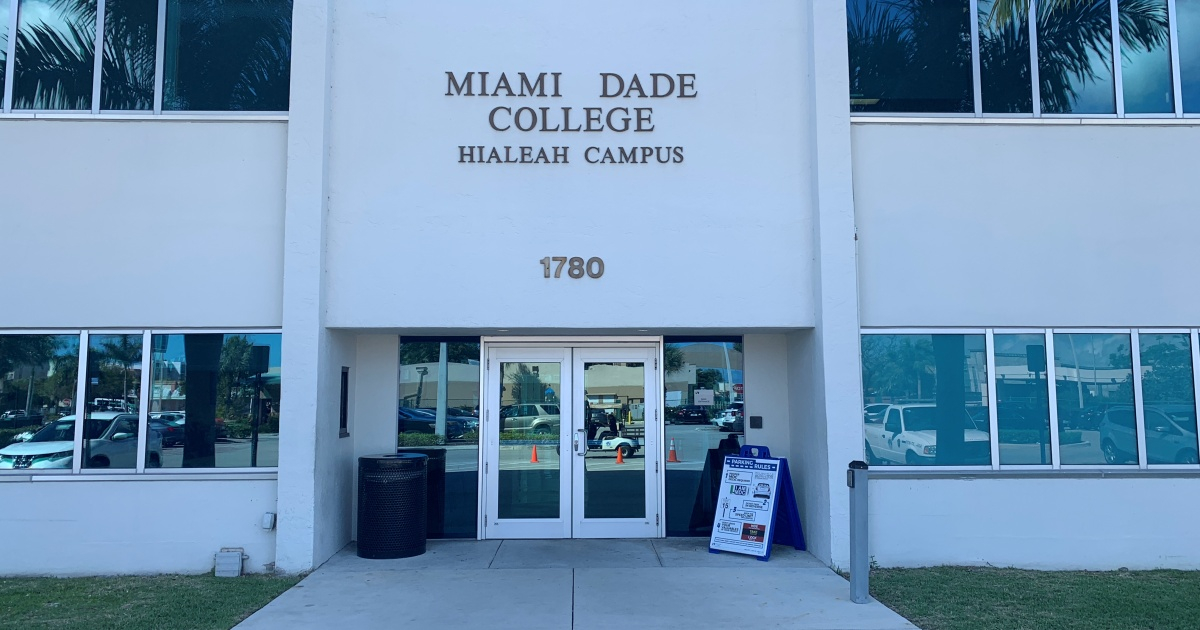
The Miami-Dade County School Board is considering requiring high school students to prove their U.S. citizenship or legal presence in the United States to access college courses through the dual enrollment program, known as dual enrollment.
The proposal was discussed on Wednesday, November 18, 2026, but it has not yet been approved.
According to WLRN, there was no vote, and the matter will be passed to a committee, which will decide whether to include it in a future board meeting for formal consideration.
What is dual enrollment and why does it matter?
Dual enrollment allows high school students to take college courses and earn credits towards graduation and further higher education.
In Miami Dade College (MDC), it is available for eligible students in grades 6 to 12.
The program is particularly valuable for low-income families: eligible students from public schools do not pay tuition or for academic materials.
Among the requirements of MDC are a minimum GPA of 3.0 and demonstrating readiness for college-level studies.
Why is this change being proposed?
The initiative aims to align district practices with the Florida Rule 6A-10.0240, in effect since August 5, 2026, which requires public colleges to verify the citizenship or legal presence of their students.
This verification also extends to those participating in dual enrollment programs.
Another state regulation will restrict the admission of new students without legal status to certain public universities starting in the 2027-2028 academic year, differing from the colleges.
If the School Board approves the change, it would affect access to these university courses, not the right of young people to attend regular public secondary classes.
Who could it affect?
U.S. citizens, permanent residents, and other students who can prove a legal immigration status may meet the requirement, provided they also fulfill the academic conditions.
Relevant documents may include the permanent resident card (I-551) and certain immigration records, such as the I-94.
The greatest challenges may arise among young Cubans with I-220A, individuals whose humanitarian parole has expired or been revoked, and asylum seekers with pending cases who do not have other accepted documents to validate their legal presence.
These groups, however, should not be automatically considered excluded.
The possibility of enrolling would depend on the individual situation, the available documents, and the criteria applied by the educational institution.
Reactions and recommendations for families
During the meeting, board member Luisa Santos, who arrived from Colombia at the age of eight and was undocumented, opposed the proposal. She recalled that she also benefited from the dual enrollment program during her school years.
"I was eight years old. It wasn't my choice. I was here excited to contribute, to learn, and our schools gave me everything," Santos stated.
Daniella Pierre, president of the NAACP of Miami-Dade, also defended access to the program. "Dual enrollment is more than just earning college credits. It is a pathway to college readiness, affordability, and expedited degree completion," she remarked.
While the proposal is still being processed, Cuban families can consult with school counselors about the current requirements and review their children's immigration documents.
In situations such as an I-220A, expired parole, or pending asylum, it is advisable to seek specialized legal advice before beginning the enrollment process.
Esta propuesta podría tener consecuencias directas para jóvenes cubanos con I-220A u otros estatus migratorios inciertos. Sigue de cerca todos los cambios en las políticas que afectan a la comunidad en nuestra sección de
Related videos:
Filed under: