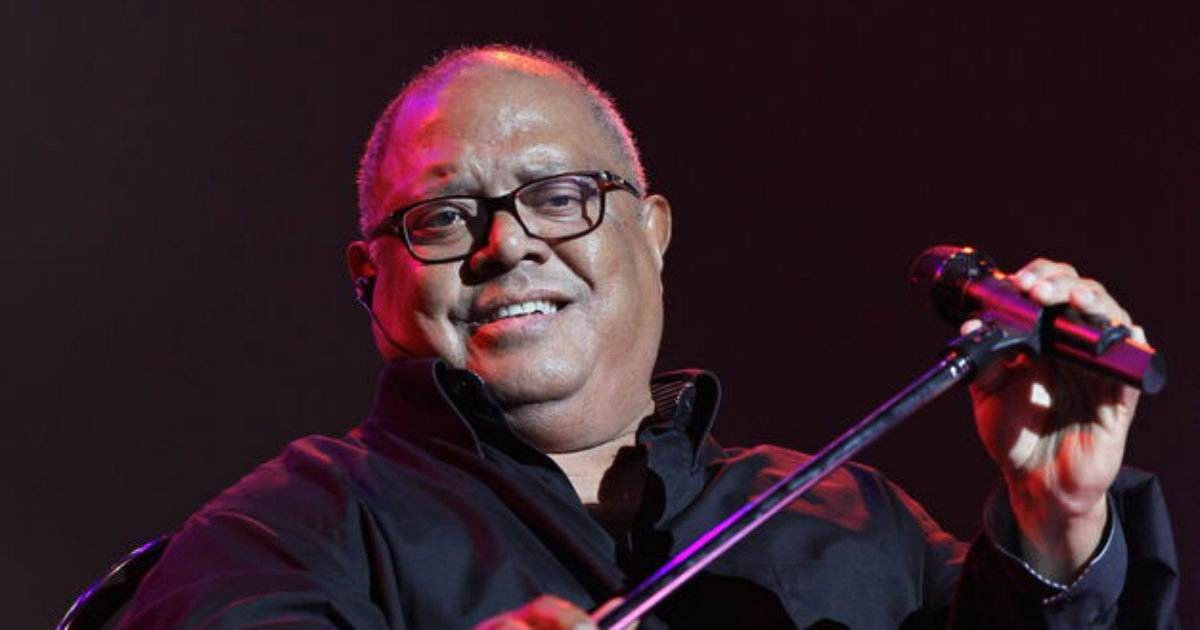
The documentary "To Live: The Relentless Time of Pablo Milanés", directed by Fabien Pisani, son of the legendary Cuban singer-songwriter, arrives in commercial theaters in Spain on Friday, November 27, four years after the death of its protagonist and with a paradox that shadows it: the Cuban regime has not allowed its official release on the Island.
The film, shot over the course of 15 years, combines family footage, material from Cuban television, and the Cuban Institute of Cinema (ICAIC), along with testimonials from figures such as Joaquín Sabina, Ana Belén, Joan Manuel Serrat, Chico Buarque, and Harry Belafonte.
The film explores the last days of Milanés (1943-2022), who died in Madrid after a long illness, far from the Cuba he loved so much and that disappointed him greatly.
Pisani, one of the nine children of the artist, explained to the agency EFE that his father initially joined the project "out of obligation," but after the first session, he became enthusiastic upon realizing it wouldn’t be just a simple tribute, but an opportunity to discuss an entire generation of artists who are essential to the history of Latin America.
The documentary has just won the audience award for best international feature film at the In-Edit Festival in Barcelona, where screenings recorded over 85% attendance.
Before arriving in Spanish theaters, the film traveled through festivals in the United States, Canada, the United Kingdom, and several Latin American countries. At the Havana Film Festival in New York, it won the award for Best Documentary.
However, in Cuba, the story is different. The 46th International Festival of New Latin American Cinema in Havana rejected the film without explanation, even though the same festival did schedule another documentary by Pisani. The only screening on the Island took place at the Norwegian Embassy in Havana, in an alternative cultural space, with around 200 attendees.
Pisani does not hesitate to point out who is responsible. He acknowledges that his father remains a "difficult figure" for the regime and laments the "inability" and "parsimony" of the Cuban government to embrace the legacy of someone so beloved by his people, whose disillusionment with the revolution, according to the filmmaker, "practically everyone in Cuba shares."
The Cuban actor Luis Alberto García questioned the festival's exclusion and argued that the decision seemed to be based on ideological reasons, as the film portrays Milanés as an exceptional patriot, contradicting the official characterization of the songwriter as a "traitor" due to his criticisms of the system.
The documentary addresses episodes that challenge the official narrative: Milanés's experience in the UMAP—forced labor camps created in 1965—racism, censorship against the Pablo Milanés Foundation, and the conflicts surrounding his last concert in Havana.
For Pisani, the editing process was also a personal mourning. After the death of his father in November 2022, he spent two years editing the material: "Having to edit the film, confined with him in the room for two years, immersed in his music, his voice, and his presence, was difficult until I realized it was a privilege."
The filmmaker assures that every time he travels to Cuba, he looks for a way to screen the film and receives direct gratitude from the people. "Being here with the film now and sharing it with the audience is very important to me. He left me that gift," he concludes.
Related videos:
Filed under: