
Related videos:
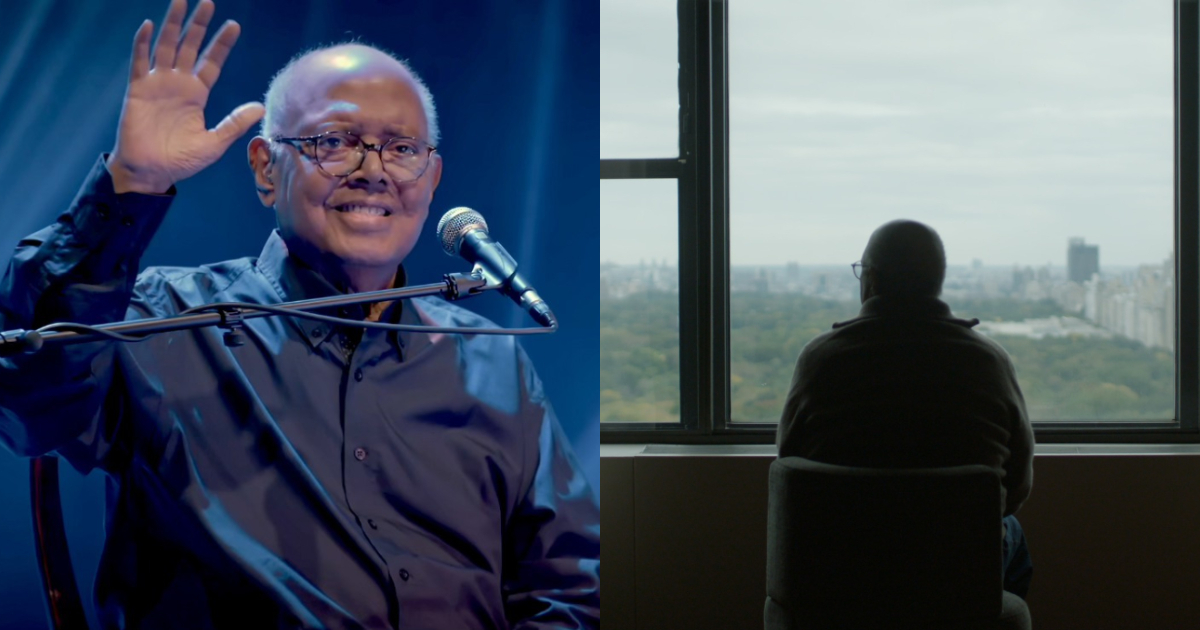
The director Fabien Pisani reported that the International Festival of New Latin American Cinema, scheduled for December, rejected his documentary "Para Vivir," about Pablo Milanés (1943-2022), despite its international success, an action he attributes to the ongoing cultural censorship in Cuba.
Pisani revealed through his profile on Facebook that his joy over the selection of "En la Caliente. Tales of a Reguetón Warrior" faded when the committee of the Havana Festival ignored his other film, "Para Vivir," for days before finally announcing that it would not be included.
He pointed out that the film has participated in festivals such as Sheffield, Mar del Plata, Morelia, and DOC NYC, which, in his opinion, rules out a purely curatorial criterion.
The filmmaker stated that he hoped the documentary would allow the Cuban audience to reconnect with the figure of Milanés, whom he considers his adoptive father since the age of two.
"Did no one dare to show Pablo Milanés in a cinema in Havana?" he questioned, suggesting the intervention of cultural bureaucracy.
Pisani recalled the long tradition of censorship against independent cinema in Cuba and the attempts by the authorities to obstruct the musician's last concert on the island, months before his passing.
He regretted that the festival squandered the opportunity to symbolically repair grievances against one of the country's most beloved figures.
Despite the rejection, he said he will continue filming and sharing uncomfortable stories, convinced that as long as artistic creation exists, there will be a future, even if that future —for now— cannot be projected in the cinemas of Havana.
Born in Havana, Pisani has been driving cultural projects as a promoter, producer, and director in music, film, and television for nearly 20 years.
He is the founder of the Musicabana Festival and a key figure in the development of the creative economy in Cuba. His notable works include “7 Days in Havana” (2012).
With this new exclusion, Cuban cinema adds another chapter to its long history of institutional censorship.
In mid-October, the Cuban director and screenwriter Enrique “Kiki” Álvarez reported that the Cuban Institute of Art and Cinematographic Industries (Icaic) ended his employment relationship and that of his colleague Esteban Insausti without prior notification, also forging a "voluntary resignation" that never existed.
In a lengthy post on Facebook, Álvarez -La Ola (1995); Jirafas (2014); Venecia (2016)- revealed that the mentioned institution terminated his contract and Insausti's as of August 1, 2025, without informing them or justifying the decision.
At the end of 2024, the Cuban Filmmakers Assembly (ACC) issued a strong call to defend creative freedom and a warning about the denunciation of censorship affecting Cuban cinema.
"Our culture cannot continue to be led by the same repressors and censors with long-standing impunity. The damage accumulated over their years of practice is evident," stated the ACC, directly pointing to the authorities responsible for the deterioration of the film infrastructure on the island.
The organization reported a new act of institutional violence directed against the young filmmaker Orlando Mora, whose film “Matar a un Hombre” was censored in the last edition of the Havana Film Festival.
Similarly, in early January, the Provincial Court of Havana dismissed the lawsuit filed by filmmaker Juan Pin Vilar against the Canal Educativo, which showed his documentary "La Habana de Fito" without his consent.
In April, the 26th edition of the Buenos Aires International Independent Film Festival (BAFICI) awarded the Special Jury Prize in the Avant-garde and Genre competition to the documentary Crónicas del Absurdo (2024), by Cuban filmmaker Miguel Coyula.
Filmed with hidden recordings, the 77-minute audiovisual project reveals the reality of independent artists in Cuba, subjected to state control and harassment.
Furthermore, the tribute that the theater group El Público, led by director Carlos Díaz, was preparing on October 19 alongside the Fábrica de Arte Cubano (FAC) to commemorate the centenary of the birth of Celia Cruz (1925-2003) was suspended at the last minute, by decision of the National Center for Popular Music.
Filed under: