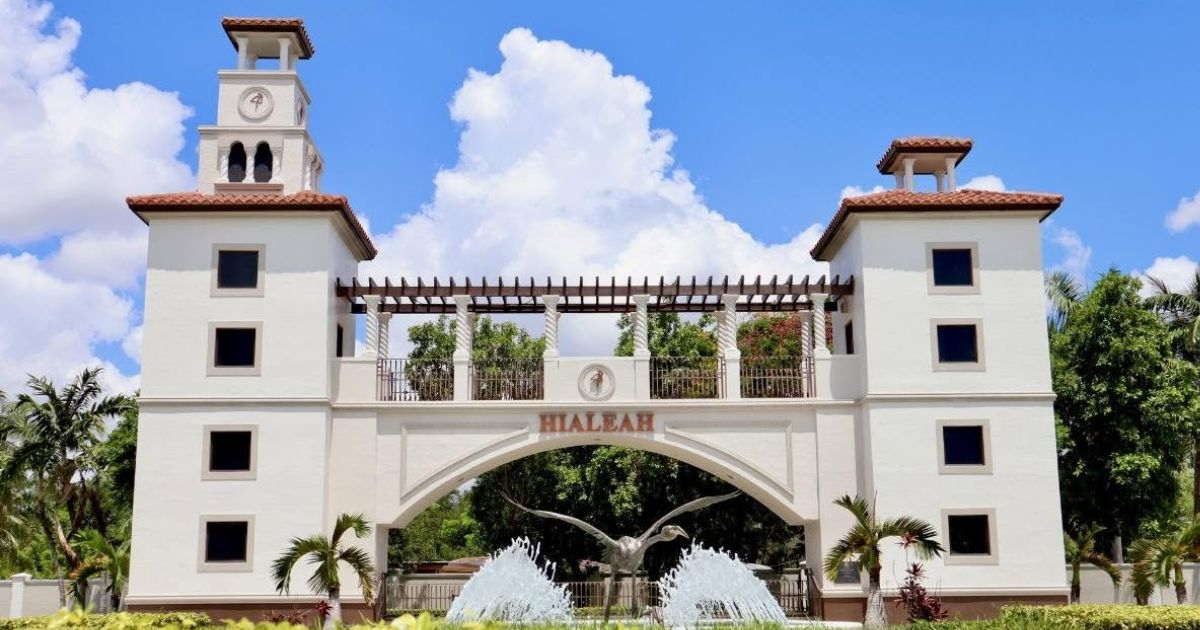
Hialeah, known as the most Cuban city in Florida, faces a difficult paradox: after nearly 79% of its voters supported a reform to reduce property taxes, municipal authorities are considering cutting public employee salaries by up to 20%, freezing hires, and eliminating jobs to offset the loss of revenue.
According to a report published on Sunday by Florida Politics, Hialeah is among the municipalities in Miami-Dade that are considering austerity measures following the approval of Amendment 3, a constitutional amendment that expands property tax exemptions for primary residences.
The authorities in Hialeah estimate that the reform could result in losses of up to 17 million dollars in the 2028 fiscal year and 28 million in 2029, a significant reduction for a city operating with an approximate budget of 514 million dollars.
Among the options discussed by the municipal government is a 10% salary reduction during the first year and a 20% reduction in the second year for non-unionized workers, in addition to freezing new hires, eliminating vacant positions, and reducing expenses in various departments.
The proposals began to be analyzed during an emergency meeting convened after the elections on November 3, according to information from the Miami Herald reported by Florida Politics.
The cuts have not yet been approved. A spokesperson for Mayor Bryan Calvo clarified that discussions are ongoing, but there is no definitive decision regarding salary reductions or the elimination of positions.
The measures under consideration would exclude employees covered by union agreements and the departments of Construction and Public Works, deemed self-sufficient. However, they could impact managers and civilian workers in the Police and Fire departments.
The situation is especially complicated for Mayor Calvo, who recently signed what he described as historic labor agreements with the three municipal unions.
These include accumulated salary increases of approximately 25% to 30% for police officers over three years, 17% for firefighters over two years, and 2% for workers represented by the American Federation of State, County, and Municipal Employees.
Union commitments limit the scope for implementing general staff cuts, while the municipal administration strives to maintain essential services without the same tax revenues.
Amendment 3, approved in Florida on November 3 with nearly 62% of the votes, expands the tax exemption known as homestead.
Starting in January 2027, the exempt assessed value for non-school taxes will increase to $150,000, while in 2028 it will reach $250,000, with subsequent adjustments for inflation.
In Hialeah, where there are approximately 61,000 residential properties, about 32,000 currently have the primary residence exemption.
According to municipal projections, the proportion of these properties that do not pay municipal property taxes is expected to increase from the current 9% to 43% in 2027 and nearly 71% in 2028.
For many homeowners, including Cubans residing in Hialeah, the reform represents a tax relief. However, the reduced revenue forces local governments to reconsider how they will fund their payrolls and public services.
The impact is not limited to Hialeah. In Miami Gardens, authorities have already cut more than 90% of the budget allocated for special events and eliminated around a dozen activities, including municipal funding for the Jazz in the Gardens festival. They have also frozen hiring for vacant positions and reduced discretionary spending.
In Miami Shores, each department was instructed to reduce its operating expenses by 10%, and the creation of new positions funded by the general fund was suspended.
The municipal workforce decreased from 155 to 148 employees, impacting services such as maintenance, sports activities, and facility management.
Miami Beach faces a different situation. There, Commissioner David Suarez proposed reducing benefits and expenses for the elected positions, including assistants, vehicle allowances, phone allowances, and certain security services, before making cuts to municipal departments.
The consequences could also affect the county government. Miami-Dade estimates losses of approximately $385.5 million in the first year of implementing the reform and $696.7 million in the following year.
Among the services that could face budgetary pressures are libraries, public transportation, parks, and social programs, although there is still no definitive plan for cuts.
The drop in revenue has also raised concerns about the possibility that municipalities and counties may try to offset it through new local fees or charges.
Governor Ron DeSantis recently proposed a taxpayer bill of rights to prevent local governments from replacing eliminated taxes with new rates and fees, although this initiative could also limit funding alternatives for municipalities.
Related videos:
Filed under: