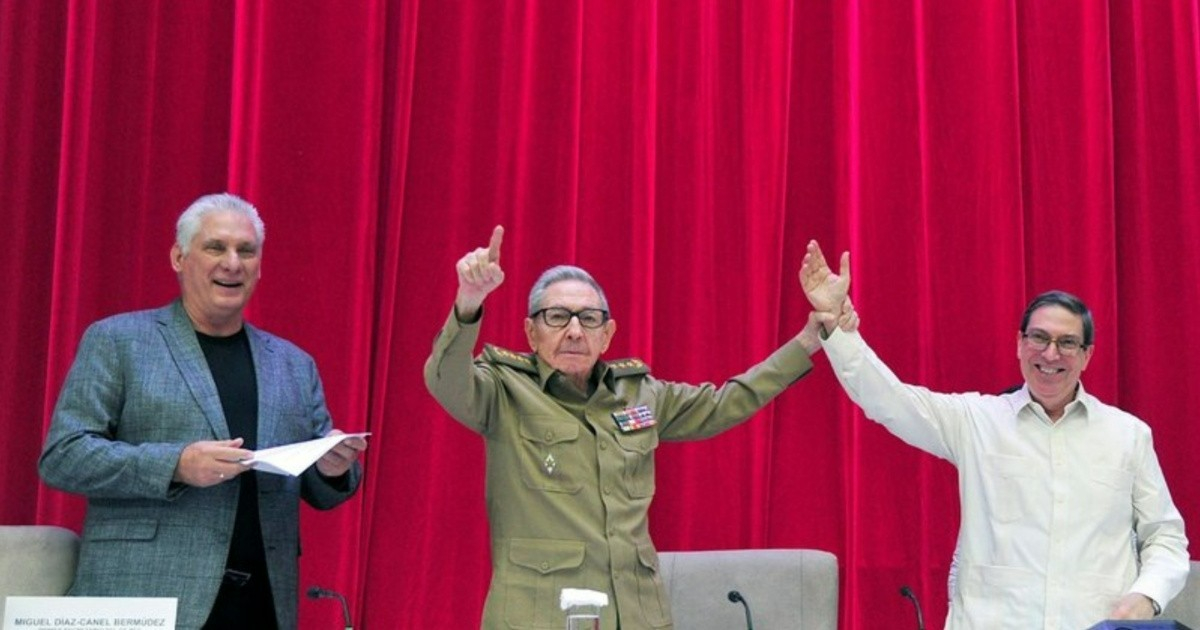
The Chilean Chamber of Deputies approved this Tuesday Resolution 125, which requests the government of President José Antonio Kast to support the establishment of an international tribunal to judge the crimes against humanity committed by the Cuban regime, according to El Mundo CR.
The vote was 88 votes in favor, 30 against, and 14 abstentions, a broad parliamentary support that reflects the growing consensus in the Chilean legislature regarding the need for accountability for human rights violations on the island.
"Historic breakthrough!", celebrated the Mexican jurist René F. Bolio, president of Justicia Cuba, on X. "We are ready for justice to come to Cuba!", he added."
The resolution calls on the Ministry of Foreign Affairs to coordinate efforts with other democratic states and international organizations to promote justice, reparations for victims, and guarantees of non-repetition.
The initiative was led by the Republican representative Chiara Barchiesi Chávez, with support from legislators of the Republican Party, National Renewal, and UDI, among other political forces. The project was introduced to the Chamber on May 13, 2026, with nine additional co-signers.
The text is based on the work of the International Commission for Justice in Cuba, an organization that has documented executions, torture, political imprisonments, religious persecution, and internal deportations for more than nine years. The commission has identified 43 members of the regime as suspected perpetrators of these crimes.
"We have identified the crimes and their alleged perpetrators. We have the testimonies, the files, and the names. What we have lacked is an international court to judge them," Bolio stated.
The jurist also emphasized that the organization is willing to collaborate with the Chilean Government by providing its documentary resources and the expertise of its specialists for the legal design of the instance.
The proposal to create an ad hoc tribunal —similar to those established for Nuremberg, the former Yugoslavia, or Rwanda— was formally presented to the Organization of American States in 2018. On that occasion, Bolio submitted four files to the OAS that included the sinking of the tugboat 13 de Marzo in 1994 and the shooting down of the planes from Hermanos al Rescate in 1996.
The resolution approved this Tuesday is political and declarative in nature: it does not itself create a tribunal nor legally obligate third States, but it opens a specific diplomatic avenue.
The Florida Attorney General warned last October that new charges could be brought in the investigation against Raúl Castro for his alleged involvement in the shooting down of two planes from Hermanos al Rescate, which took place on February 24, 1996, over international waters, resulting in the deaths of four men. Since March, a criminal investigation related to this event has been reopened in the United States.
The European Parliament approved a resolution in June 2026 calling for sanctions against Miguel Díaz-Canel and the suspension of the Political Dialogue and Cooperation Agreement between the European Union and Cuba, with 283 votes in favor. In September, the same chamber demanded the release of Félix Navarro and Saylí Navarro with 374 votes.
Justicia Cuba emphasized that, in the face of a potential democratic transition on the island, it is essential to prepare the legal instruments that ensure national reconciliation is not confused with impunity.
Related videos:
Filed under: