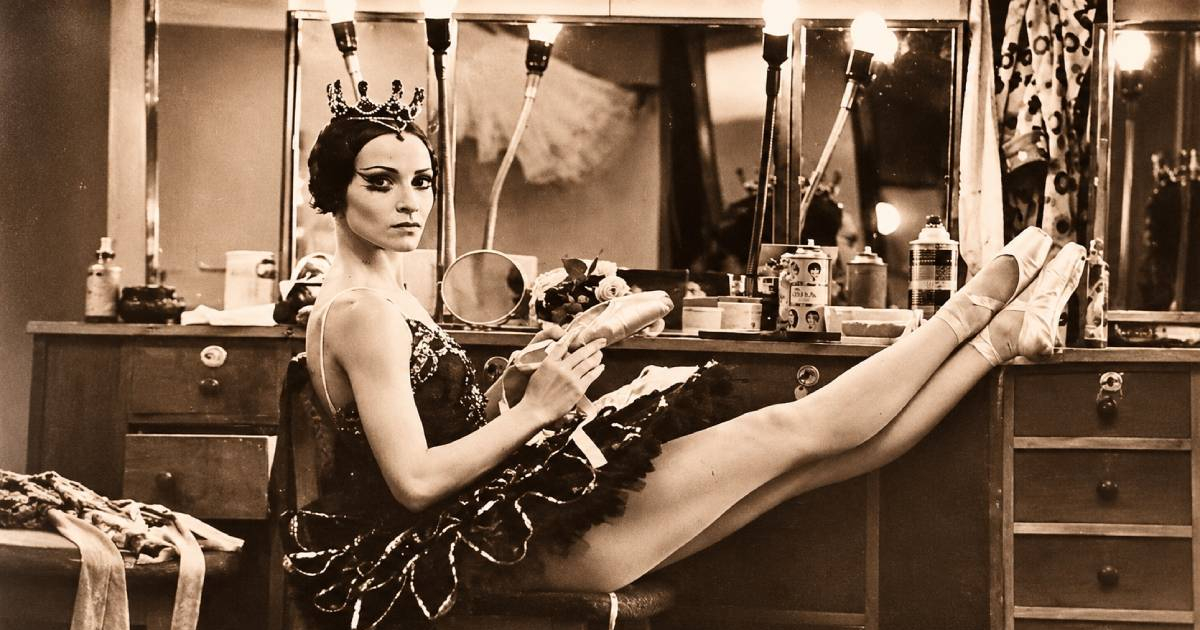
Rosario Suárez «Charín», one of the great figures of Cuban ballet in the 20th century, arrives this Tuesday in Murcia for the premiere in Spain of the documentary about her life, a career marked by both international acclaim and tensions with the Cuban dictatorship that forced her into exile.
The Film Archive of the Region of Murcia "Francisco Rabal" will host a screening at 7:00 PM of The Queen of Thursdays (2016), a documentary by Havana filmmaker Orlando Rojas that reconstructs Charín's artistic and personal history as part of the "Screen in Dance" series.
The dancer will attend the session and will engage in conversation with the audience afterward. The event's presentation will be handled by the Spanish filmmaker Arantxa Aguirre.
Charín joined the National Ballet of Cuba (BNC) in 1968, and two years later, at just 17 years old, she won the Gold Medal in the youth category at the Varna International Ballet Competition (Bulgaria), one of the most prestigious competitions in the world.
In her nearly three-decade career connected to the BNC, Suárez performed in over 50 countries and was the principal dancer for 15 years, portraying roles such as Giselle and Odette-Odile in Swan Lake.
However, despite that record, her performances were primarily limited to the Thursday shows of the company, which is where the nickname that gives the documentary its title originated: “The Queen of Thursdays”.
Rojas takes that revealing detail to construct a portrait that goes beyond artistic biography and examines the relationships between creation, power, identity, and freedom within the Cuban system.
The tensions with the leadership of Alicia Alonso led Charín to leave the BNC in 1986, at the peak of her career, to co-found the Ballet Teatro de La Habana with Caridad Martínez and Mirta García, although the company dissolved after about five years.
Suárez returned to the National Ballet of Cuba, and the definitive break with the institution came in September 1994, when, after a performance of Giselle at the Teatro Albéniz in Madrid, he requested political asylum in Spain, a request that was later denied.
In August 1995, at the age of 42, she arrived in Miami, where she founded the Ballet Cubano de Miami, renamed Ballet Rosario Suárez in 1997, although the company faced serious funding difficulties.
The film premiered worldwide in March 2016 during the 33rd edition of the Miami International Film Festival, where it won the Knight Award for Best Documentary and the Audience Award, and later screened at festivals in Austin and New York. The project had already received two awards at the Guadalajara International Film Festival in 2009, while it was still in production.
The premiere in Murcia also has a symbolic connection: Orlando Rojas directed in 2001 The Nights of Constantinople, a film that featured Francisco (Paco) Rabal, in whose honor the Filmoteca was named, and his grandson Liberto Rabal.
Related videos:
Filed under: