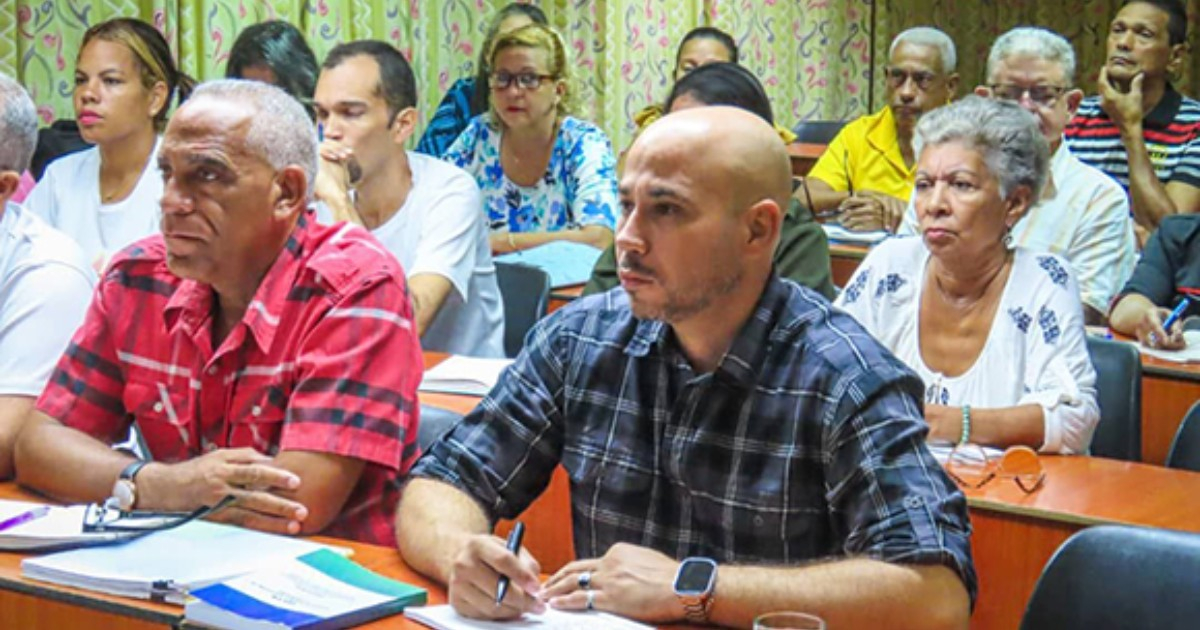
The Cuban regime began a nationwide tour in Granma this Tuesday, aimed at preparing local authorities to implement the Code of Childhood, Adolescences and Youth, as reported by the state media Cubadebate, without the official note detailing budgets, material resources, or specific compliance indicators.
The tour was led by the Deputy Minister of Education, Marlen Triana Mederos, along with the jurist and UNICEF consultant Luis Alberto Hierro Sánchez, with the participation of representatives from the Ministry of Justice, the Ministry of Labor and Social Security, the Ministry of Culture, the Prosecutor's Office, the Ministry of Education itself, and the Union of Young Communists (UJC).
The stated objective is for territorial institutions to take on the new responsibilities of the Ministry of Education concerning comprehensive rights protection and youth care, "in accordance with what is stipulated in the legislative framework," according to the official text.
The Law No. 178 was approved by the National Assembly on July 18, 2025, and came into effect on January 28, 2026, replacing a code from 1978. With its 214 articles, it regulates the rights of individuals aged zero to 35 years and acknowledges principles such as the best interests of the child, progressive autonomy, and non-discrimination.
It also establishes that anyone —including minors themselves— can report violations to the Prosecutor's Office, the Ministry of the Interior, the Ombudsman, or the courts.
However, the implementation tour takes place in the midst of a structural crisis that fundamentally contradicts the guarantees outlined in the legal text.
According to data from UNICEF cited on November 20, 9% of Cuban children aged six to 23 months experienced severe food insecurity. The World Food Programme noted that 48.5% of children aged six to 11 were not receiving meals or snacks at school.
The government itself acknowledged that around 200,000 minors were in situations of vulnerability or risk, and the Cuban Observatory of Conflicts recorded 71 reports of child labor and begging during 2025.
The educational landscape is no less serious. The 2026-2027 school year started on September 1 with 24,000 vacant teaching positions —12.5% of the total—and more than 380,000 students without an assigned lead teacher. The Minister of Education, Naima Ariatne Trujillo Barreto, acknowledged that the start of the school year would occur under "very difficult" conditions due to a lack of electricity, fuel, uniforms, materials, teachers, and food.
The images that circulated recently among independent media illustrate this gap: a six-year-old boy was collecting cans barefoot to help his grandmother, and two girls were selling cassava on the street to contribute to the family's livelihood.
In Matanzas, a teacher conducted classes at the entrance of her home because the only school in the village of Sumidero was in a dilapidated and unsafe condition.
The UJC, which has explicit responsibilities in the new Code for the protection of youth rights, commemorated the World Children's Day on November 20 with an institutional message that did not mention the food crisis, child labor, or the deteriorating education that Cuban minors are experiencing. The tour began just four days after that episode.
The Code recognizes formal mechanisms for reporting, but no official announcement regarding the tour explains what will happen when a family seeks accountability from the same state institutions that today cannot guarantee electricity in classrooms or food in school cafeterias.
Related videos:
Filed under: