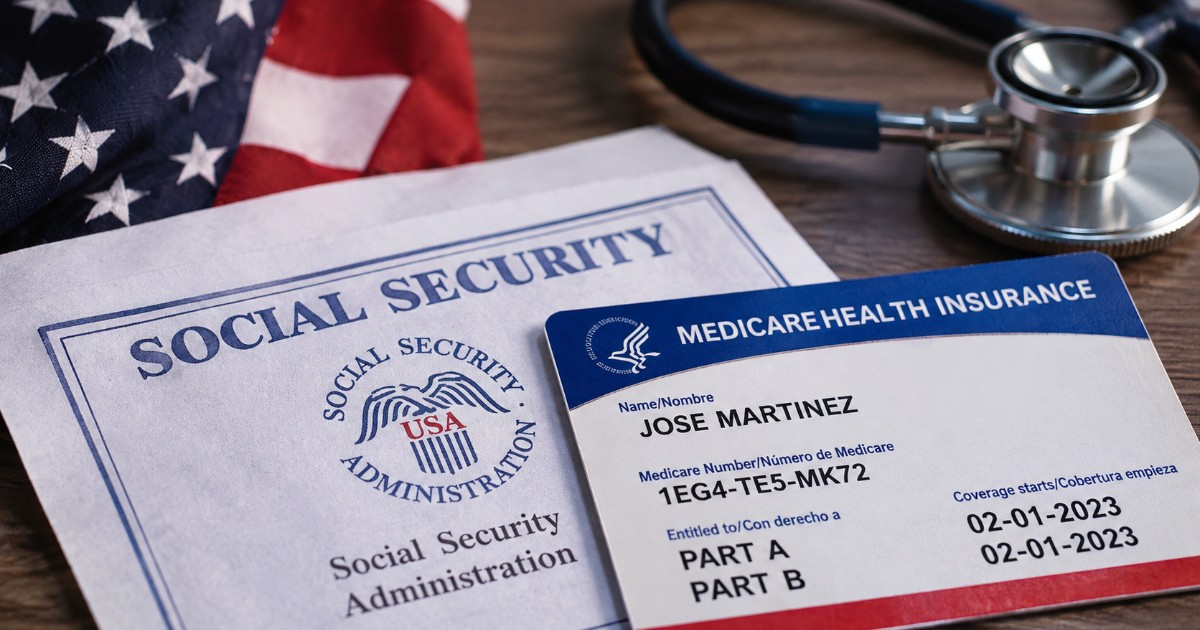
The Social Security Administration (SSA) began sending out notification letters this month to approximately 300,000 legal immigrants enrolled in Medicare, informing them that their coverage could end on February 1, 2027 if they do not confirm that they belong to an eligible immigration category under the new federal law.
The measure originates from H.R. 1 —the so-called "One Big Beautiful Bill Act"—, enacted on July 4, 2025, which restricts Medicare to four groups: U.S. citizens or nationals, legal permanent residents (green card holders), certain Cuban-Haitian entrants, and migrants under the Compacts of Free Association.
Refugees, asylum seekers without permanent residence, beneficiaries of Temporary Protected Status (TPS), humanitarian parolees, and victims of trafficking are excluded unless they also fall into a protected category.
Esta situación forma parte de los profundos cambios que afectan a los inmigrantes en Estados Unidos. Sigue de cerca todas las novedades en nuestra sección de para saber cómo pueden impactarte a ti o a tu familia.
The affected individuals have contributed more than $6 billion to Medicare, according to data cited by Latin Times, which has intensified criticism from advocacy organizations.
"This breaks the promise of Medicare that if you pay your taxes, you can rely on the program in retirement and disability," stated Tiffany Huyenh-Cho, director of California for Justice in Aging.
Which Cubans are protected and who must take action?
For the Cuban community, the situation demands immediate attention but has significant nuances.
Cubans with a green card (permanent residency) retain their eligibility without needing to take any additional action, just like naturalized citizens.
Those who qualify as "Cuban/Haitian entrants" under section 501(e) of the Refugee Education Assistance Act of 1980 are also protected: Cubans admitted under parole with that specific designation, Cubans with pending asylum without a final executable deportation order, and Cubans in removal proceedings without a final order.
However, the real risk for many older Cubans in Miami is different: they may appear in SSA records with an outdated status—such as asylum or parole—even though they have already adjusted to permanent residency or citizenship.
If those individuals receive the notification letter, they must respond with updated documentation before the indicated deadline, or they could lose coverage due to a simple clerical error, not because they are ineligible.
Cubans with Form I-220A (order of release under ICE supervision) do not have an immigration status that protects them on its own under the new rules.
Deadlines, documents, and where to request free help
According to the final rule published by the Centers for Medicare and Medicaid Services (CMS), those who receive the letter have 60 days from the receipt of the decision letter to appeal using the SSA-561-U2 form or the SSA online appeals portal.
Documents proving eligible immigration status can be uploaded through the "my Social Security" account at ssa.gov/myaccount by selecting the "Upload Documents" option, or they can be submitted in person at any local SSA office.
The SSA clarifies that these changes do not affect Social Security payments —retirement, SSDI, or SSI— which continue to follow their own eligibility rules.
For free guidance, beneficiaries can call the SSA at 1-844-507-7131 (within the U.S.) or at 1-855-522-6939 (from abroad). In Florida, the SHINE program — the state equivalent of the federal SHIP program — offers free Medicare counseling at 1-800-963-5337.
Risk coverage includes Medicare Advantage and Part D prescription drug plans, not just original Medicare.
Although the SSA notified 300,000 people —a figure significantly higher than the initial projection of 100,000 considered by the Congressional Budget Office in 2025— the CMS actuary estimates that only about 32,000 people will actually lose coverage, as most of those notified will be able to prove their eligibility if they respond in a timely manner.
Related videos:
Filed under: