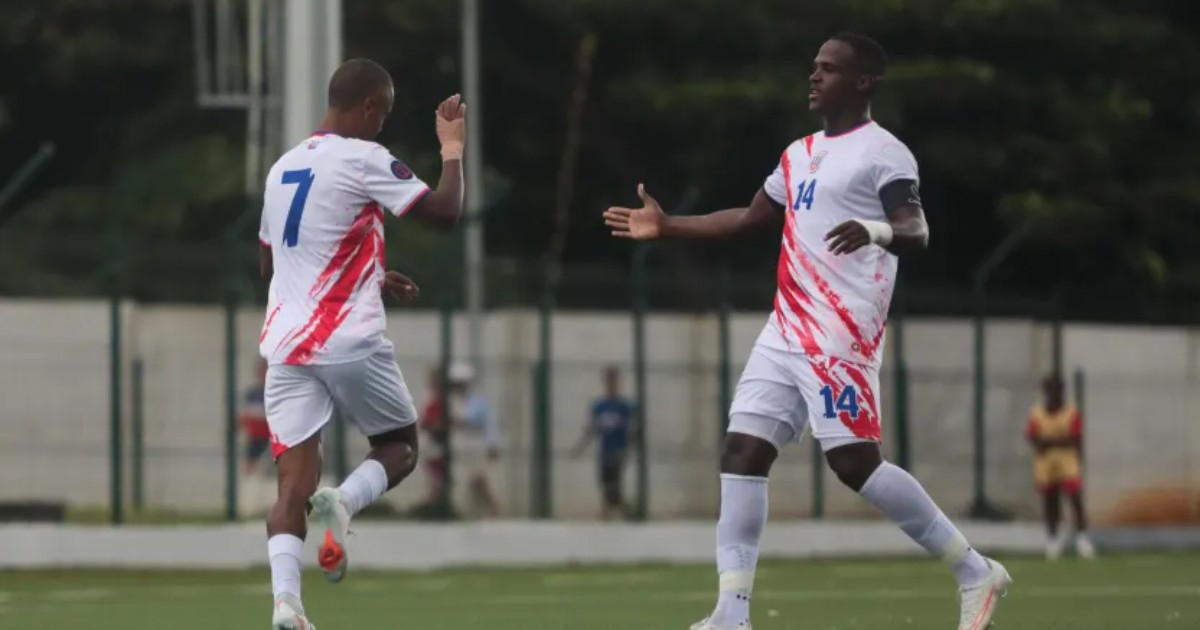
The Cuban team concluded its participation in the FIFA U-17 World Cup Qatar 2026 with a resounding defeat against Croatia, losing 7-0 on Thursday during the third and final match of Group F held at Aspire Zone Pitch 8 in Doha.
The result left Cuba with not a single point in the group stage, with a record of three losses, three goals scored, and 21 goals conceded, sealing their elimination from the tournament.
Croatia dominated the match from start to finish. By halftime, the score was already 4-0, making any Cuban comeback unfeasible. Toni Ruso was the standout player of the game with a hat trick: he scored a penalty in the 18th minute, added another in the 20th, and completed his performance in the 76th. Izak Ježić contributed two goals, scoring in the 37th and 57th minutes, while Vito Jakovljević netted the fourth goal in the 44th minute, and Patrik Lačić secured the seventh goal in the 82nd.
With this victory, Croatia finished top of Group F with 7 points, 12 goals scored and only one against, a goal difference of +11 that establishes it as one of the strongest teams in the tournament. Senegal also advanced to the Round of 32 from the same group with four points, after drawing 1-1 with Tajikistan in the simultaneous match.
The journey of Cuba in Qatar 2026 was tough from the start. On the first day, November 20, they lost 3-5 to Tajikistan in a match where Yojanry González scored twice and Yankarlos Iglesias added the third. Three days later, Senegal delivered a 9-0 thrashing that practically closed any chance of qualification. The loss to Croatia confirmed their elimination with the worst possible record.
However, Cuba's presence in this tournament holds historical significance that goes beyond the results. Qualification for Qatar 2026 was a milestone for Cuban football: it marked the return of the national team to a U-17 World Cup after 35 years of absence, and it is also only the third time the country has participated in the history of the competition, following Scotland 1989 and Italy 1991.
The classification was achieved last February, under the technical direction of Sandro Sevillano, when Cuba finished unbeaten and at the top of Group F of the Concacaf qualifiers held in Guatemala City, with victories against Curacao and El Salvador and a draw against Belize.
The gap between Cuba's level and that of its rivals in Qatar was starkly exposed throughout the three matches. The Caribbean team scored only three goals and conceded 21, a disparity that reflects the distance still separating Cuban football from the world’s youth powerhouses. However, simply returning to a stage of this magnitude marks a step forward for a generation that had not experienced such a level of international competition.
Sevillano had confessed after the qualification: "What I feel is inexplicable," words that now contrast with the harshness of a group stage that left no room for the Cuban team.
Related videos:
Filed under: