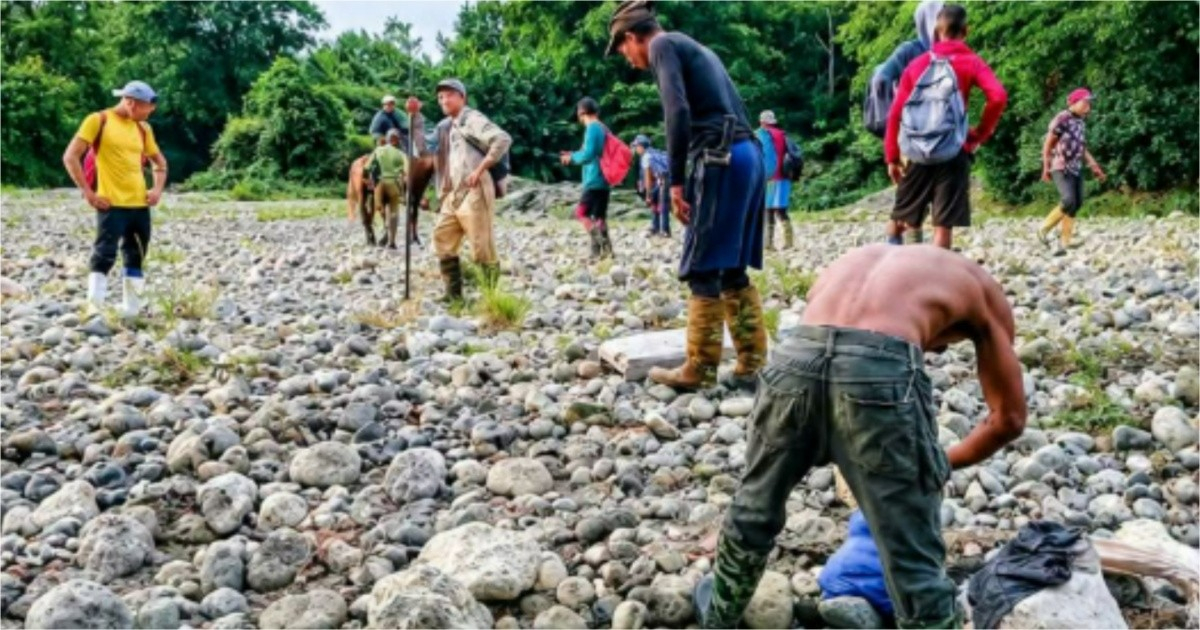
Forces of the Ministry of the Interior (MININT), along with environmental authorities, detained at least 16 people during an operation against illegal gold mining in protected areas of the municipality of Yateras, in the province of Guantánamo.
According to the official page "Guantánamo y su Verdad," which shared the information on Facebook, the detainees were engaged in searching for the mineral in forested areas and riverbeds within protected territories. During the operation, several tools and equipment used in the illegal activity were also seized.
The authorities did not disclose the identities of those arrested or their places of residence, although sources close to the case indicate that most are residents of the municipality of Yateras itself.
This operation is the most recent in a series of police actions in the area during 2026. In October, at least 60 people were detained in a similar operation in El Yarey, also in Yateras, mostly young individuals. A month earlier, in September, the authorities dismantled illegal extraction areas in Yateras and Imías, resulting in several arrests.
The phenomenon is directly related to the serious economic crisis that Cuba is facing. In October 2026, a gram of refined gold exceeded 60,000 Cuban pesos on the black market.
The accumulated environmental damage is severe. Between 2014 and 2024, illegal mining destroyed approximately 27.4 hectares of forests and altered 47 kilometers of waterways within the Cuchillas del Toa Biosphere Reserve and the Alejandro de Humboldt National Park, designated a UNESCO World Heritage Site for its exceptional biodiversity.
In 2021, a fire attributed to illegal miners ravaged approximately 1,896 hectares of the park, the largest in its history. In July 2026, another fire affected about 200 hectares in the Ojito de Agua area of Yateras, potentially linked to the same activity.
The judicial response has also escalated. In September 2025, the People's Municipal Court of Yateras sentenced five individuals for illegal gold extraction and soil contamination in Piedra la Vela, by the banks of the Toa River, within the Humboldt Park itself, with sentences ranging from one year and six months to two years and seven months in prison, along with the confiscation of tools and restrictions on applying for a passport.
Cuban legislation provides for sentences of up to seven years in prison for this crime in the province of Guantánamo, although the persistence of the phenomenon demonstrates that the sanctions have not managed to curb the activity, driven by an economic crisis that the regime has been unable to resolve after more than six decades of governance.
Related videos:
Filed under: