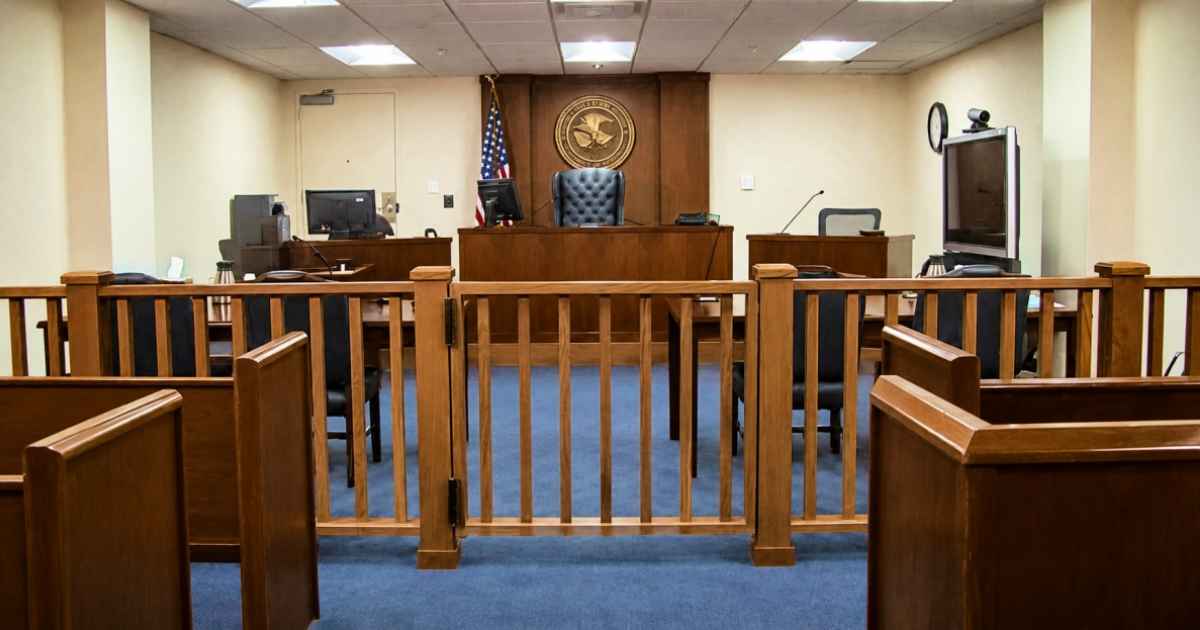
A federal judge from the Western District of Washington declared the detention of Quemel Tome Cubeñas illegal, a Cuban who arrived in the United States as a child with his family fleeing persecution on the island, and ordered his release within 24 hours after concluding that ICE could not prove that his deportation was feasible in the near future.
The ruling, issued on November 24 by Judge Tiffany M. Cartwright in the case Tome Cubenas v. Blanche (No. 2:26-cv-03653-TMC), granted the habeas corpus petition submitted by the Cuban and also established an explicit prohibition: ICE cannot deport him to any country not listed in his original removal order without prior notification and without giving him the opportunity to contest it before an immigration judge.
Tome Cubeñas has a deportation order to Cuba issued in 2015 that has never been carried out because the Cuban regime refused to accept him, a common practice that has left thousands of Cubans in a migratory limbo for years.
ICE arrested him again on September 10, 2026, after serving a prison sentence, and transferred him to the Northwest ICE Processing Center.
There, according to his testimony, the deportation officer identified as Friete Subero informed him that Cuba would not accept him and presented him with two options: Mexico or the Democratic Republic of the Congo.
Faced with the fear of being sent to Africa, the Cuban initially accepted Mexico. Agent Subero denied having mentioned the Congo and maintained that it was Tome Cubeñas himself who suggested that destination because he had relatives there.
Following the evidentiary hearing held on November 19 in Tacoma, Judge Cartwright dismissed the agent's account. "The court found Subero's testimony that Cubeñas had spontaneously offered to be expelled to Mexico not credible," she wrote in her ruling.
And he added: "The court found Cubeñas' explanation credible that he only accepted Mexico after being told that otherwise, he would be sent to the Democratic Republic of the Congo."
Once Tome Cubeñas withdrew his consent to go to Mexico, the parties agreed that the country would not accept him without it, thereby closing off that option.
The judge applied the standard set by the Supreme Court in Zadvydas v. Davis (2001), which prohibits indefinite detention when deportation is not "reasonably foreseeable," and concluded that "there was not a significant likelihood that Cubeñas would be removed to Cuba, Mexico, or any other country in the reasonably foreseeable future."
The ruling also ordered the return of the Cuban's identification documents—except for the passport—and his work permits. The Government had until November 27 to submit a compliance report.
This case is not the only one. On the same day, November 24, the Eighth Circuit Court of Appeals had suspended days earlier an order that required the Government to bring back a Nicaraguan deported to Bangui from the Central African Republic, complicating the prospects for the 69 Cubans sent to that country on October 21.
On that same day in Nevada, two federal judges issued similar orders in favor of two other detained Cubans, Alfredo Garrido Calzado and Eligio Andrez Gomez Gomez, with equivalent restrictions against deportation to third countries.
The ruling from Washington is individual and does not establish an automatic precedent for all Cubans with old deportation orders.
However, it illustrates a specific legal avenue: the request for habeas corpus based on Zadvydas when ICE cannot substantiate a real and viable plan for deportation.
Immigration attorneys recommend not to sign any document accepting transfer to a third country without prior legal counsel, as that consent can be crucial for the outcome of any subsequent litigation.
Este caso forma parte de un panorama migratorio en constante cambio. Sigue de cerca las decisiones judiciales, las políticas de ICE y todo lo que afecta a la comunidad cubana en
Related videos:
Filed under: