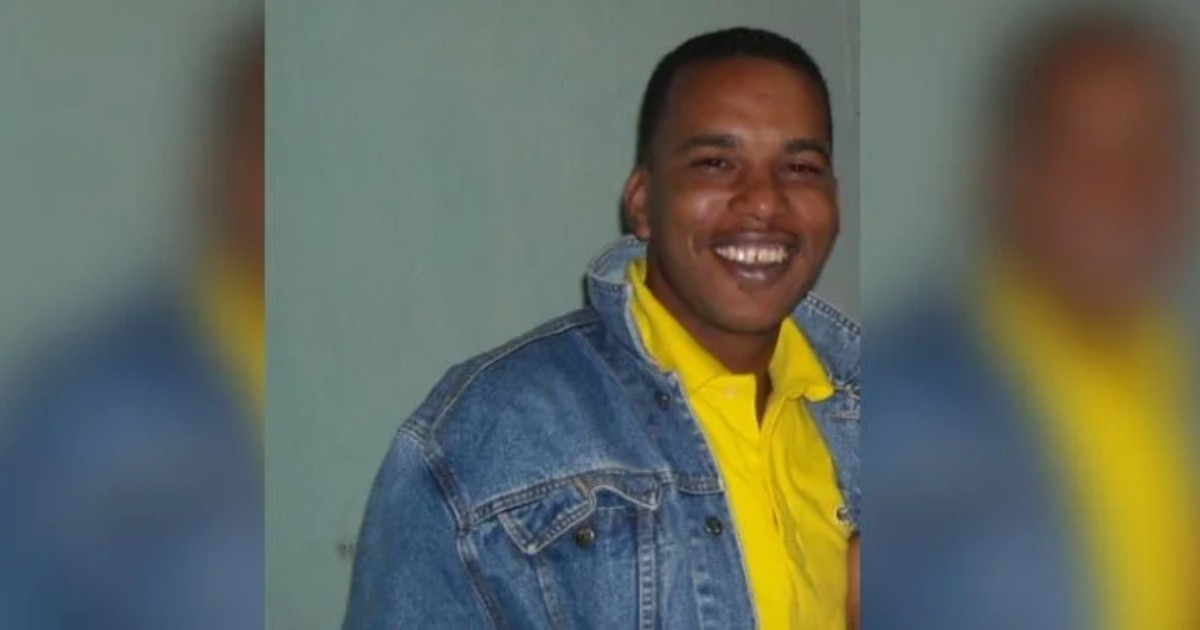
Harlen Oropesa Carrero, a political prisoner from the 11J protests held in the prison camp La Lima in Guanabacoa, reported this Sunday via a telephone call to Cubanet the systematic harassment by a non-commissioned officer and the authorities' refusal to provide him with dental care despite suffering from severe pain for at least three months.
The uniformed officer, identified by the surname Lafita and responsible for opening and closing the camp's doors, has repeatedly insulted Oropesa, calling him a "paper seller" and "scum of society." According to the inmate, the non-commissioned officer "takes pleasure in embarrassing, shaming, humiliating, and mistreating the prisoners."
Oropesa, 42 years old, filed the complaint with Major Dariel Obregón, Lafita's direct superior. Initially, the officer promised that "this would not happen again," but when the prisoner reiterated the accusation, the major "laughed in his face."
In parallel to the harassment, Oropesa is facing a situation of medical neglect. He suffers from pain in several molars that require fillings or extractions, but the camp authorities deny him the permit—the essential written authorization needed to go to a health center—claiming there is a lack of transportation and telling him to "take care of it on his own."
The interim director of the camp, a lieutenant colonel identified as Yunier, nicknamed "the Cadet," responded to the request by asking "what he wanted him to do." Without that document, Oropesa cannot leave his home without risking the loss of the minimum severity regime that was granted to him.
The sub-official Lafita also keeps about 75 inmates locked up, including Oropesa, for refusing to go out to work without pay. According to the inmate, this measure contradicts the instructions of the head of the unit, Jorge Parada —who is absent for health reasons— and those of the provincial and national authorities of the prison system, which allow inmates to move within the camp's perimeter.
The material conditions in La Lima exacerbate the confinement. "There is no water, no electricity, the food is bad, and there is no television or other entertainment," described Oropesa, who stated that the inmates feel "suffocated." Breakfast consists of rice water or another cereal and a piece of boiled cassava "hard as a stick"; lunch and dinner include three or four spoonfuls of rice, a paste of unknown composition, and boiled chopo, with broth that has no salt or seasoning.
The guards also prevent inmates from bringing in food received from outside the camp—such as pizzas, bread, or others—and force them to eat it before crossing the gate or throw it away.
Oropesa was arrested on July 11, 2021, while participating in the peaceful protests of that day. He was sentenced to nine years in prison for public disorder, contempt, assault, and incitement to commit a crime in a trial that he described as "rigged" and lacking procedural guarantees, with "false witnesses." Before arriving in La Lima, he went through the maximum security prison Ivanov, in Cotorro, where he recounted being forced to pass between two rows of soldiers who were beating the detainees, and later through Valle Grande and El Pitirre prison.
His case adds to a documented pattern in 2026. In August, the 11J prisoner Ángel Serrano Hernández was beaten by guards in La Lima after refusing to work under duress and was transferred to a higher security prison. In October, the political prisoner Marcos de la Luz Caballero Granados reported more than five months of agricultural work without receiving pay in another penitentiary camp. By November 2026, the Cuban dictatorship recorded 1,353 active political prisoners, of which 464 suffered from serious illnesses without adequate treatment and 236 faced severe malnutrition.
Related videos:
Filed under: