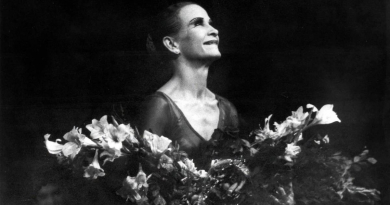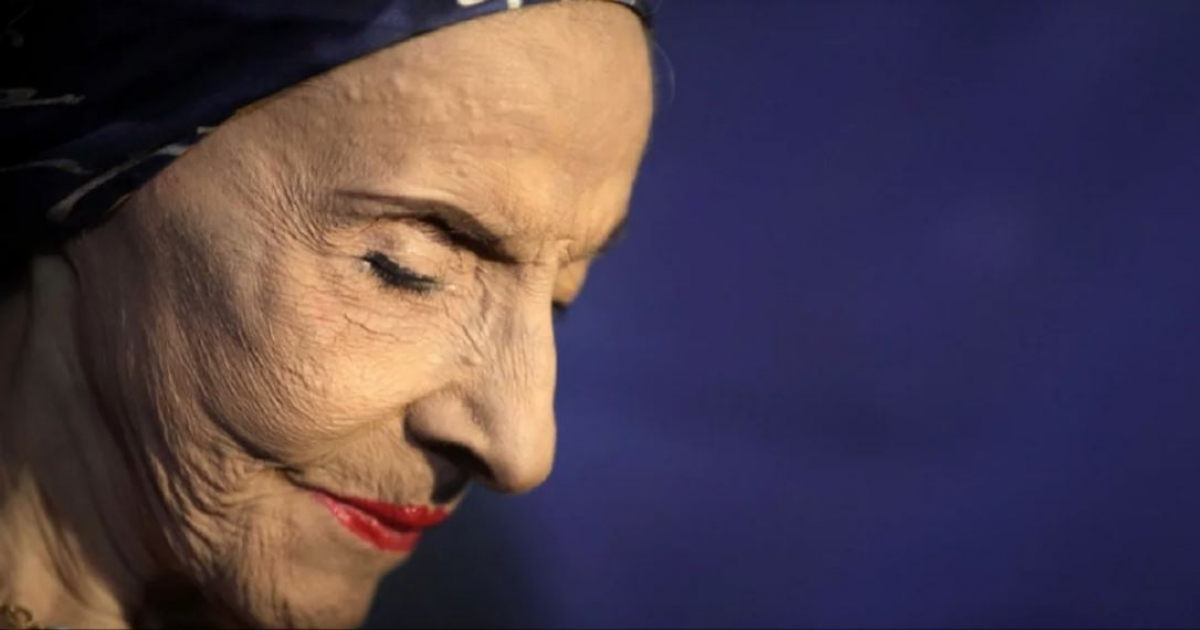
Alicia Alonso was a Cuban dancer and choreographer, born in Havana on December 21, 1920, and passed away in the same city on October 17, 2019, at the age of 98. Prima Ballerina Assoluta of the National Ballet of Cuba, she is regarded as a legend in the world of dance, renowned for her performances of Giselle and Carmen, among many others.
Alonso was born in Havana and was one of the two daughters of an army officer and his wife. The family enjoyed a comfortable and easygoing lifestyle, living in one of the best neighborhoods in the capital. From a very young age, Alonso showed an affinity for music and dance—her mother could keep her entertained for long periods with just a phonograph, a scarf, and a few records.
She started dancing at the age of seven.
In June 1931, she began studying ballet at the Sociedad Pro-Arte Musical in Havana with Nikolai Yavorsk and performed publicly for the first time on December 29, 1931, at the age of 10. Her first serious debut was in Tchaikovsky's The Sleeping Beauty at the Teatro Auditorio on October 26, 1932. She originally danced in Cuba under the name Alicia Martínez.
In 1937, the dancer fell in love with a fellow ballet student, Fernando Alonso, whom she married. After their wedding, she changed her last name to Alonso, which she would be known by internationally. The new couple moved to New York City, hoping to launch their professional careers. There, they found lodging with some relatives in the Upper West Side of Manhattan, near Riverside Drive. She gave birth to a daughter, Laura, but managed to continue her training at the American Ballet School and took private lessons. She traveled to London to study with Vera Volkova. Meanwhile, her husband joined the new Mordkin Ballet Company in New York.
After several vision problems, she was diagnosed in 1941 with issues in her retina, which required her to undergo surgery up to three times, resulting in the loss of part of her peripheral vision. Despite this, she continued her career and returned to New York in 1943 to keep improving her style.
Alonso worked with the Russian Ballet of Monte Carlo from 1955 to 1959, during which he participated in a 10-week tour of the Soviet Union, performing in Giselle. His performances earned him the Dance Magazine award in 1958.
Due to Alonso's affiliation with the new regime established in Havana, the audience in the United States largely turned its back on her. The Cuban government from the 1960s to the 1980s did not allow Cubans to establish relations with the United States, in part due to fears of defections. Nevertheless, Alonso's company continued to achieve success, both in Eastern and Western Europe. In 1967 and 1971, she performed in Canada, where collaborators noted that Alonso remained the greatest dancer of her time.
In 1998, the University of Valencia (Spain) awarded her the title of Professor Honoris Causa.
In 2010, the Ministry of Culture declared 2010 as "The Year of Alicia Alonso" to commemorate the 90th anniversary of her birth. Emotional tributes were paid to her in Cuba and various parts of the world, and important distinctions were bestowed upon her by cultural, social, and political entities.
Some of her national and international recognitions include the National Order of Merit Carlos Manuel de Céspedes and the title of "Dame". Republic of Cuba, 1947; "Palma de Revolución" awarded to the most distinguished artist. Periódico Revolución, 1961; Distinguished Woman in Art plaque. Federation of Cuban Women, 1963-67; Diploma of Recognition. National Committee of the Communist Youth Union, 1966; Order for "30 Years of Dedication to Art". National Union of Arts and Entertainment, 1968; Medal of Honor. Greek Theatre of Los Angeles, Los Angeles, California, United States of America, 1957; Grand Prize of the City of Paris. IV International Dance Festival, Paris, France, 1966; Gold Medal. Gran Teatro Liceo of Barcelona, Spain, 1971.