
Related videos:
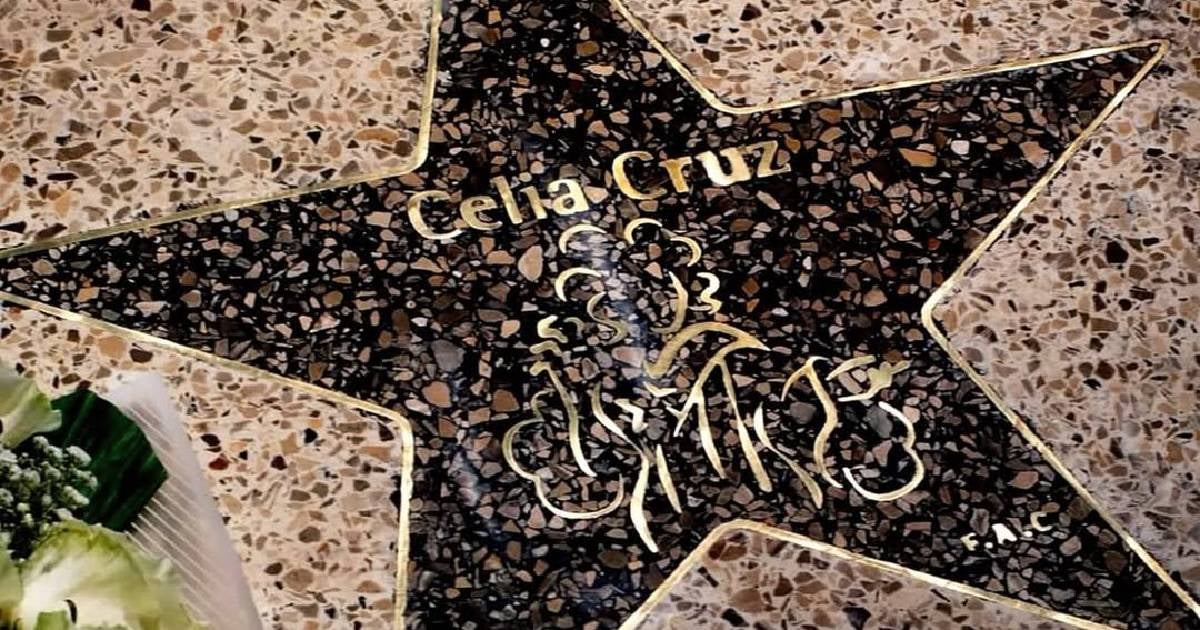
Celia Cruz has symbolically returned to Havana. A hundred years after her birth, the most universal voice of Cuba was honored with a star on the Walk of Fame at the Cuban Art Factory (FAC), a gesture that her legacy described as “a symbolic return” to her homeland.
“With immense pride and emotion, we celebrate that Celia has symbolically returned to Havana, where she now shines with her own star on the Walk of Fame at the Cuban Art Factory,” expressed the Patrimonio de Celia Cruz on their social media.
The message thanked musician X Alfonso, Sandra López, and Carlos Alfonso for “keeping her memory alive and making it possible for the voice and legacy of Celia to return to her homeland.”
The star of Celia Cruz is part of the project Constelación FAC, a cultural initiative that pays tribute to great personalities of Cuban culture. Her name belongs alongside figures such as Benny Moré, Chucho Valdés, Leo Brouwer, Alicia Alonso, Juan Formell, and Eusebio Leal.
"This tribute aims solely to honor an artist who has left an indelible mark on our music," published the institution led by X Alfonso, alongside an image of the granite mosaic bearing the signature of the Queen of Salsa.
The recognition of Celia Cruz comes after more than 60 years of official censorship, during which her name and music were erased from Cuban radio, television, and stages by the decision of Fidel Castro's regime.
Days before the tribute, the Ministry of Culture canceled a theatrical gala organized by FAC and the group Teatro El Público to commemorate the artist's centenary.
The decision, communicated without explanation or mention of Celia's name, sparked a wave of criticism and accusations of cultural censorship among artists and intellectuals.
The researcher and biographer Rosa Marquetti described the event as "a demonstration of the fear that power still has of that voice."
"They have spent 60 years fearing her ability to mobilize, and yet, Celia remains greater than all their censorship," she wrote on social media.
Other artists such as Sergio Benvenuto Solás and the critic Sergio Rafael Vidal condemned the official decision, likening it to "the methods of cultural control characteristic of totalitarian regimes of the 20th century."
As a symbolic response to censorship, the Cuban Art Factory staged an artistic action on the day the banned gala was supposed to take place: for one hour, it kept a lit empty chair on the stage, accompanied by complete silence. Then, a DJ played some of the most iconic songs of Celia Cruz.
"An artwork that never was, an armchair, silence, and the art of resistance... Celia lives," wrote FAC in a post that went viral as a testament to cultural dignity and creative defiance against state censorship.
The tribute to the singer had a special chapter on October 21, with a memorial mass at the Parish of Our Lady of Charity of El Cobre, in Central Havana.
The ceremony, under the slogan "United for Celia," brought together artists, believers, and ordinary citizens who wanted to honor her legacy.
Among the attendees were the singer Haila Mompié, the musician Alain Pérez, the reggaeton artist Yomil Hidalgo, and the head of the U.S. diplomatic mission in Cuba, Mike Hammer.
Celia Cruz's official Instagram account celebrated the event as "a gesture of love and cultural resistance."
“The Queen of Salsa does not need permission from any government to be who she is. It is we, the people, who need her to remember what freedom means,” wrote Rosa Marquetti at the end of the day.
Celia Cruz, born in Havana on October 21, 1925, died in exile in 2003 without being able to return to her country. Her voice, banned by the regime, lived on in the homes and memories of generations of Cubans. Today, her ¡Azúcar! remains a cry of identity, resistance, and hope.
Filed under: