
Related videos:
The Cuban Ministry of Internal Trade (MINCIN) reported delays and impacts in the distribution of regulated basic basket products due to financial and logistical issues.
Through its page, the organization stated that the difficulties are exacerbated by the "strengthening of the measures imposed by the United States government."
According to the statement, as it is already February, the supply of rice for December 2024 has still not been completed in the western and central provinces, although the arrival of ships is expected in the coming days.
In the case of sugar, the distribution of two pounds per person in January has been completed in some provinces, while the delivery of peas is still in progress in various regions of the country.
One of the most sensitive products, powdered milk for children has been distributed with limitations.
In January, 20 days' worth of powdered milk was distributed for children aged 0 to 2 years, except in Pinar del Río, Artemisa, and Granma, where only 10 days were distributed and the remainder will be provided with the next delivery, they stated.
Additionally, they stated that the distribution of milk for the first 10 days of February for children aged 0 to 6 years has already begun and medical diets for children with chronic illnesses and pregnant women are being ensured.
The regulated bread continues to be distributed, and authorities assure that its stability will depend on the arrival of raw materials throughout the month.
On the other hand, the statement confirms that there will be no deliveries of meat products, oil, or coffee, which represents a severe blow to the population's food supply.
Meanwhile, stores in foreign currencies remain stocked with these products, but they can only be purchased by those who have access to these currencies.
In recent months, the Cuban government has intensified the opening of supermarkets that operate exclusively in U.S. dollars, a measure that is part of a "partial dollarization" of the economy.
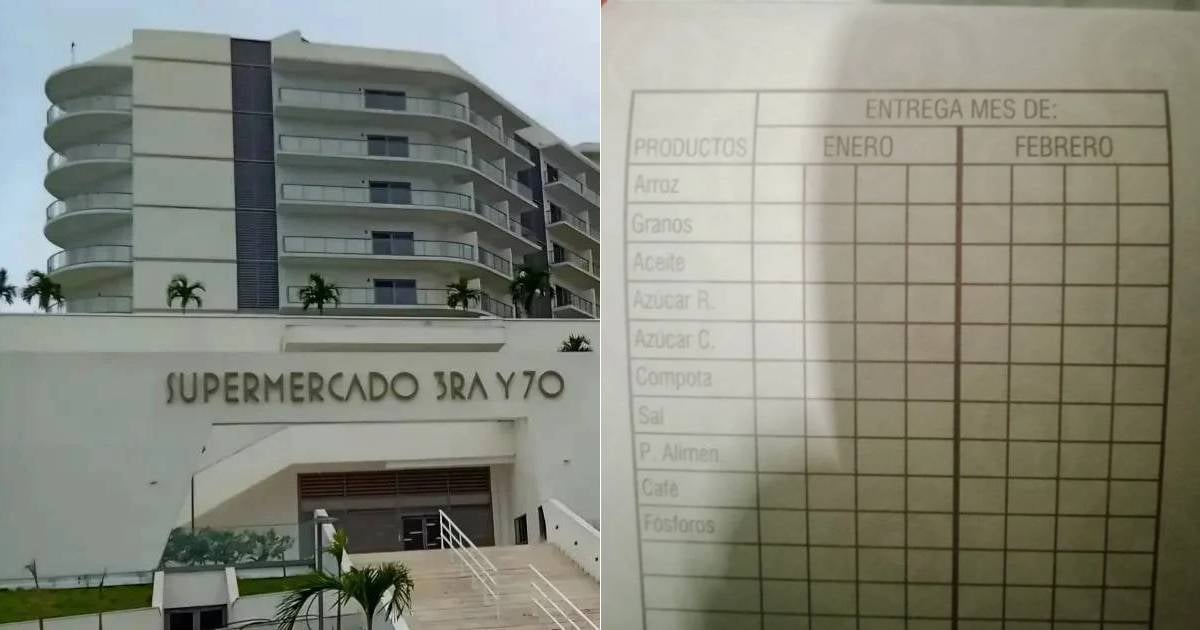
These stores, like the one inaugurated at the intersection of 3rd and 70 in Havana, offer a wide range of national and imported products, including food, hygiene items, and household appliances.
However, only cash payments in dollars or through debit cards linked to foreign currency accounts are accepted, which limits access for most Cubans who receive their salaries in Cuban pesos.
The opening of these stores has generated criticism and controversy, as many citizens believe that they exacerbate economic and social inequalities in the country.
Prices in these establishments tend to be high; for example, a 500-gram panettone is sold for 15.20 dollars, a figure that exceeds the average monthly salary in Cuban pesos.
Furthermore, the increasing demand for dollars to make purchases in these stores has put pressure on the informal currency market, leading to a rise in the exchange rates of the US dollar against the Cuban peso.
Recently, the Cuban government announced the expansion of stores that operate exclusively in U.S. dollars to other parts of the country, including 50 that will be managed by MINCIN.
Cuban authorities defend the opening of these dollar stores as a necessary measure to attract foreign currency and keep the economy afloat amid the crisis.
However, this policy has exacerbated the inequalities in access to consumer goods, creating a parallel market that leaves many citizens on the sidelines.
Frequently Asked Questions about the Food and Economic Crisis in Cuba
Why are there delays in the distribution of the basic food basket in Cuba?
Delays in the distribution of the basic basket in Cuba are due to financial and logistical problems, exacerbated by the tightening of measures imposed by the United States government. This affects the arrival of essential products such as rice, sugar, and milk to the provinces of the country.
How does the partial dollarization of the economy in Cuba impact it?
Partial dollarization in Cuba, with the opening of stores operating exclusively in dollars, has exacerbated economic and social inequalities, as only those with access to foreign currency can purchase basic products such as meat, oil, and coffee. This has led to an increase in the exchange rates of the dollar in the informal market.
What measures is the Cuban government taking to address the food shortage?
The Cuban government has prioritized the distribution of basic products such as rice and sugar, but the removal of subsidies for the basic basket has deepened popular discontent. Efforts are being made to redirect subsidies towards vulnerable individuals, although specific mechanisms for this have not been detailed.
How does the removal of subsidies on basic goods affect Cuban families?
The elimination of subsidies for the basic basket has increased difficulties for Cuban families, who rely on these products to survive. This measure has led to long lines and delays in the delivery of essential goods, exacerbating the food crisis in the country.
What is the current situation of inflation in Cuba?
Despite the fact that the year-on-year inflation rate was 24.88% in 2024, the public perception is that real inflation exceeds these figures, due to the dependence on the black market and the rise in prices in key sectors such as food and transportation. This has reduced the purchasing power of Cuban families.
Filed under: