
Related videos:
The President of the United States, Donald Trump, announced on Wednesday the imposition of a 25% tariff on all cars manufactured outside the country, which he described as a historic measure to protect the national automotive industry and reduce dependence on imports.
The policy will also apply to car parts, including engines and transmissions, and will come into effect on April 2 at 12:01 AM, Miami time.
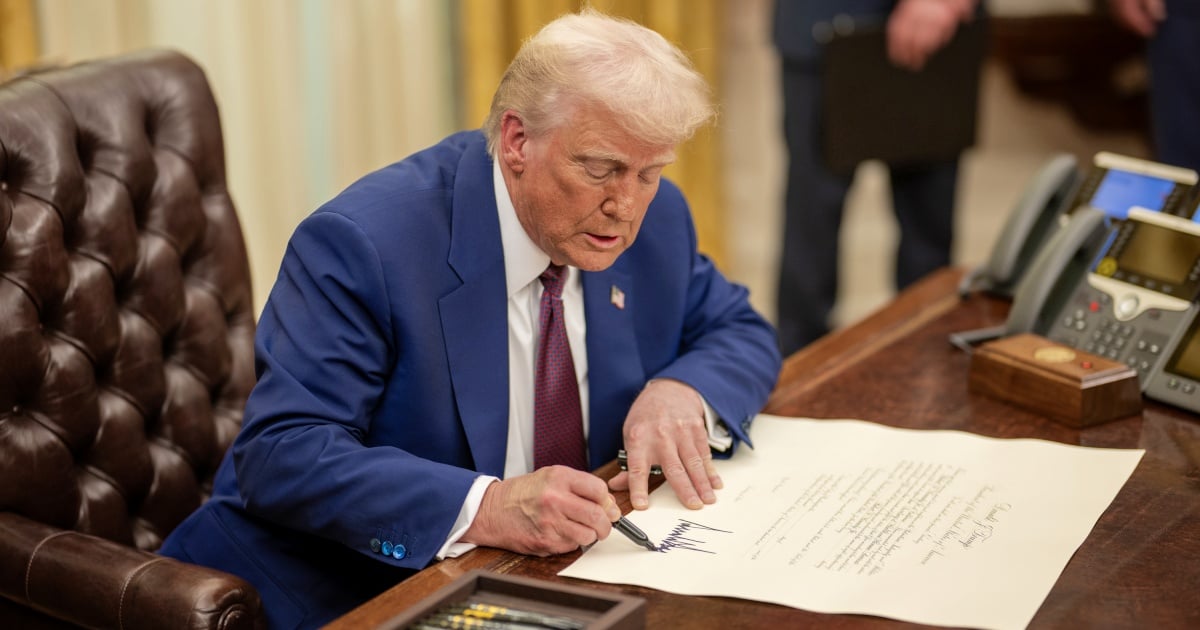
“Frankly, a friend has often been much worse than an enemy. And what we are going to do is impose a 25% tariff on all cars not made in the United States,” Trump stated in the Oval Office.
Tariffs without exceptions
The president was emphatic that there will be no exceptions, not even for traditional allies like Canada, Mexico, or Europe, nor for U.S. brands that manufacture vehicles outside the country.
The government estimates that the measure will generate up to 100 billion dollars annually in revenue, which will be allocated to infrastructure projects and the reduction of the national debt.
"We hope that these tariffs will not only boost the manufacturing of cars and trucks in the country, but also generate billions in additional revenue for the United States," Trump stated.
The collection will begin on April 3, and imported automotive parts will be subject to the tariff no later than May 3. However, those that meet the requirements of the Treaty between Mexico, the United States, and Canada (T-MEC) will initially be exempt until a new verification system is adopted.
"This will be the Day of Liberation," Trump declared, referring to April 2 as the beginning of a new era of "trade reciprocity."
That day, it is expected that he will announce new reciprocal tariffs on countries that have activated customs taxes on American goods and services.
Reactions from the automotive sector
The measure has raised concerns among automobile manufacturers and consumers, as it could lead to an immediate increase in vehicle prices.
Shortly after the announcement, shares of the three major U.S. manufacturers - General Motors, Ford, and Stellantis - fell sharply in after-hours trading. GM lost over 7%, while Ford and Stellantis dropped more than 4%.
"If they have factories here, they are happy. If they do not have factories here, they will have to get moving and build them," Trump warned.
Automotive companies have warned that relocating their entire production chain to the United States is not feasible in the short term and would result in additional costs that would ultimately be borne by consumers.
Justification of the White House
The White House argues that the new tariffs are necessary to revitalize the American automotive industry, which has been impacted by foreign competition and the relocation of production.
In 2024, nearly 16 million vehicles were sold in the United States, and half of them were imported.
Of the assembled vehicles in the country, only between 40% and 50% of their components were manufactured domestically, meaning that only one in every four cars sold can truly be considered "Made in America".
Investment and short-term impact
This year, companies like Hyundai and Stellantis announced new investments in factories within the United States, while others like Honda, Nissan, and Volvo are considering joining the trend. Trump also proposed a tax deduction for loans used to purchase domestically assembled cars.
Although the administration defends the measure as a bet on economic growth and self-sufficiency, analysts warn that it represents an escalation in the global trade war and could provoke retaliation from key trading partners.
The decision marks a radical shift from decades of free trade in North America, where the automotive industries of the United States, Mexico, and Canada have operated as an integrated market.
That model, originally promoted by the North American Free Trade Agreement (NAFTA) and later by the USMCA, could be profoundly affected if the new tariff barriers remain in place.
Frequently Asked Questions about the 25% Tariff on Imported Cars in the U.S.
Why has Donald Trump imposed a 25% tariff on imported cars?
Donald Trump has imposed a 25% tariff on imported cars with the aim of protecting the United States' domestic automotive industry and reducing reliance on imports. According to the White House, this measure seeks to revitalize the American automotive sector, which has been impacted by foreign competition and the relocation of production.
When will the 25% tariffs on automobiles take effect?
The 25% tariffs on automobiles manufactured outside of the United States will take effect on April 2 at 12:01 am, Miami time. These tariffs will also apply to automotive parts such as engines and transmissions.
What impact will the new tariffs have on the U.S. automotive industry?
The new 25% tariffs could lead to an increase in car prices in the United States due to reliance on imported components. Furthermore, they could result in a decrease in vehicle production in the region and impact employment in the automotive industry and component supplier companies.
Which countries and sectors will be most affected by Trump's tariffs?
The tariffs will primarily affect countries such as Canada, Mexico, and the European Union, which are key trading partners of the United States. In particular, the automotive sector, along with the steel and aluminum industries, will be among the most impacted due to the new tariffs imposed by the Trump administration.
What is Trump's justification for these tariffs and how has the international community reacted?
Trump justifies tariffs as a measure to balance trade rates and protect the U.S. economy. However, the international community has reacted with concern, warning of potential retaliation and the risk of escalating the global trade war. Canada and Mexico, for example, have already announced response measures to the U.S. tariffs.
Filed under: