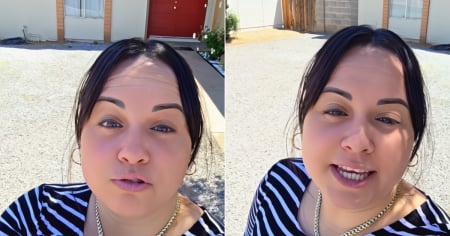
A Cuban woman in the United States has gone viral after sharing a video from her workplace, where she proudly states that she makes a living as a housekeeper in a nursing home. Her name is Heidy Díaz, known on TikTok as @heidydiazsosa, and her story has resonated with hundreds of users on the platform.
“No shame in saying I work in housekeeping at a nursing home; that is my job, and I am very happy. I ask God for many blessings for having this job here in the United States,” begins the Cuban woman in a video recorded while wearing her uniform.
Even though she was supposed to rest that day, she said she was called in to cover a shift and didn’t hesitate. “I say I came here to improve myself, to get ahead, and if I’m not doing well, if I’m not moving forward, then my family can’t be either,” she explains. And she sums it up bluntly: “This is what I do, sir: housekeeping. And well, you have to work.”
Heidy also made a direct critique of the distorted view that is sometimes held from Cuba about life in the United States: “Sometimes people in Cuba think that one here works as a manager in a hotel or a boss, but that’s not the case… you have to do whatever comes your way. And I genuinely love my job.”
The reactions to the video were immediate. Hundreds of people, mostly Cuban women, shared their own experiences in the cleaning sector, both in hospitals and private homes or health centers. Many highlighted that although they held professions such as technicians, teachers, or nurses in Cuba, they have found stability and support in the U.S. through this type of work.
Comments like “I am also housekeeping and I am proud,” “That’s what matters, working without stealing from anyone,” or “I used to be a boss in Cuba, now I clean, but I help my family” are repeated among the supportive responses that flooded the post.
Heidy had already shared on social media that even in her days off, she takes the opportunity to do extra work cleaning houses. On a previous occasion, she said: “Look, my loves, the day I take a break, I am cleaning a house. So you can see that in this country, you come to work and to prosper, but if you don’t work, you are nobody and do nothing with your life.” She expressed this in a previous video that also received great support.
También han surgido testimonios similares de otras cubanas como "The Dreaming Cuban Woman", quien respondió con firmeza a quienes se burlaron de su trabajo limpiando casas: “¿Pena? Pena me daría tener dos manos, dos pies, y vender mi cuerpo para ganarme la vida”. Su mensaje directo fue celebrado con cientos de mensajes de apoyo.
Another inspiring example is that of Leidy Aragón, a Cuban in Tampa who began cleaning houses for 20 dollars and today owns her own business. She started with less than 100 dollars, a second-hand vacuum cleaner, and a strong desire to succeed. Today, she is a single mother, independent, and has become an example of resilience for other migrant women.
Heidy's story, like that of so many others, reflects a seldom-told reality: that of the hard and honest work that sustains thousands of Cuban families outside the island. Without embellishments, with humility and much courage, Heidy makes it clear: "Those who don’t work do so because they simply don’t want to, but here, whether good or bad, there is work, my friend."
Frequently Asked Questions about Housekeeping Jobs and the Lives of Cuban Immigrants in the U.S.
Why does Heidy Díaz not feel ashamed of her housekeeping job in the U.S.?
Heidy Díaz is not ashamed of her housekeeping job because she sees it as a worthy source of income that allows her to get ahead and support her family. She believes that working honestly is a reason for pride and is grateful for the job opportunities in the U.S.
What is the misconception that some people in Cuba have about jobs in the U.S.?
Some people in Cuba have the mistaken perception that all immigrants hold high-ranking positions, such as managers or bosses. However, many Cubans, like Heidy, work in jobs that require physical effort, which is a common reality for those seeking economic stability abroad.
How has Heidy Díaz's testimony impacted other Cubans?
Heidy Díaz's testimony has resonated with many Cubans who have shared similar experiences working in the cleaning sector in the U.S. Her story has fostered a sense of community and support among those who value honest work and the effort to improve their quality of life.
What message does Heidy Díaz convey about honest work in the U.S.?
Heidy Díaz conveys the message that honest work is worthy and essential for thriving in the U.S. She emphasizes that any job that allows one to support a family and make progress is valuable, and that dignity lies in daily effort, not in the nature of the work.
Filed under: