
Related videos:
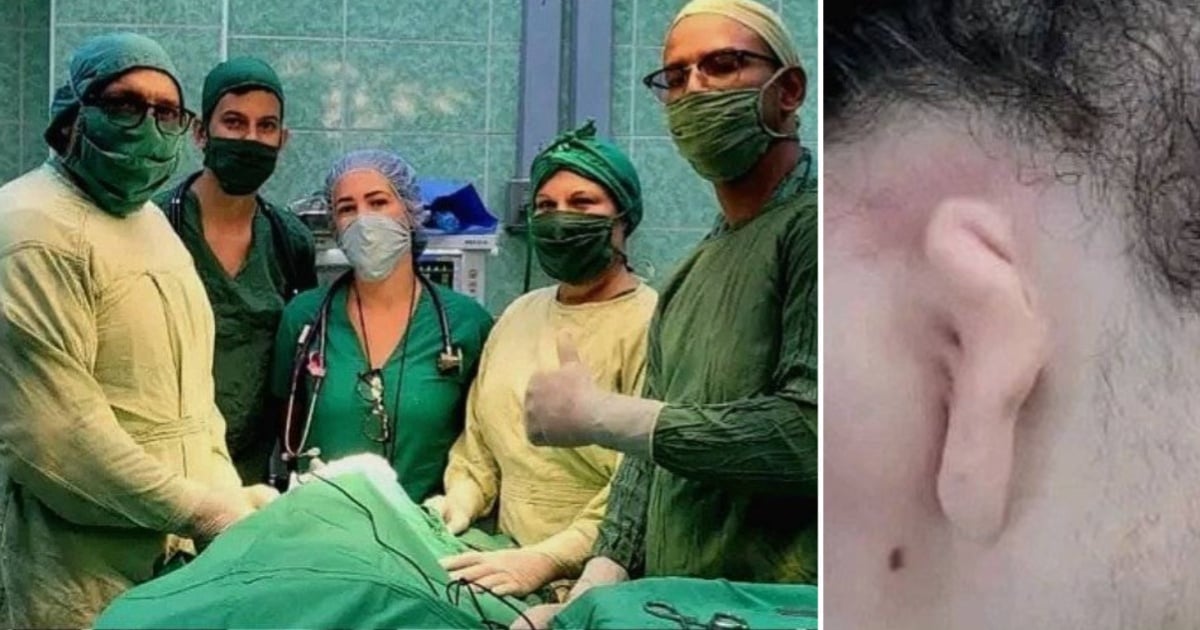
An 18-year-old teenager from the municipality of Cacocum became this Thursday the first patient from Holguín to undergo reconstructive surgery for microtia at the Octavio de la Concepción de la Pedraja Pediatric Hospital.
The complex intervention was carried out by a team of specialists, led by Dr. Jorge E. Márquez Camayd, head of the Plastic Surgery and Burn Care service at the center, according to the local official newspaper Ahora.
The intervention consisted of the reconstruction of the external ear using costal cartilage from the patient himself.
"The surgery was successful and the patient's recovery has been satisfactory," reported the hospital authorities via social media.
Microtia is a congenital malformation of the outer ear that can range from a mild deformity to a complete absence of the ear.
According to Márquez Camayd, this condition has a strong emotional impact on patients, especially in childhood and adolescence.
Microtia affects between one in 8,000 to 10,000 births, and unilateral presentation is more common, with a higher frequency in the right ear.
The intervention marks a milestone in healthcare in the province by avoiding the transfer of patients to Havana, where such specialized procedures were previously concentrated.
The introduction of this technique in Holguín represents a step forward in the decentralization of high-complexity medical services in Cuba.
Experts added that this experience will allow to provide treatment systematically and free of charge to other children and adolescents with this condition, without the need to leave the province.
In the midst of the collapse of the healthcare system, characterized by a shortage of supplies, outdated technology, and an overwhelmed staff, every now and then medical feats occur that stand out not only for their clinical value, but also for being carried out under extremely adverse conditions.
At the end of June, an 80-year-old man underwent a balloon aortic valvuloplasty, a minimally invasive procedure that had never before been performed by the medical team at the Cardiocentro in Santiago de Cuba.
This method was chosen due to the high risk associated with open-heart surgery, which was rejected by the family of the 80-year-old patient.
The patient presented with a mitroaortic valvular disease combined with a sclerodegenerative ischemic heart disease, along with chronic heart failure exacerbated by severe aortic stenosis and mild to moderate mitral insufficiency. These conditions made conventional surgery extremely risky.
Frequently asked questions about reconstructive surgery in Holguín and the Cuban healthcare system
What is microtia and how does it affect individuals?
Microtia is a congenital malformation of the outer ear that can range from a mild deformity to the total absence of the ear. This condition emotionally affects patients, particularly during childhood and adolescence, due to the aesthetic and social implications it carries.
Why is ear reconstructive surgery significant in Holguín?
The surgery marks a milestone in healthcare in Holguín by eliminating the need for patients to be transported to Havana for specialized procedures. This represents a significant advance in the decentralization of high-complexity medical services in Cuba, enabling systematic and free treatment of this condition without the need to leave the province.
What are the current conditions of the healthcare system in Cuba?
The Cuban health system is facing a structural collapse characterized by a shortage of supplies, outdated technology, and an overload of staff. Despite these challenges, occasionally medical feats are achieved, but these are exceptions in a system that regularly leaves many without the necessary treatments due to a lack of resources.
How is the reconstructive surgery for microtia performed?
Microtia reconstructive surgery is performed using the patient's own costal cartilage to reconstruct the outer ear. This technique allows for the creation of an auricular structure that enhances both the aesthetic appearance and, potentially, the auditory function of the patient.
Filed under: