
Related videos:
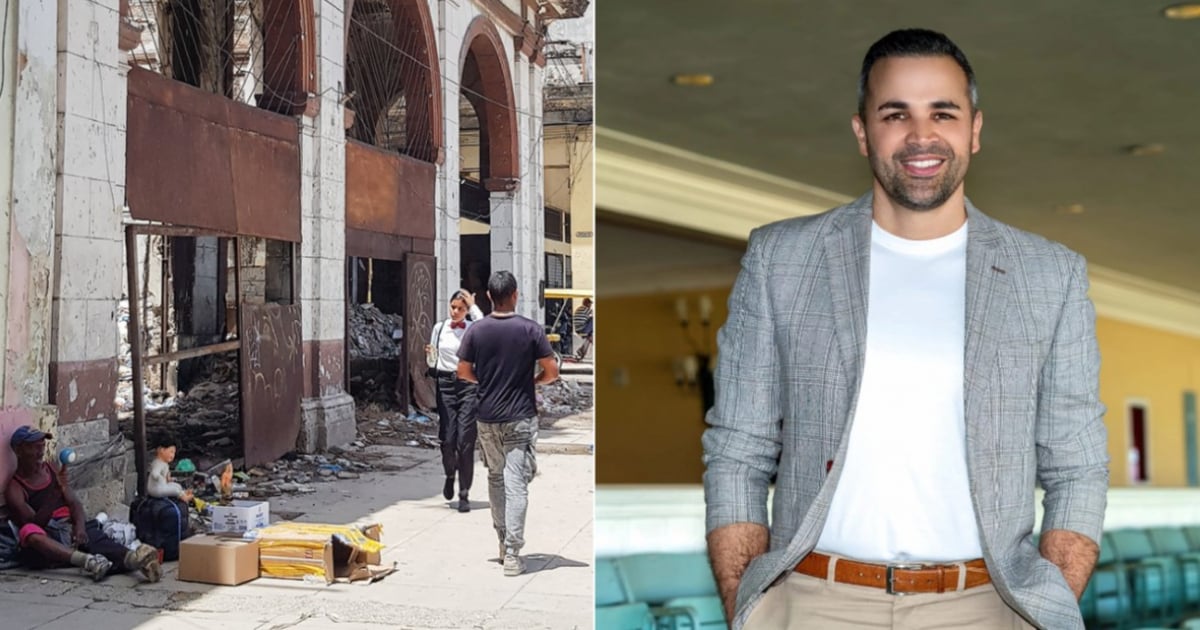
“ They taught us to beg, hidden behind the word 'solve'. They forced us. I did it, I begged,” denounced the Cuban actor and writer Lieter Ledesma, in a raw and emotional post on social media that has highlighted the deep collective discomfort that erupted following the recent statements of the Minister of Labor and Social Security, Marta Elena Feitó Cabrera.
Ledesma, based in the United States, depicted without euphemisms what has become a daily and systemic condition for millions of Cubans: the constant humiliation of having to ask —of the State, friends abroad, any door that opens— for the most basic necessities to live.
"Begging for mismanagement, begging from the officials, the athletes, the artists. An entire people begs the foreign friend: a recharge, medicine, food… life," he wrote.
Words that ignited indignation
The digital social explosion arose as a direct response to the controversial words of Minister Feitó, who during a parliamentary session stated that in Cuba "there are no beggars," and that those who sleep in doorways or ask for alms "are disguised."
"They have found an easy way of life to make money and not work," he said, in a statement that was described as insensitive, arrogant, and disconnected from reality.
The reaction on social media was immediate. Artists like Luis Alberto García, Ulises Toirac, and Rigoberto Ferrera, as well as intellectuals, journalists, and ordinary citizens, condemned the speech for denying the existence of extreme poverty on the island.
Presidential reprimand
Amid increasing pressure, Miguel Díaz-Canel intervened to distance himself from the minister during a speech before the Commission for Youth, Childhood, and Equality of Women's Rights in Parliament. Without naming her, he acknowledged that: “The existence of people living on the streets is a real and undesirable phenomenon in our society,” and added: “I do not agree with some of the viewpoints expressed in the commission regarding this issue. It is counterproductive to make such judgments.”
Also, Prime Minister Manuel Marrero Cruz reacted, appealing to empathy, though without openly condemning Feitó. He reiterated that attention to the most vulnerable is a "priority" for the government and warned that "sensitivity cannot be just discourse; it must be action."
And the Ministry?
Despite the media storm, the Ministry of Labor and Social Security (MTSS) maintains an uncomfortable silence. Its official channels continue to promote topics such as multiple employment and the new Labor Code, without a word regarding the statements that have sparked widespread outrage.
"Begging should not be a destination."
Lieter Ledesma's publication has achieved what few manage to do: to expose the truth without filters. Not with numbers, but with experiences. With shared pain.
“The Cuban longs for a different country. May that dream cease to be a mirage. We should not have to beg for what rightfully belongs to us,” he concluded.
On an island where scarcity has become routine and dignity a luxury, begging is not hidden: it is normalized. And this, as Ledesma has reminded us, is perhaps the deepest wound.
Frequently asked questions about the situation of begging in Cuba
What did the Minister of Labor of Cuba say about begging?
The Minister of Labor and Social Security of Cuba, Marta Elena Feitó Cabrera, stated that there are no beggars in Cuba, only people disguised as beggars, suggesting that they have found an easy way of life to make money without formal work. This statement has been widely criticized for its insensitivity and disconnect from the social reality of the country.
How did the Cubans react to the minister's statements about the homeless?
The reaction was immediate and forceful. Intellectuals, artists, journalists, and ordinary citizens expressed their outrage on social media, labeling the minister's words as an offense towards the most vulnerable and a denial of extreme poverty on the island.
What stance did Miguel Díaz-Canel take regarding Minister Feitó's statements?
Miguel Díaz-Canel distanced himself from the minister's statements, acknowledging the existence of homeless individuals and criticizing the superficial judgments regarding the issue. However, his response was perceived by many as ambiguous and evasive, as he did not openly condemn the minister.
What is the situation of poverty in Cuba according to recent reports?
The Cuban Observatory of Human Rights estimates that 89% of Cuban households live in extreme poverty. Additionally, independent studies and visual reports contradict official claims, revealing a reality of destitution and poverty that the government attempts to conceal.
Filed under: