
Related videos:
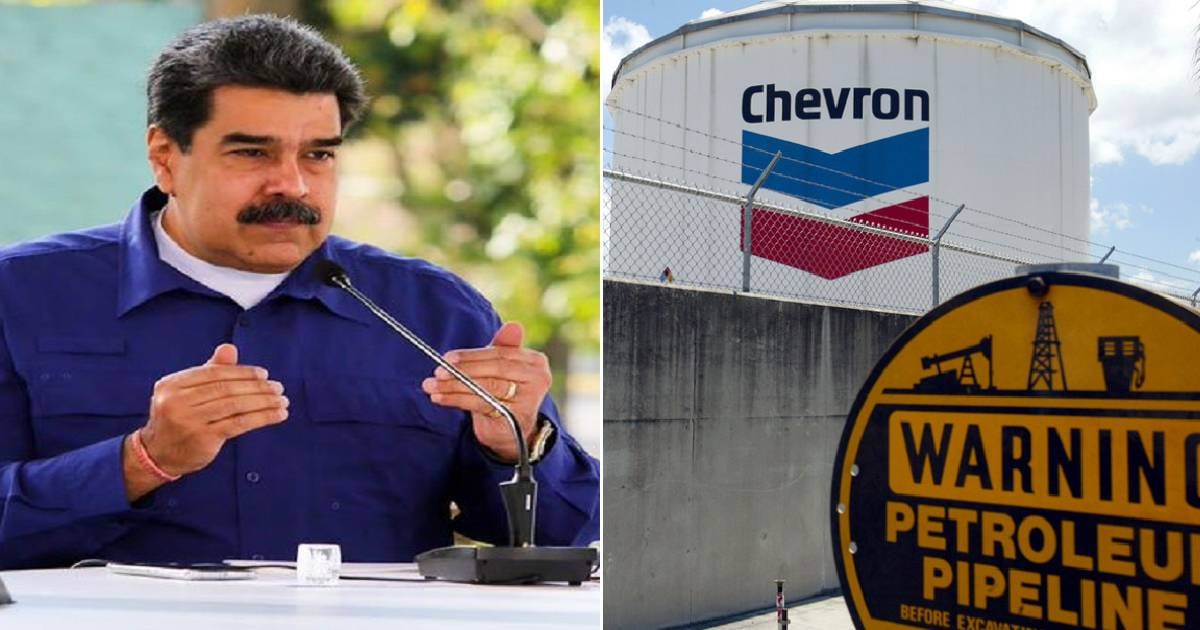
The administration of President Donald Trump granted approval on Thursday for the oil company Chevron to resume its crude extraction activities in Venezuela, as confirmed by sources close to the negotiations cited by The Wall Street Journal.
The partial lifting of restrictions marks a significant shift in the energy and foreign policy of the U.S. towards Nicolás Maduro's regime.
The Trump Administration approved a new license allowing the oil giant Chevron to restart its operations in the South American nation, marking a departure from previous hardline measures and suggesting a recalibration aimed at balancing energy interests with Nicolás Maduro's regime.
The new agreement issues a "specific license" instead of a general one, allowing Chevron to resume more regular operations with PDVSA.
The agreement is believed to have been finalized after weeks of discussions between senior officials, including President Trump and Secretary of State Marco Rubio.
Chevron is one of the few foreign companies that never completely severed ties with Venezuela, despite the sanctions imposed by previous governments.
The company has stakes in various joint ventures with PDVSA, the Venezuelan state oil company, but Trump had given them a deadline in March to terminate their agreements with the South American nation.
However, the decision is already causing divided reactions among Republican and Democratic lawmakers, many of whom are warning about the risks of legitimizing the Maduro regime.
In the coming days, the Department of the Treasury and the Department of State are expected to formalize the terms of the license granted to Chevron, including possible limits on exports and controls over payments to Venezuelan officials.
In response to a query from El Nuevo Herald, the State Department indicated that the license "was issued solely for maintenance purposes by Chevron and to create the necessary conditions for the regime to pay the substantial debt it owes to the Texas-based oil company."
"Although we cannot comment on specific licenses, the U.S. government will not allow the Maduro regime to benefit from the sale of oil," the entity noted in another response to the Miami Herald in an email.
Venezuela's debt to Chevron was estimated at around $3 billion before it decreased following the Biden administration's decision to grant the Texas-based company a license to operate in the country, which was revoked by the Trump administration earlier this year.
Chevron was responsible for approximately a quarter of Venezuela's oil production, which earlier this year was around 900,000 barrels per day, El Nuevo Herald reminded.
Frequently asked questions about Chevron's resumption in Venezuela
Why did Trump authorize Chevron to resume its operations in Venezuela?
The authorization for Chevron to resume its activities in Venezuela is part of a strategy by the United States to re-establish its presence in key sectors of the region, particularly in light of the advances made by China and Russia in the Venezuelan energy industry. Furthermore, this decision was part of an agreement following the release of American citizens detained in Venezuela.
What does Chevron's resumption imply for the sanctions imposed on Venezuela?
The resumption of Chevron's operations implies a relaxation of the sanctions that had restricted the production and export of Venezuelan crude oil. However, it is expected that the Department of the Treasury and the Department of State will formalize the terms of the license granted to Chevron, including possible limits on exports and controls over payments to Venezuelan officials.
How does the agreement with Chevron affect Nicolás Maduro's regime?
The agreement allows the Maduro regime to maintain oil production without the pressure of stricter sanctions, which could lead to increased crude shipments to its political allies like Cuba. However, it has also faced criticism from those who believe it legitimizes the regime without demanding profound political reforms.
What role does Cuba play in the context of Chevron's operations in Venezuela?
The temporary exit of Chevron from Venezuela had forced the country to seek new markets, indirectly benefiting Cuba, which is facing a fuel crisis. Venezuela could increase its crude oil exports to Cuba to offset the loss of Chevron's exports, which would partially alleviate the energy crisis on the island.
Filed under: