
Related videos:
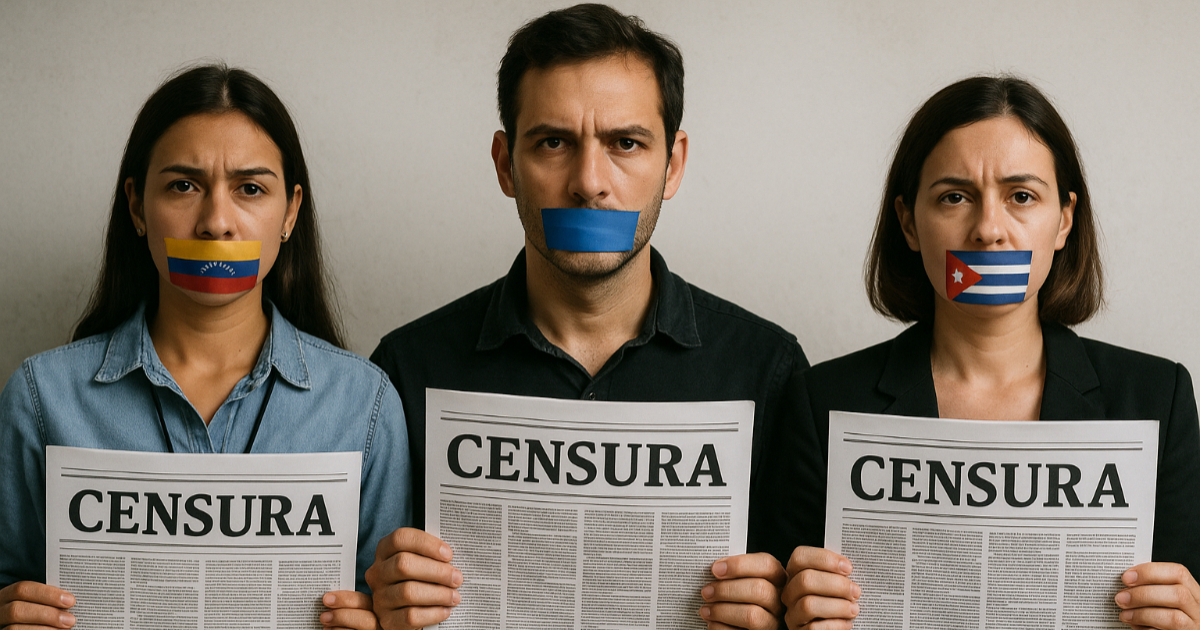
A recent regional study has confirmed an alarming trend in the state of press freedom in Latin America: 92.3% of exiled journalists in the region come from the totalitarian regimes of Venezuela, Nicaragua, and Cuba.
The report, titled "Displaced Voices: A Profile of Latin American Journalistic Exile 2018-2024," was produced by the University of Costa Rica in collaboration with Fundamedios, the Unesco UDP Chair in Chile, and the Association of Venezuelan Journalists Abroad.
The study documents that Venezuela leads in the number of communicators forced into exile, with at least 477 journalists, followed by Nicaragua (268) and Cuba (98), as reported by Infobae.
In the three countries, independent journalism has been criminalized and stifled through state mechanisms of censorship, judicial harassment, and physical and digital threats, it emphasizes.
"These regimes have turned the practice of journalism into a high-risk activity, forcing hundreds of professionals to flee in order to preserve their integrity and their right to inform," the report states.
In Cuba, independent journalism has endured years of pressure from the state apparatus, it highlights.
The emergence of digital media such as 14ymedio, El Estornudo, and ADN Cuba has triggered new waves of surveillance, police summons, arbitrary detentions, and bans on leaving the country. Censorship remains a state policy on the island, it asserts.
In Venezuela, the institutional collapse and the consolidation of information control by the State have created zones of silence and informational deserts in their wake.
The systematic persecution includes the closure of independent media, digital blocking, arbitrary detentions, and state harassment.
This hostile environment has emptied newsrooms and radio stations, exacerbating misinformation and depriving millions of citizens of access to reliable news, it states.
In Nicaragua, following the protests of 2018, Daniel Ortega's regime intensified its repression against the press.
The raids on newsrooms, the imprisonment of journalists, and the denationalization of critical communicators are recurring practices.
The emblematic case of the newspaper La Prensa, which was confiscated by the government, illustrates the extreme deterioration of informational freedoms.
"In these contexts, the executive branch directly leads the persecution of journalists, without institutional checks to curb the abuse," highlights the report.
Leaving these countries is not easy. Many journalists face document confiscation, detention at borders, and subsequently stigmatization abroad.
In addition to emotional uprooting, many must leave journalism due to a lack of opportunities or legal restrictions in the host countries. Others—the document notes—choose dangerous migration routes to avoid state reprisals.
Despite the exile, dozens of communicators remain active, founding digital media from abroad, collaborating with international networks, and documenting human rights violations. For many, journalism has become an act of resistance.
"They took our country away, but not our voice," expressed a Nicaraguan journalist exiled in Costa Rica.
The massive exile of journalists in Latin America not only represents a tragedy for the displaced professionals but also poses a serious threat to the citizens' right to information.
Venezuela, Nicaragua, and Cuba top this blacklist of repression, while international organizations call for urgent measures to protect those who make journalism a pillar of democracy.
Filed under: