
Related videos:
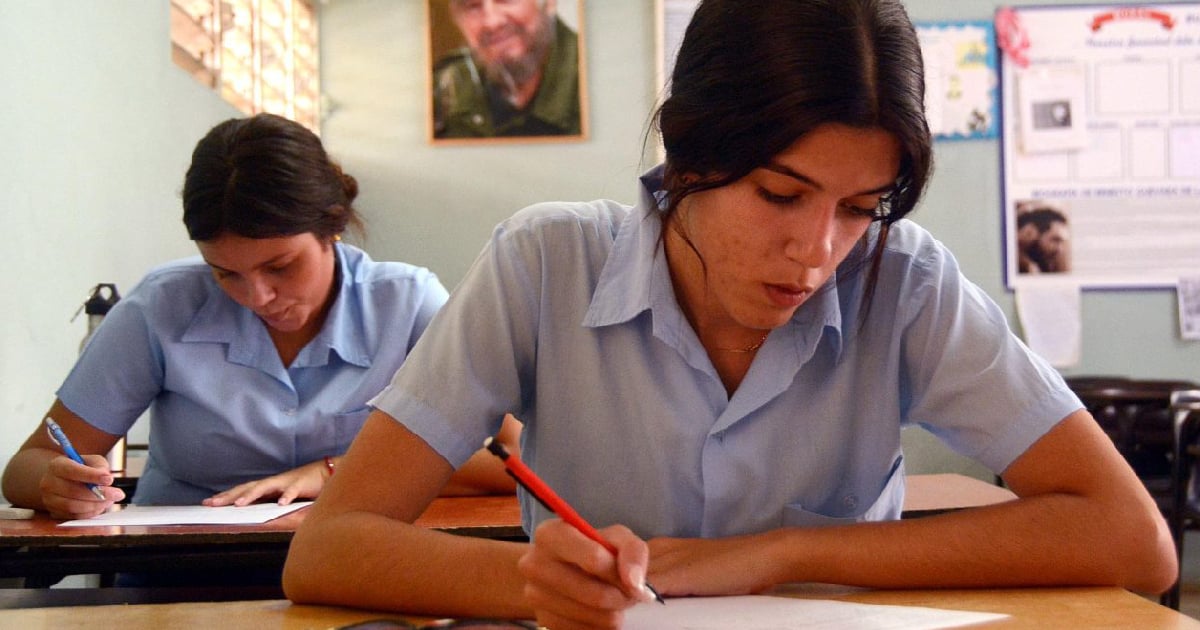
Only two eleventh-grade students showed up for the aptitude exam to qualify for the Journalism program at the Manuel Ascunce Domenech site, affiliated with the Universidad de Ciego de Ávila Máximo Gómez Báez (UNICA).
An alarming contrast when compared to the years when dozens of applicants competed for one of the few available positions, emphasized the official newspaper Invasor.
The cited source indicates that this dramatic decline in vocational interest also leaves an open question: How likely is it that both students will ultimately choose to pursue the degree, graduate, and practice the profession in the local media?
If it were to happen, that scenario would not be confirmed before five years, a sufficient amount of time for the situation to become even more uncertain. However, in any case, it highlights another failure of the Cuban educational system: young people do not want to study journalism.
The obstacles are varied: starting from the academic year 2024-2025, young Cuban women interested in studying Journalism will be required to complete a year of Mandatory Military Service.
This new measure, unprecedented in other careers, is added to the traditional aptitude tests and the so-called university college, an eight-week stage that candidates must complete after finishing high school.
Moreover, there continues to be a disconnect between media discourse and the actual concerns of citizens, which has led to a loss of credibility that discourages many young people.
This is compounded by low salaries, limited social recognition of the profession, and an economic environment that relegates university education to a secondary or tertiary level.
Even for those who wish to study, the conditions are challenging: commuting to classes can cost hundreds of pesos per week; accessing digital platforms requires a connectivity that many cannot afford, despite the regime's flexibility with university students and internet access; and basic tools like laptops or materials are out of reach for many families.
A report from UNICA, cited by Invasor, revealed that only 49% of the students enrolled four years earlier managed to graduate.
Most left not due to poor performance, but for personal or economic reasons, because in the current reality of Cuba, studying and working at the same time remains impractical for many.
In the midst of this vocational crisis, the Ministry of Higher Education implemented a measure in 2024 to allow flexibility: those who miss or do not show up for the entrance exams will also be able to access university.
However, that measure does not guarantee vocation or commitment.
Meanwhile, a sentiment shared by many young graduates is becoming more common: "I burned the midnight oil for five years only to end up in a small business," and it's no joke. It's a snapshot of the current reality.
Filed under: