
Related videos:
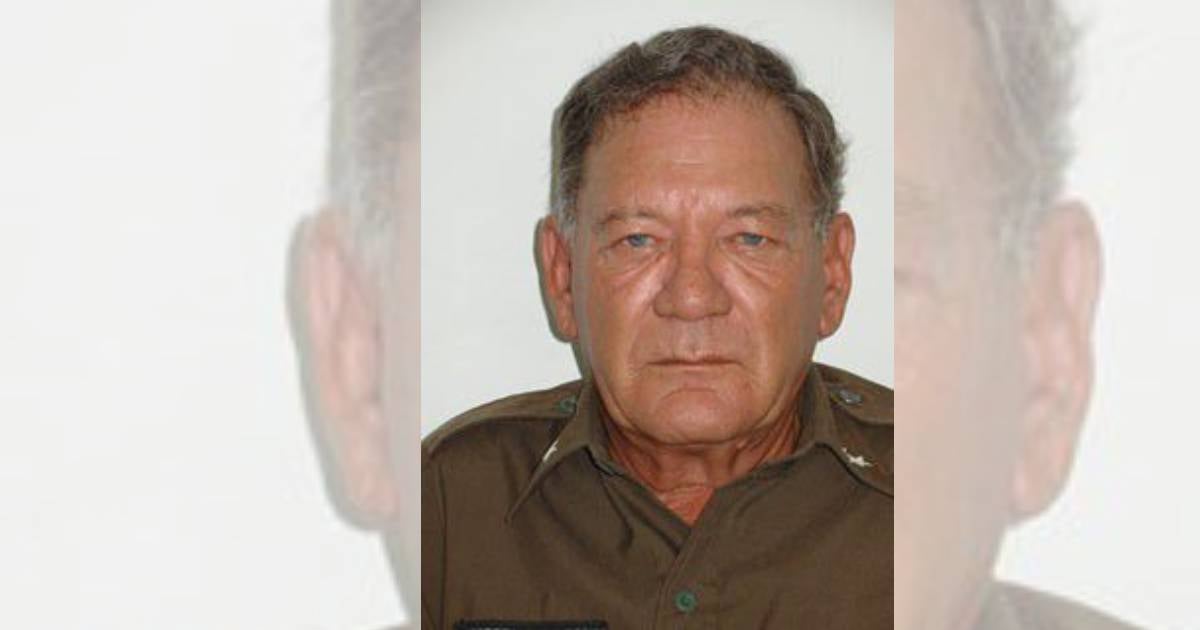
The reserve colonel Pedro Francisco Rodríguez Peralta, a historical officer of the Ministry of the Interior (MININT), passed away this Sunday in Cuba at the age of 88, after more than five decades connected to the military and repressive apparatus of the regime.
Originally from San Germán, in Holguín, Rodríguez Peralta was a combatant in the Clandestine Struggle, participated in the Bay of Pigs, and developed an extensive career in the Revolutionary Armed Forces and the MININT, where he held positions such as head of the General Directorate of Public Order, Border Guard Troops, and Forest Rangers, as confirmed by an official note.
The colonel also participated in several internationalist missions in Angola. In one of them, in 1969, he was wounded and captured, remaining a prisoner of war until 1974, when he returned to Cuba. Shortly thereafter, he went back to Africa for new military operations.
Throughout his career, he was awarded medals and titles that the regime reserves for its most loyal figures, including "Combatant of the Clandestine Struggle," "First-Class Internationalist Combatant," and the "Eliseo Reyes Captain San Luis."
According to the MININT, the remains of Rodríguez Peralta will be cremated at the family's request, and his funeral honors will take place this Monday at the Colón Necropolis. As is customary, the statement does not mention any self-criticism or critical elements regarding his legacy.
His death occurs in a context marked by the recurrent passing of high-ranking officials from the MININT and the Armed Forces, several of whom share similar backgrounds: lengthy, decorated careers closely tied to the mechanisms of repression and internal control.
In recent months, figures such as Brigadier General Marcos Antonio Hernández Alcaraz, former head of Penitentiary Establishments; Colonel Lázaro Delgado Chaple, second-in-command of the Identification and Immigration Directorate, who died following complications from the Oropouche virus; and General Romárico Vidal Sotomayor García, sanctioned by the United States for abuses during the July 11 protests, have passed away.
Frequently Asked Questions about the Death of Cuban Colonel Pedro Francisco Rodríguez Peralta and the Military Context in Cuba
Who was Pedro Francisco Rodríguez Peralta and what was his role in the Cuban regime?
Pedro Francisco Rodríguez Peralta was a reserve colonel of the Ministry of the Interior (MININT) of Cuba, known for his involvement in the Clandestine Struggle, the invasion of Playa Girón, and for his extensive military career in the Revolutionary Armed Forces. Additionally, he participated in internationalist missions in Angola, where he was captured and remained a prisoner of war. His career was marked by a close relationship with the military and repressive apparatus of the Cuban regime.
Why is her death significant in the current context of Cuba?
The death of Rodríguez Peralta adds to a series of recent fatalities among high-ranking officials of MININT and the Armed Forces, which reflects a generational shift in the Cuban military leadership. This occurs against a backdrop of rising social discontent and internal pressures in Cuba. Furthermore, his passing emphasizes the longevity and influence of historical figures within the regime over the control of the repressive apparatus.
What impact does the death of high-ranking military officials have on the Cuban regime?
The death of high-ranking military leaders such as Rodríguez Peralta can weaken the power structures of the regime, as these officers are often key figures in maintaining control and internal repression. Furthermore, their disappearance paves the way for potential restructuring and changes in the military hierarchy, which could impact the regime's stability during a time of economic and social crisis.
How does the death of Rodríguez Peralta impact the official narrative of the Cuban regime?
The death of Rodríguez Peralta underscores the narrative of sacrifice and loyalty to the regime that the Cuban government seeks to uphold. His career, filled with decorations and internationalist missions, is depicted as an example of dedication to the revolutionary cause. However, it also highlights the criticisms regarding the use of historical figures to justify and perpetuate a repressive system.
Filed under: