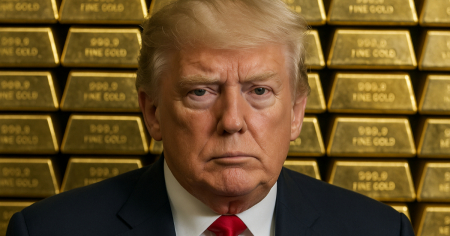
The U.S. president Donald Trump stated this Monday that he wants Russia to return part of the occupied Ukrainian territory.
“Let’s change the lines, the lines of battle. Russia has occupied a large part of Ukraine. They have taken some very important territories. We are going to try to recover some of that territory for Ukraine,” Trump said this Monday referring to his meeting on August 15 in the state of Alaska with Putin, where the leaders are expected to discuss the issue of the war in Ukraine.
“It's taken a large part of the sea (…) Many people don't know that Ukraine had 1,000 miles of sea that have disappeared, except for a small area, Odessa. They only have a little bit of water left. So I'm going to review the parameters,” he assured.
Trump stated that after the meeting with the Russian, "immediately, perhaps on the plane, perhaps after leaving the room," he would call "the European leaders and Zelensky."
He also stated that his future intention is to bring Putin and the Ukrainian president together: “Ultimately, I am going to bring them both into the same room,” he affirmed.
"This is a war that should never have happened, but I will speak with Zelenski. The next meeting will be with Zelenski and Putin, or with Zelensky, Putin, and myself. I will be there if they need me, but I want to arrange a meeting between the two leaders," he added.
Additionally, Trump stated that the meeting will be "very good" and that within the first two minutes he will figure out what kind of agreement Putin is willing to negotiate.
First meeting between Trump and Putin in his second term
Last week, in a message shared on his Truth Social network, Trump described the meeting as an event of "utmost importance."
It will be the first face-to-face meeting between the two leaders since Trump's return to the White House this year, and the first summit between the United States and Russia since the meeting of Joe Biden and Putin in Geneva in 2021.
The meeting takes place amidst a climate of high international tension due to the Russian invasion of Ukraine.
Moscow has rejected the participation of Ukrainian President Volodymyr Zelensky in this first phase of negotiations, despite calls from Kyiv and several European capitals to include Ukraine and the European Union in the process.
The Kremlin maintains demands that Kiev and its allies consider unacceptable, such as renouncing to join NATO, recognizing Russian sovereignty over Crimea and the occupied regions, reducing the Ukrainian armed forces, and lifting all international sanctions.
Trump has insisted that his goal is to end the war "as soon as possible" and has given the Kremlin a deadline that expires this Friday to stop the attacks on Ukraine, under the threat of new sanctions.
In parallel, their government approved an additional $200 million military aid package for Kiev and raised tariffs on imports from India to 50%, in response to New Delhi's purchase of Russian oil.
Also, after the U.S. deployed two nuclear submarines close to Russian strategic targets in response to statements made by former Russian President Dmitry Medvedev, the current vice chairman of the Kremlin Security Council, who dismissed the announced increase in tariffs by Washington if the Kremlin did not end the war.
In recent days, your special envoy Steve Witkoff met with Putin in Moscow and described the conversation as "productive," although he did not disclose any concrete agreements.
The announcement has generated mixed reactions: while some view the summit as an opportunity to unblock dialogue, others fear that a bilateral agreement between Washington and Moscow without the participation of Kiev could disrupt the strategic balance in Europe.
On August 15, Alaska will be the stage for one of the most watched events of the year, with the potential to redefine—for better or for worse—the course of the war in Ukraine and the global balance of power.
Frequently Asked Questions about the Meeting between Trump and Putin and the Conflict in Ukraine
What is Trump's objective in the meeting with Putin regarding Ukraine?
Trump's goal is to try to reclaim part of the Ukrainian territory occupied by Russia. He wants to change the lines of battle and discuss with Putin the possibility of an agreement that includes the return of significant territories to Ukraine. Additionally, he seeks to end the war as soon as possible and threatens with new sanctions if Russia does not stop the attacks on Ukraine.
What is Zelensky's stance on Trump's proposal for a "land exchange"?
Zelensky has firmly rejected any concession of territory to Russia. The Ukrainian president believes that any decision made without Ukraine's participation is a "decision against peace" destined to fail. Zelensky's stance is resolute that Ukrainian territory is indivisible and inviolable, according to the country's Constitution.
What reactions have been generated by the summit between Trump and Putin without Ukraine's participation?
The announcement of the summit has generated mixed reactions. Some see the summit as an opportunity to unlock dialogue, while others fear that a bilateral agreement between Washington and Moscow without the participation of Kiev could disrupt strategic balances in Europe. The exclusion of Ukraine has raised concerns both in Kiev and in several European capitals.
What demands does Russia have in the negotiations regarding the conflict in Ukraine?
Russia maintains demands that Kiev considers unacceptable, such as Ukraine's renunciation of joining NATO, the recognition of Russian sovereignty over Crimea and the occupied regions, the reduction of Ukrainian armed forces, and the lifting of all international sanctions.
Filed under: