
Related videos:
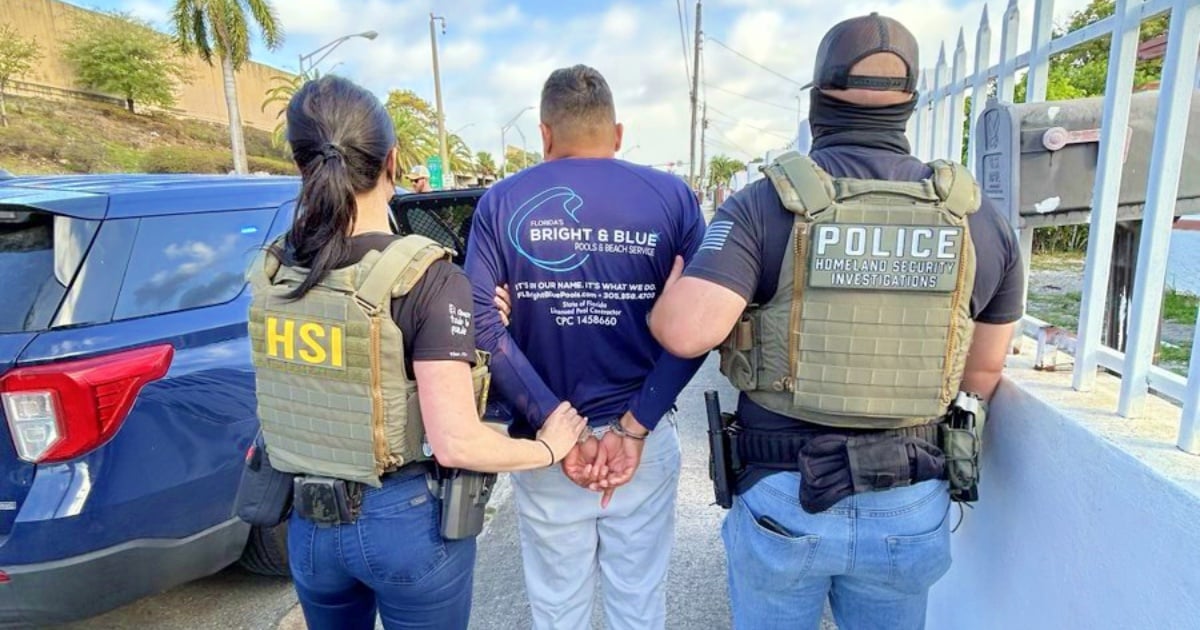
Florida continues to arrest migrants under its controversial SB 4-C law, despite the fact that the Supreme Court of the United States has kept it suspended since July, as revealed by judicial documents.
According to a report by the agency EFE, the state Attorney General, James Uthmeier, acknowledged before the Southern District Court of Florida that in July, Guatemalan Juan Vásquez Salas and Mexican José Bersay Díaz Salas were arrested, both under the charges established in SB 4-C.
Díaz Salas was detained on July 3, following a collision that resulted in injuries and damage to three vehicles in Sarasota County. Twenty-five days later, the police arrested Vásquez Salas in the same county after another traffic incident.
These arrests contradict the order from the Supreme Court on July 9, which upheld the decision from the Southern District of Florida to temporarily suspend the enforcement of SB 4-C.
The law turns the irregular entry of undocumented individuals into a state crime, which allows for their imprisonment, and was driven by Republican Governor Ron DeSantis.
Federal Judge Kathleen M. Williams held the Florida prosecutor in contempt for failing to comply with her order to halt the enforcement of the regulation and demanded he submit regular reports detailing the number of arrests made, EFE recalled.
Organizations such as the Florida Immigrant Coalition (FLIC) and the Farmworkers Association (FWAF) have reported that the state is also using SB 4-C to detain migrants at the detention center nicknamed "Alligator Alcatraz," which has a capacity of 2,000 people, inaugurated on July 3rd west of Miami.
The plaintiffs are demanding that Florida explain under what authority this facility operates, after an email from the Immigration and Customs Enforcement (ICE) indicated that it is under state control.
The SB 4-C has become a symbol of the Republican states' offensive against irregular migration, and its final resolution could set a national precedent in immigration matters.
Frequently Asked Questions about Florida's Immigration Law and Its Implications
What is Florida's SB 4-C law and why is it controversial?
The SB 4-C law makes the illegal entry of immigrants into Florida a state crime, allowing for their imprisonment. This law has been heavily criticized by civil rights organizations, as it is seen to encroach upon federal jurisdictions and could encourage arbitrary detentions based on racial profiling. Furthermore, its implementation has been suspended by the Supreme Court due to potential unconstitutionality.
Why is Florida still arresting undocumented immigrants if the law is suspended?
Despite the suspension of the law by the Supreme Court, Florida has continued to arrest undocumented immigrants, with the state attorney general arguing that the court order is not binding on all agencies. This action has led federal judge Kathleen Williams to hold the attorney general in contempt for failing to comply with her order to cease the enforcement of the regulation.
What is the "Alligator Alcatraz" detention center and what is its current status?
The "Alligator Alcatraz" detention center is a facility in Florida used to detain undocumented migrants. It has become a symbol of the state's immigration policies, but has been the subject of severe criticism for human rights violations and inhumane conditions. The lack of clarity regarding its legal jurisdiction and administration has led to lawsuits against the state of Florida.
What are the legal implications of the enforcement of law SB 4-C?
The enforcement of law SB 4-C has been challenged for violating the Supremacy Clause of the U.S. Constitution, which grants the federal government exclusive authority over immigration policies. Furthermore, its implementation could impose an unacceptable burden on interstate and foreign commerce, according to the plaintiffs. The detentions under this law have been criticized for their potential to promote racial profiling and violations of civil rights.
Filed under: