
Related videos:
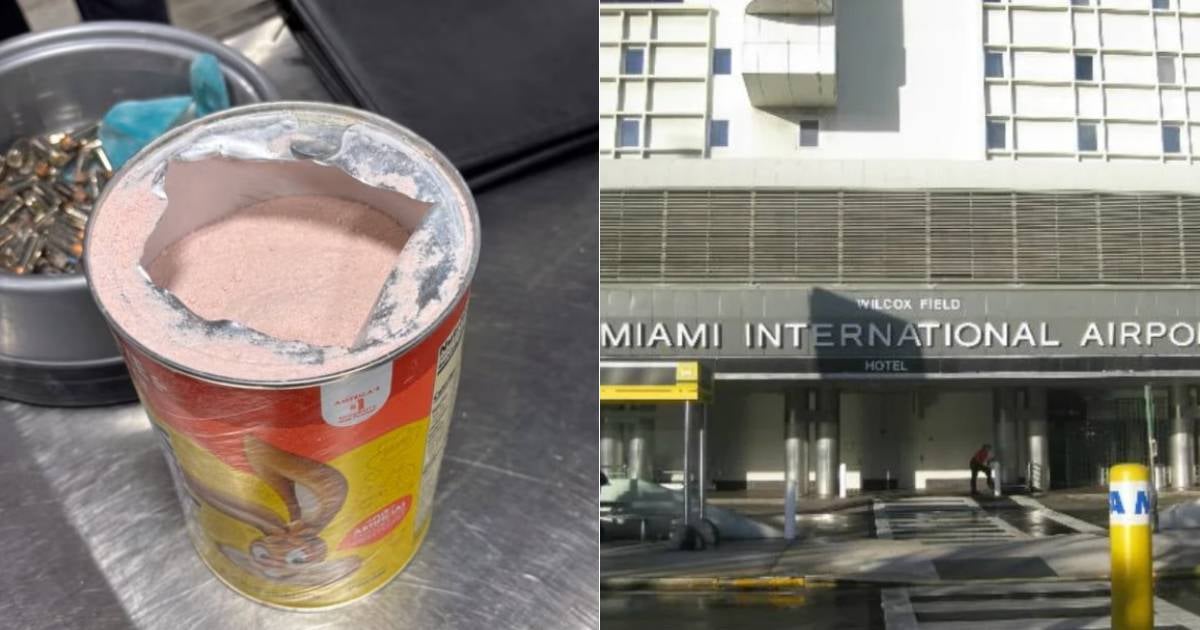
A Cuban passenger was intercepted at the Miami International Airport while attempting to transport 64 hollow-point bullets concealed in a strawberry-flavored Nesquik container, as confirmed by the Transportation Security Administration (TSA) and reported by Martí Noticias.
The ammunition was meticulously hidden inside a blue rubber glove, buried in the pink dust of the popular children's product. The unusual weight of the container raised suspicions and led to a secondary inspection, where the explosive team protocol was activated.
According to the report published by journalist Mario J. Pentón in the mentioned media, the TSA, in a sarcastic tone, posted on social media: “Instead of a sweet blend of nostalgia, they found a glove filled with 64 hollow-point bullets buried in a container of fictitious fruity flavor”.
Witnesses told Martí Noticias that the man was dressed entirely in red, carrying a Cuban passport and a green card, and was preparing to board a charter flight to Cuba.
Although transporting ammunition in checked baggage is legal in the U.S. if it is declared and properly packed, hiding it in a food product seriously violates airport security regulations.
Neither the identity of the passenger detained in Miami nor the final destination of the flight have been revealed. It is also unknown whether the bullets were ultimately destined for Cuba, although all indications suggest that they were.
The episode recalls an incident that occurred a few days ago at the George Bush Intercontinental Airport in Houston, Texas, where agents from the Customs and Border Protection (CBP) confiscated a bottle containing biological substance from a traveler arriving from Cuba.
It was scorpion venom that, according to the passenger, was intended for medical purposes, but lacked the required documentation for its importation.
CBP then took the opportunity to warn that "please leave the home remedies at home," reminding that the entry of undeclared biological materials can result in fines, criminal charges, and seizures.
Frequently Asked Questions About Smuggling at Airports and Airport Security
What happened with the Cuban passenger at Miami Airport?
The Cuban passenger was intercepted at Miami International Airport for attempting to transport 64 hollow-point bullets hidden inside a strawberry-flavored Nesquik container. The ammunition was concealed within a blue rubber glove, which triggered TSA security protocols. Although carrying ammunition in checked baggage is legal if declared, hiding it in food products violates airport security regulations.
Why is it illegal to hide ammunition in food products?
It is illegal because it violates current airport security regulations. Although transporting ammunition in checked luggage is legal if it is declared and properly packaged, hiding it in a food product adds a significant security risk and contravenes safe transport regulations.
What other cases of smuggling have been detected recently at airports?
Recently, several cases of smuggling have been detected at airports, including attempts to introduce drugs in gummy candies, electronic cigarettes, and food products. In the Cuban context, there have been reports of liquid narcotics hidden inside the bodies of passengers and live birds concealed in luggage, reflecting the increasing creativity of smugglers in evading the law.
What legal consequences do those who attempt to smuggle items at airports face?
Individuals attempting to smuggle items at airports face serious legal consequences, including fines, criminal charges, and seizures. In Cuba, drug trafficking and smuggling can result in sentences of up to 30 years in prison, life imprisonment, or even the death penalty in aggravated cases. Authorities warn that ignorance of the contents of packages does not exempt one from criminal liability.
Filed under: