
Related videos:
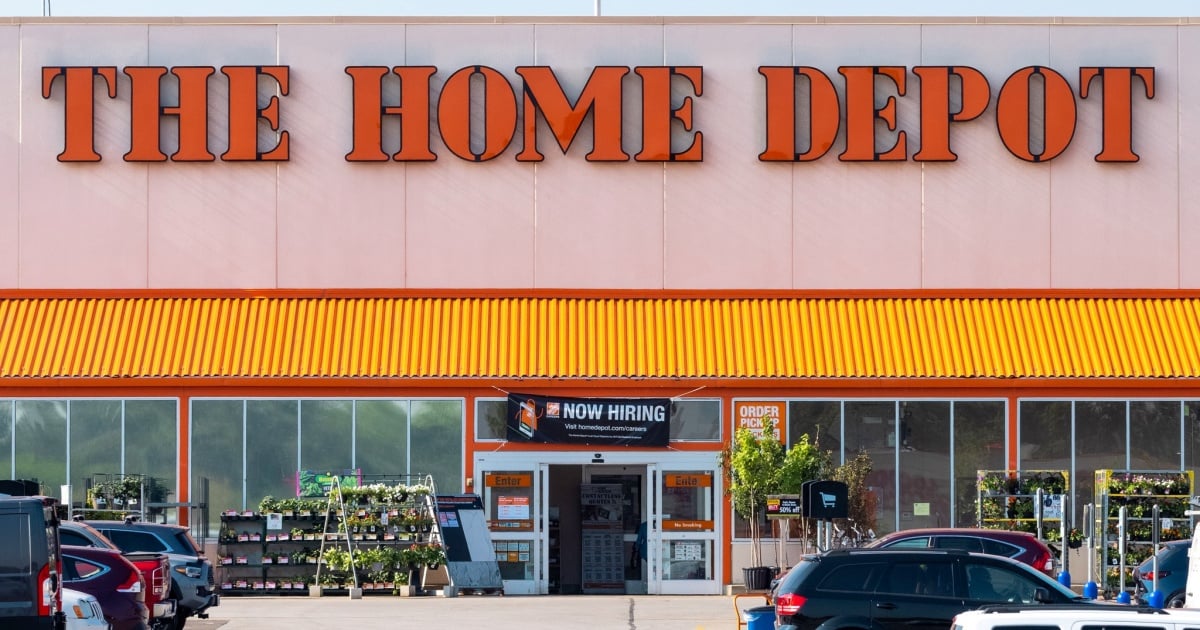
Home Depot, the largest home improvement retailer in the United States, announced this Tuesday that it will raise prices on some of its imported products, attributing the decision to the impact of the tariffs imposed by President Donald Trump's administration.
The measure marks a shift from what the company itself had assured just a few months prior, when it stated that it would not pass on the burden of the taxes to its customers.
Change in position regarding tariffs
In May 2025, the Atlanta-based company indicated that it did not plan to raise prices despite the tariffs, and even suggested the possibility of discontinuing certain affected products.
However, the company's financial director, Richard McPhail, now acknowledged that the pressure from the new taxes is greater than anticipated.
“For some imported products, tariffs are significantly higher today than during the same period of the last quarter,” McPhail said in a statement to the Wall Street Journal.
"Therefore, as expected, there will be a slight fluctuation in prices in some categories, but it will not be widespread," he warned.
The shift positions Home Depot alongside other major American companies that had already warned about the impact of Trump's tariff policy on their costs and pricing strategies.
Inventory under pressure and search for diversification
About half of Home Depot's inventory comes from suppliers outside the United States, making it particularly vulnerable to import duties.
The company had previously indicated that it sought to diversify its supply base so that no foreign country would account for more than 10% of its total merchandise.
That diversification strategy reflects the chain's fear of relying on a single source of imports, in a context where the trade war threatens to drive up the cost of key materials such as wood, steel, and other essential supplies for construction and remodeling.
Financial results and projections
The announcement about the prices coincided with the presentation of the quarterly results.
Although sales increased by 5% compared to the previous year, net income fell by 0.2% due to rising operating costs.
The company anticipates that its earnings per share will decrease by 2% this year, partly due to economic uncertainty and high interest rates, which are hindering home renovation projects, according to Univision.
The CEO, Ted Decker, noted that relief in financial conditions could improve the situation.
"Undoubtedly, a relief in mortgage rates, in particular, could be beneficial," he warned.
Mortgage rates in the U.S. have remained close to 7%, which, according to Home Depot, discourages many consumers from undertaking large remodeling projects.
McPhail expanded on that vision during the results conference.
"Our clients tell us that the pricing environment is delaying larger renovation projects... They are not canceling them. The demand for home improvements persists. That’s why our job is to prepare for it," he reported.
Real estate market indicator
Home Depot's performance is closely monitored by analysts as a barometer of the U.S. real estate market.
In this quarter, comparable sales grew by 1%, below the 1.5% that analysts had anticipated, confirming a cooling in the pace of the sector.
The company also reported a 0.9% decrease in total customer transactions, although the average purchase amount increased by 1.2%, suggesting that while fewer shoppers are visiting, those who do are spending more per visit.
The rise in prices places Home Depot among the companies that are already feeling the effects of Trump's tariff policy.
According to The Independent, the chain joins companies like AriZona Iced Tea, whose founder Don Vultaggio warned that he might be forced to raise the price of his iconic Big Can from $0.99 following tariffs of up to 50% on steel and aluminum.
“At some point, the consumer will have to pay the price… It makes me angry just to think about it. It would be a shame after more than 30 years,” he stated.
The Home Depot case also had an unexpected political angle: recently the company asked the Florida Republican Party to remove from its online store a line of deportation-themed products that parodied the company's logo.
"We do not allow any organization to use our brand or logo for commercial purposes," stated Sarah McDonald, the company's director of public affairs.
Frequently Asked Questions about Price Increases at Home Depot Due to Trump's Tariffs
Why has Home Depot decided to raise the prices of certain products?
Home Depot has decided to raise the prices of some of its imported products due to the impact of the tariffs imposed by the administration of Donald Trump. These tariffs have increased the costs of importation, leading the company to pass part of those costs onto consumers. Although the company initially assured that it would not raise prices, financial pressure has forced it to change its stance.
What percentage of Home Depot's inventory is affected by tariffs?
Close to half of Home Depot's inventory comes from suppliers outside the United States. This means that a significant portion of its products is subject to the import tariffs imposed by the Trump administration. The company is looking to diversify its supply base to reduce its reliance on any foreign country, ensuring that no single country represents more than 10% of its total merchandise.
How have Trump's tariffs affected other companies in the United States?
Companies like Nike, Adidas, Amazon, Walmart, and Mattel have announced price increases in response to tariffs. These increases are related to the rising costs of imports due to additional levies, particularly on products from Asia and Europe. The tariff policy has generated economic uncertainty, impacting numerous companies that rely on international supply chains.
What impact do Trump's tariffs have on the real estate and remodeling market?
The tariffs have increased the cost of key materials for construction and remodeling, such as wood and steel, which directly impacts the real estate market. This has led to a slowdown in the sector's pace, evidenced by the slower growth of comparable sales at Home Depot. Furthermore, high mortgage rates discourage many consumers from undertaking major remodeling projects.
Filed under: