
Related videos:
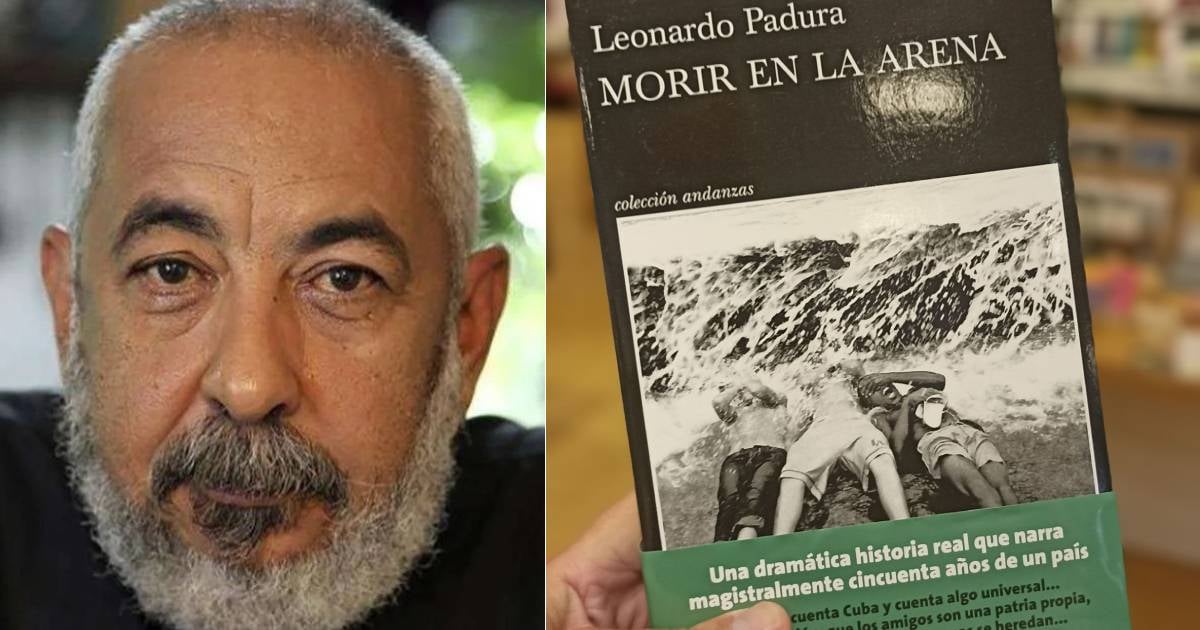
The Cuban writer Leonardo Padura has once again used the launch of one of his novels as a platform to denounce the crisis facing the island.
In the midst of promoting "Morir en la arena," which he himself defined as "the saddest novel" he has written, the 2015 Princess of Asturias Award for Literature acknowledged that in Cuba, the mantra is "every person for themselves," a phrase that illustrates the fracture of a country that once promised the common good.
"I wanted to talk about the final destiny of my generation, people who worked, sacrificed, suffered prohibitions and limitations... and now find themselves poorer than ever," Padura said in Madrid during a meeting with journalists, as reported by the EFE agency.
The new novel by the author of "The Man Who Loved Dogs" is based on a true event: a parricide that serves as a narrative catalyst. But beyond the suspense, Padura aimed to depict the everyday lives of those who struggle to survive amidst precarious conditions, blackouts, and inequality.
"It's the chronicle of a collapse," he summarized.
"Misery creates miserable people."
“Miseria creates miserable people,” Padura stated, referring to the rise in violence, theft, and inequality that has characterized recent Cuba.
The exorbitant prices, such as a dozen eggs for 3,000 pesos compared to pensions of 2,000, reflect the decline in daily life. “The viability of these small businesses is good in a country where everything is lacking, but the issue is the prices,” he pointed out.
The protagonists of "Morir en la arena" are Rodolfo, a retired man, and his ex-sister-in-law Nora, who manage to get by thanks to something that Padura considers crucial in Cuba: the support of relatives abroad. It is a snapshot of a country where millions of people rely on remittances to survive.
Living under blackouts and repression
Padura has also confessed that, to withstand the blackouts in Havana, he invested $4,000 in solar panels, as he stated to the newspaper El País. “Not everyone can afford this”, he acknowledged, aware that many of his neighbors endure power cuts of up to 20 hours a day.
That contrast between privileges and deprivations runs through both his personal life and his work, combining intimate testimony with social denunciation. In the same interview, he referred to the repression of the protests on July 11, 2021. “They were exemplary sentences; for breaking a glass, ten years in prison. People suffer and remain silent, because the alternative…”, he said.
Literature as memory
Although he insists that he is neither a politician nor an economist, Padura acknowledges a "responsibility" as a writer: to tell what he sees around him. "In Cuba, it's impossible to alienate yourself from reality; reality doesn’t just knock on your door, it opens it and enters your home," he stated to EFE.
Padura defends literature as a "reservoir of memory" against attempts at manipulation or silence, both in Cuba and in other countries. And although many of his novels are not published on the island, Cubans find ways to read them, even in pirated digital copies that circulate just days after being released in the international market.
Beyond the sadness that permeates "Morir en la arena," Padura believes that the Cuban people retain something essential, "an invincible spirit."
Frequently asked questions about the crisis in Cuba and Leonardo Padura's stance
What aspects of the Cuban crisis does Leonardo Padura address in his new novel?
Leonardo Padura uses his novel "Morir en la arena" to denounce the profound crisis that Cuba is experiencing. Through his work, Padura highlights the rise in violence, theft, and inequality that Cubans suffer from. The novel reflects daily life marked by precariousness, blackouts, and dependence on remittances from abroad for survival. Padura portrays a country worn down by repression and a lack of hope for imminent change.
How does the energy crisis affect daily life in Cuba?
The energy crisis in Cuba is evident in prolonged blackouts that disrupt lives and routines. Cubans face power cuts of up to 20 hours a day, which affects food refrigeration, communication, and overall quality of life. Many have to resort to using charcoal or firewood for cooking, and the lack of electricity also limits access to the internet and the ability to voice complaints or express grievances.
What has Padura said about the repression in Cuba?
Leonardo Padura has criticized the repression in Cuba, referring to the protests of July 11, 2021. In his statements, he points out that the sentences were "exemplary," with disproportionate penalties such as ten years in prison for breaking a window. Padura emphasizes that Cubans suffer in silence in the face of repression and the lack of freedoms, which reflects the harsh political reality on the island.
What solutions has Padura implemented to cope with power outages in his home?
To cope with power outages, Leonardo Padura installed a solar panel system in his home, an investment that cost $4,000. Padura acknowledges that this is an unreachable luxury for most Cubans, who must endure power cuts of up to 20 hours a day without viable alternatives. This solution reflects the inequality in access to resources on the island.
Filed under: