
Related videos:
Thousands of Cuban prisoners are forced to work in the production of tobacco and marabou charcoal intended for export, under conditions that international organizations describe as "modern slavery."
A report from the Non-Governmental Organization (NGO) Prisoners Defenders, based in Madrid, estimates that at least 60,000 inmates on the island are subjected to forced labor with little or no compensation, under threats, violence, and without adequate protective equipment.
The investigation, published this Monday by The Guardian and Euronews, documents systematic abuses in Cuban prisons, where inmates are used to support million-dollar businesses linked to exports. The products, including the world-renowned Cuban cigars and marabou charcoal, end up in major European markets.
The report directly attributes responsibility to the Cuban government, accusing it of maintaining an for economic purposes. According to the NGO, between April and August 2025, they interviewed 53 people from 40 prisons, in addition to the family members of inmates, and conducted 60 additional interviews corroborated with documents.
The result was an estimate of at least 60,000 prisoners forced to work under coercion, threats, reprisals, or violence. 98% of the interviewees stated that they did not have the necessary tools or training, and 45% reported having suffered physical violence during work shifts.
An ex-inmate told The Guardian that if a prisoner refused to work, "they would note it in the record," which would later be used to deny family visits or parole benefits.
Pure Cohiba made behind bars
The research confirms that at least seven prisons produce tobacco intended for export. In Quivicán, a maximum-security prison known as Aguacate, 40 prisoners aimed to produce 60 cigars daily, which were only counted if they met the quality standards for export.
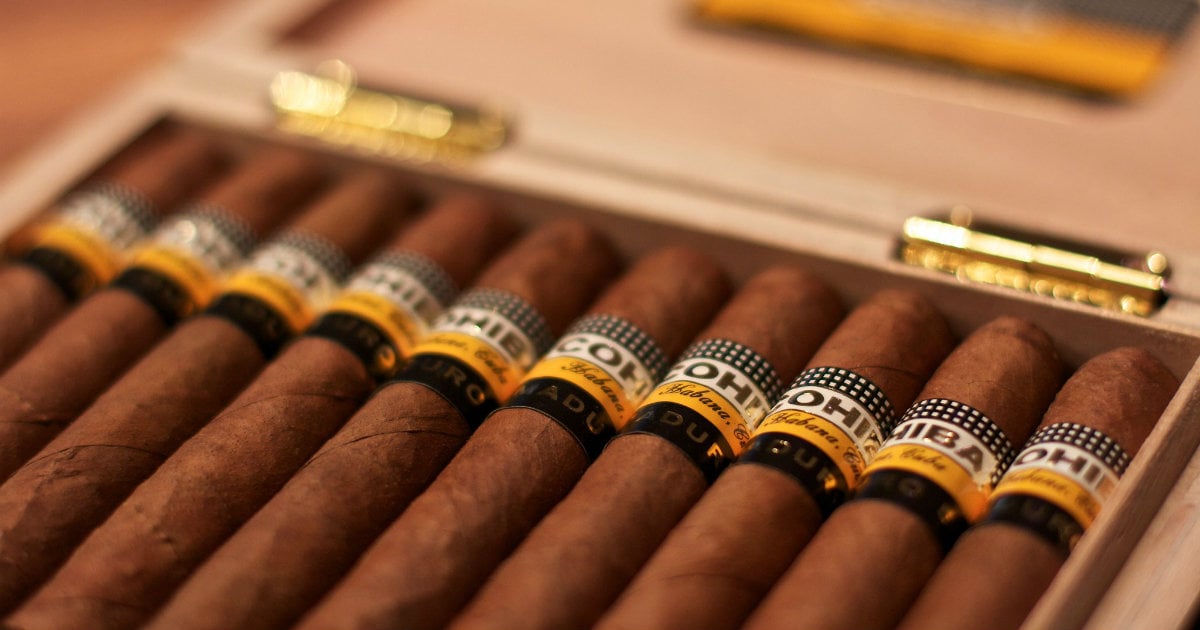
It is estimated that at least 11.6 million cigars are produced each year through forced labor in prisons, representing 7.5% of the national production. Although the cigars exit the prisons without branding, Prisoners Defenders claims that they eventually become part of the "most recognized and revered brands", including Cohiba, a symbol of luxury once smoked by Fidel Castro.
Marabú charcoal is labeled as "ecological" and is primarily shipped to Spain, Portugal, Italy, Greece, and Turkey.
The report also documents sexual violence against imprisoned women. Two reported harassment by penitentiary officials, and one recounted having been raped by another inmate, without receiving medical or psychological care.
Another concerning finding is the disproportionate impact on the Afro-Cuban population. While they make up 34% of the general population, people of African descent account for 58% of those incarcerated in Cuba.
According to collected testimonies, Black inmates are almost always assigned to the hardest forced labor, while white inmates tend to be given lighter tasks, such as cleaning in offices or military kitchens.
"Racism is commonplace in prison," stated a black former inmate who was interviewed.
Canada also raises its voice
The complaint by Prisoners Defenders coincides with a growing international pressure on the Cuban regime. Meanwhile, Canada has requested an investigation into the imports of Cuban tobacco due to suspicions of forced labor, as part of its policy to combat modern slavery in supply chains.
The Canadian government, which has prohibited the entry of products made with forced labor since 2020, has strengthened its control mechanisms in 2024 and 2025 and may extend stricter measures against goods from Cuba.
Prisoners Defenders asserts that the Cuban penitentiary system does not aim for rehabilitation, but rather for punishment and exploitation. Therefore, it calls for the regime in Havana to open prisons to independent international missions and to prohibit the trade of products linked to forced labor.
"The structural transformation of the prison system is a debt owed to human dignity," the report concludes.
Meanwhile, the cigars smoked in Europe and the charcoal burned in homes across the Mediterranean carry an invisible mark: that of the suffering of thousands of Cubans who, behind bars, are exploited as captive labor.
Filed under: